
Why You Need Professional Land Leveling Contractors
What Land Leveling Contractors Actually Do (And Why It Matters)
Land leveling contractors are workers who make bumpy ground flat. They prepare the dirt for farms, houses, and roads. If you need to grow crops or build a new house, you need a flat surface. A good contractor makes sure the job is done right so you do not have problems later.
Quick answer: What do land leveling contractors do?
- Prepare farm fields so water flows evenly and crops grow better
- Flatten building sites so foundations are strong and water drains away
- Move dirt using big machines with GPS and lasers
- Stop erosion so rain does not wash the dirt away
- Help build roads and other public projects
If land is not flat, bad things happen. Water pools in big puddles. Buildings can crack. Crops do not get the right amount of water. Dirt washes away. Getting the land flat at the start saves you money and time later.
These workers do not just use a simple tractor. They have years of practice. They use high-tech tools like GPS to know exactly how much dirt to move and where to put it.
I am Don Larsen, the head of Saga Infrastructure. We help great local construction companies do their best work. I know what makes a contractor great. In this guide, I will help you learn about land leveling so you can make a good choice.
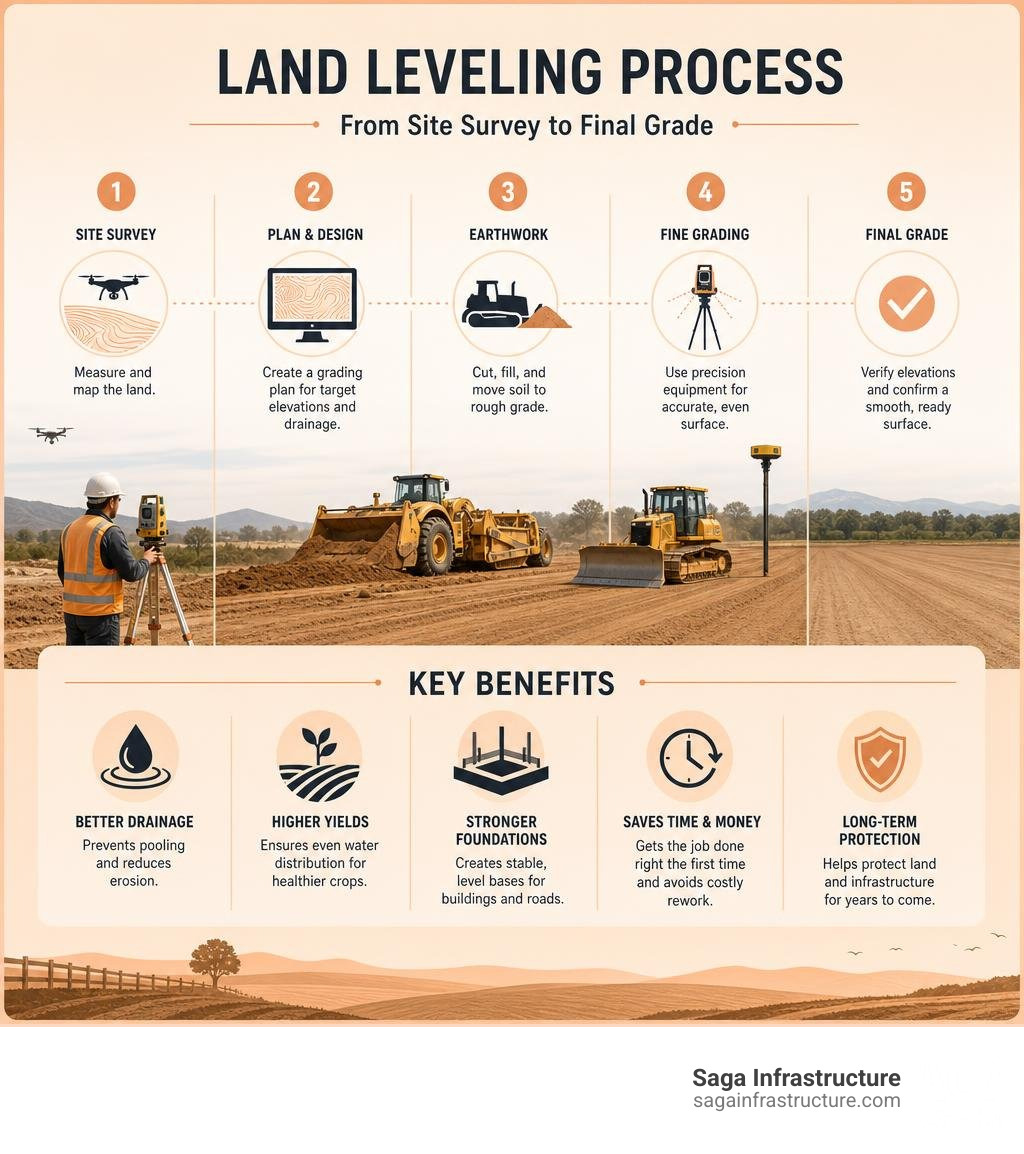
Must-know land leveling contractors terms:
What is Land Leveling and How Does It Differ From Grading?
Many people think “land leveling” and “land grading” are the same thing. They are similar, but they have different goals and use different tools.
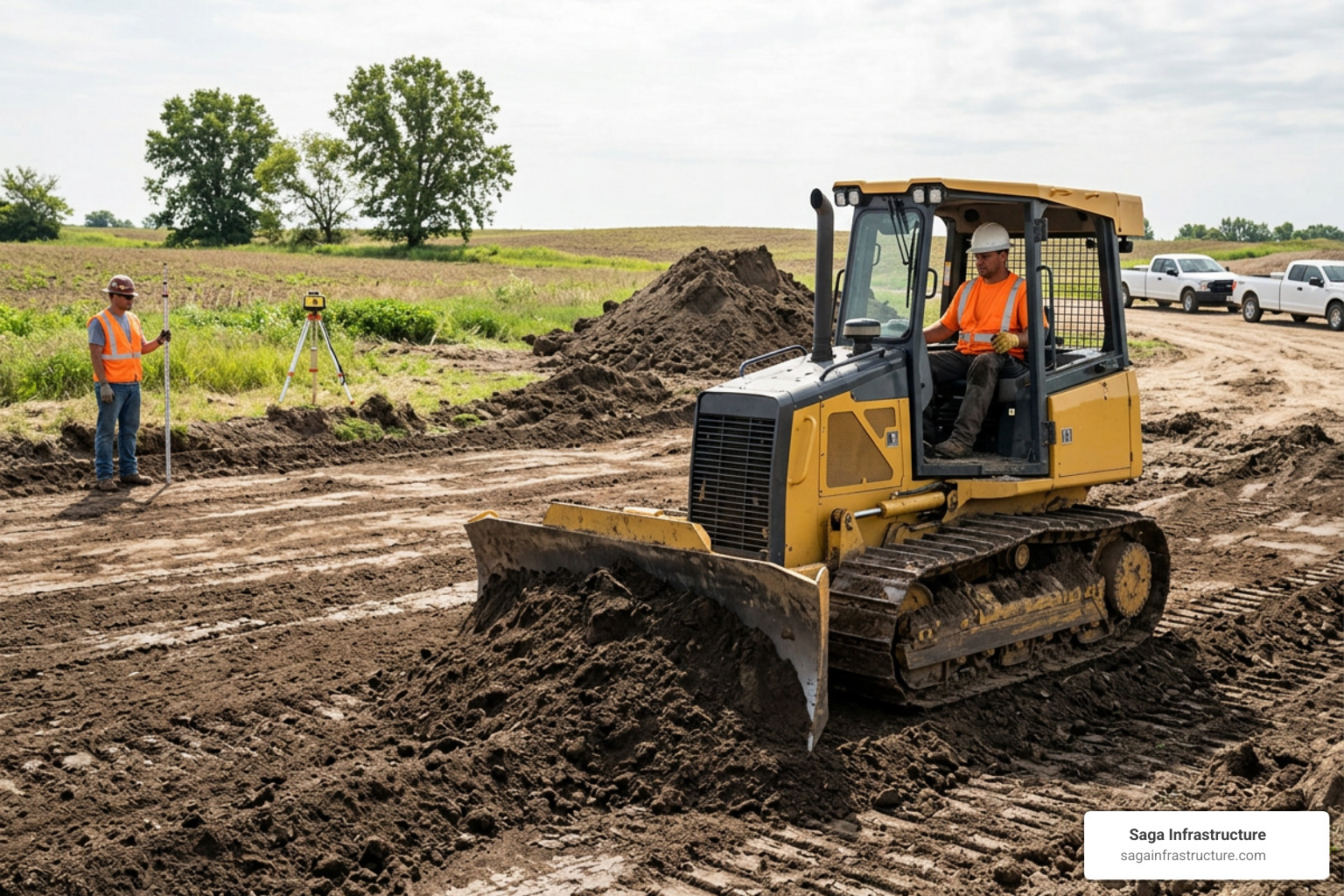
Land leveling means making the ground very flat or giving it a tiny, even slope. Imagine a big, flat farm field. The goal is to make the dirt smooth. Workers cut down high bumps and fill in low holes. This stops water from pooling in one spot.
Land grading means shaping the land to control where water flows. It is not about making things flat. Instead, it creates slopes to guide water away from homes, roads, and buildings so they do not flood.
Here is a simple way to see the difference:
| Feature | Land Leveling | Land Grading |
|---|---|---|
| Main Goal | Make a flat, smooth surface. | Shape slopes to control water flow. |
| Best For | Farms, lawns, and sports fields. | House foundations and roads. |
| Tools Used | Laser scrapers and GPS tractors. | Bulldozers and excavators. |
| Water Plan | Helps water soak in evenly. | Sends water away from buildings. |
To learn more about how these two jobs work together, read our guide on The Straight Dirt on Land Grading and Leveling.
Both jobs require knowing about different types of soil. Sandy soil in Florida behaves differently than hard clay in Texas or dry dust in Arizona. Professional land leveling contractors know how to work with the local dirt so the ground stays flat.
Core Services Provided by Professional Land Leveling Contractors
Professional land leveling contractors do many jobs to get your land ready. They do not just push dirt around. They plan and measure carefully so your project has a strong start.
Here are the main services they offer:
- Site Prep: Clearing away trees, rocks, and trash to make the ground ready.
- Moving Dirt: Shoveling huge amounts of dirt from high spots to low spots.
- Rough and Final Grading: Shaping the basic slopes first, then smoothing the top dirt for grass or roads.
- Water Drainage: Making paths and slopes so rainwater flows away safely.
- Ponds and Basins: Digging big holes to hold extra water during heavy storms.
To see how these services help prepare a site, read Everything You Need to Know About Heavy Earthmoving and Site Development.
Why Agricultural Projects Rely on Land Leveling Contractors
Farms need water to grow food. If a field is bumpy, water will pool in low spots and drown the plants. The high spots will stay dry and thirsty. This wastes water and ruins crops.
Farmers use land leveling to save water and grow more food. Leveling a field helps to:
- Water Crops Evenly: Water flows smoothly down the rows so every plant gets a drink.
- Save Water: Farmers do not have to waste water trying to reach dry high spots.
- Grow More Food: Healthy, evenly watered soil makes crops grow better.
To learn how to set up these water systems, read The Essential Guide to Grading and Drainage Systems.
How Construction and Public Works Benefit from Land Leveling Contractors
For houses and roads, flat ground is a must. If the dirt under a concrete floor is not flat and packed tight, the concrete will crack and break.
Contractors do important work for buildings and roads:
- Strong Foundations: Making flat, hard dirt pads for houses and shops.
- Road Bases: Smoothing the dirt before pouring asphalt or concrete.
- Erosion Control: Creating slopes so rain does not wash away roads and parks.
In Florida, the soil is wet and sandy. Contractors like Foshee Construction – Sitework, Grading & Utility Installation | Florida know how to work with this tricky soil. Whether you need help with a site in Minneola or need Clermont excavation – Slope in Land Grading , pros make sure your project starts on safe ground.
To see how good dirt work leads to great roads, read From Dirt to Driveway: Mastering Grading and Paving.
Advanced Equipment and Precision Technology
Years ago, workers leveled land by just looking at it. Today, professional land leveling contractors use high-tech tools to get the ground flat within a fraction of an inch.
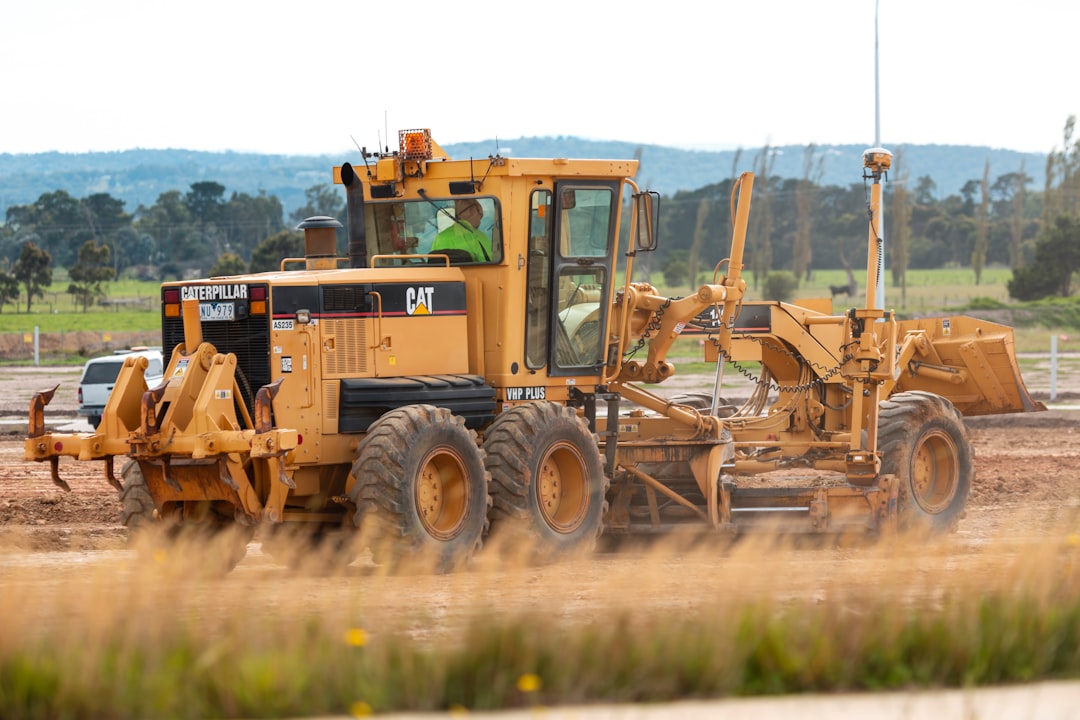
Here are some of the cool tools they use:
- GPS Machines: Tractors and bulldozers connect to satellites. The computer moves the blades up and down automatically to match a 3D map of the project.
- Laser Levels: A laser light shoots across the field. Receivers on the machines read the light to keep the blades perfectly straight.
- Heavy Rollers: These giant, heavy wheels pack the dirt down tight so it does not sink later.
These tools make the job faster and use less fuel. They also make the ground much flatter than a human could do alone. If you want to learn how to fix a small yard without big machines, read Leveling Up Your Landscape Without the Heavy Lifting.
Frequently Asked Questions About Land Leveling
Moving dirt can seem confusing. Here are answers to common questions about hiring land leveling contractors.
Why should I hire a professional instead of doing it myself?
It might seem easy to rent a small tractor and level your yard yourself. But doing it yourself can cost more if things go wrong.
First, big machines can tip over, which is very dangerous. Also, hitting buried pipes or wires can cause big problems. Second, you need special tools to get the slopes right. If you make a mistake, water could flood your house.
Finally, pros have heavy rollers to pack the dirt. If you do not pack the dirt, it will sink the first time it rains, and your yard will be bumpy again. If you need to dig a hill, read How to Properly Excavate a Hill for Your Next Retaining Wall.
How do I choose the right contractor for my project?
Finding the right partner is very important. Here is what to look for:
- License and Insurance: Make sure they are allowed to do this work and have insurance in case of accidents.
- Local Experience: Dirt is different in every town. In Texas, you want someone like Land Grading Services in Central Texas – Catahoula Construction LLC who knows the local ground. In Arizona, you need an expert like this Affordable Grading Company in Tucson, AZ – Desert Dirt Rat who knows dry desert soil.
- Past Work: Ask to see pictures of other jobs they have finished.
For a simple checklist, read our guide on how to Hire the Best Land Grading Companies Near You.
What factors affect the cost, timeline, and regional availability of land leveling?
Every piece of land is different. That means every job is unique.
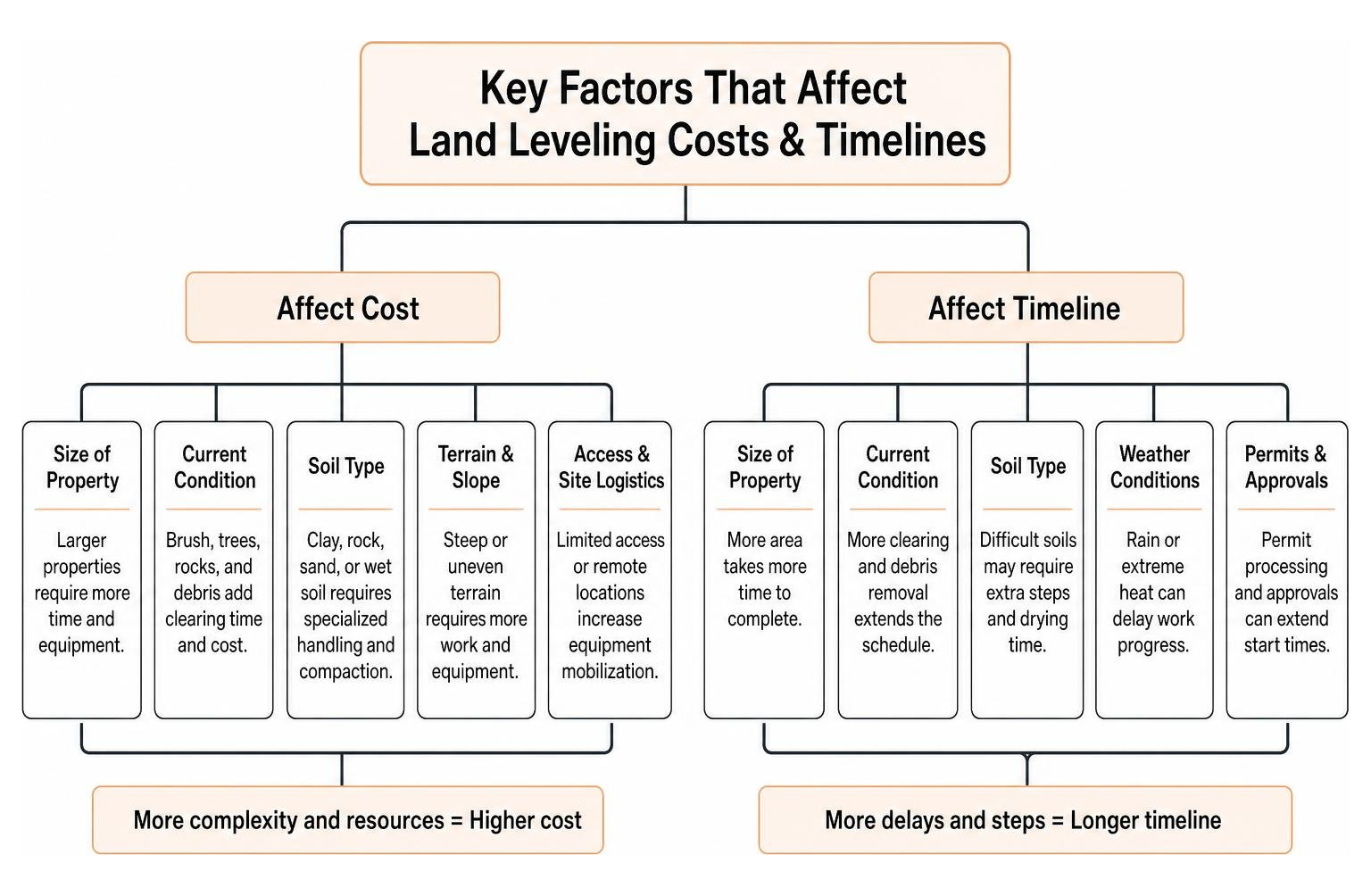
Here is what changes the price and time:
- Size of the Land: Bigger yards take more time and bigger machines.
- Trees and Rocks: If the land has lots of trees or rocks, workers must clear them first.
- Type of Soil: Hard clay or wet sand takes more work to flatten and pack.
- Weather: Rain makes mud, and you cannot flatten mud. This causes delays.
- Permits: Some towns require official permission papers before you can move dirt.
Most small yard projects take 1 to 3 days once the machines arrive. Big farm or business projects can take a few weeks. To learn more about prices, read How Much Does Land Grading Cost.
Conclusion
Land leveling is more than just moving dirt. It is about building a safe, strong foundation for crops, homes, and roads.
At Saga Infrastructure, we help local construction companies do great work. We buy and support regional contractors, like Foshee Construction in Florida. We give them tools and money to grow, but we keep their local names and teams. This means you get local experts backed by a strong national company.
If you own a construction business and want to protect your company’s future, we would love to talk to you.
Let’s start the conversation and visit Saga Infrastructure Business Owners today.