
What Earthwork Contractors Actually Do (And Why It Matters)
Earthwork contractors are experts who get the land ready. They make sure the ground is safe for buildings, roads, and pipes.
Here is a simple list of what they do:
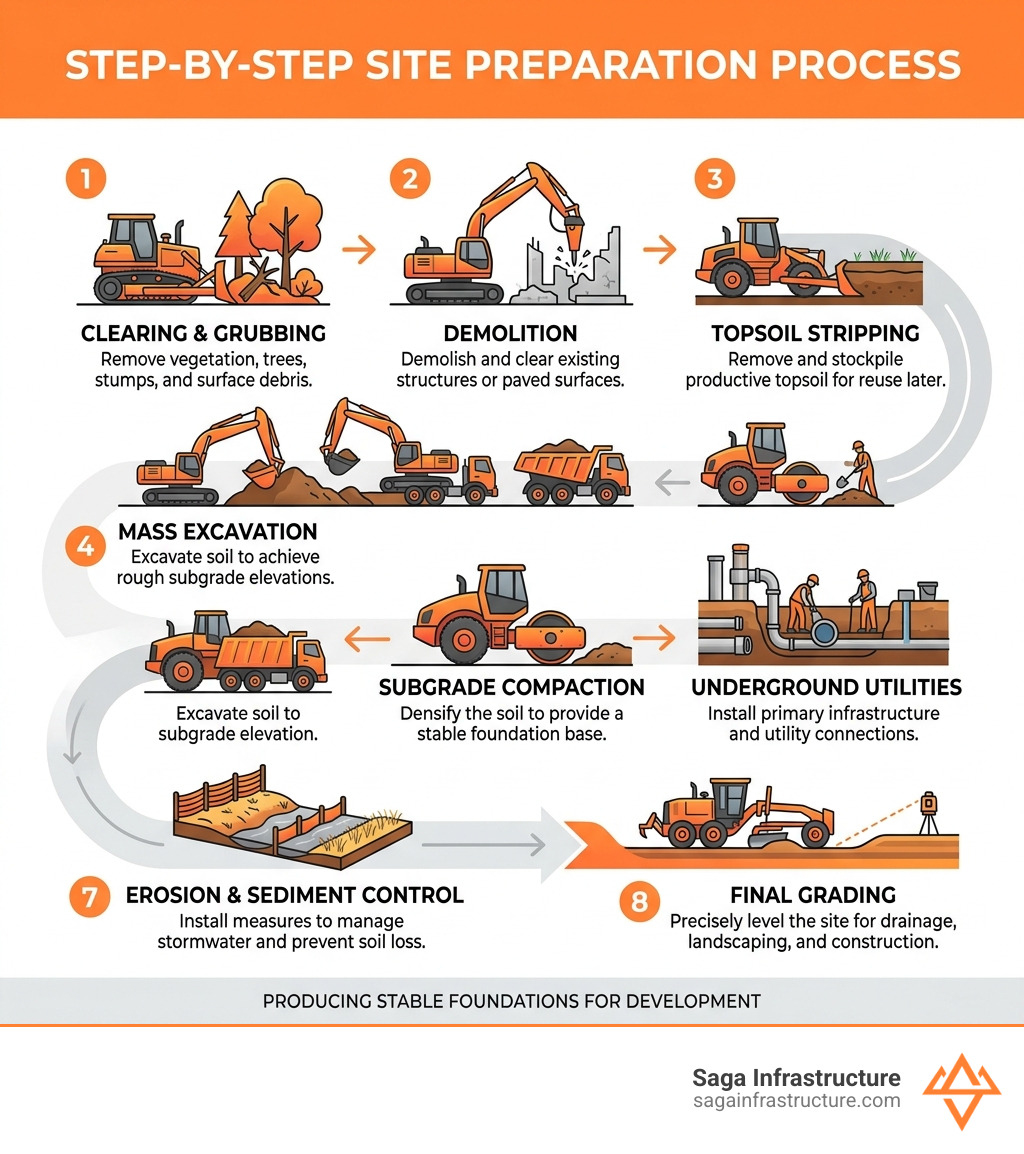
- Mass excavation: Moving large volumes of soil and rock to shape the site for construction.
- Grading: Adjusting the ground to create the right level surfaces and drainage slopes.
- Site preparation: Clearing the land, removing unsuitable material, and compacting soil for stability.
- Utility installation: Placing underground systems like water, storm, and sewer lines.
- Environmental work: Protecting soil and water through erosion control, sediment management, and remediation.
They work on many things like stores, roads, and solar farms.
Nothing can be built without this work. Every building and road needs a strong base.
Choosing the right partner is very important. A bad choice can cost a lot of money and cause delays. A good choice makes the whole project go well.
I am Don Larsen. I lead Saga Infrastructure. We work with great earthwork contractors. I have seen how the best teams work from the ground up.
Key terms for earthwork contractors:
Core Services Provided by Earthwork Contractors
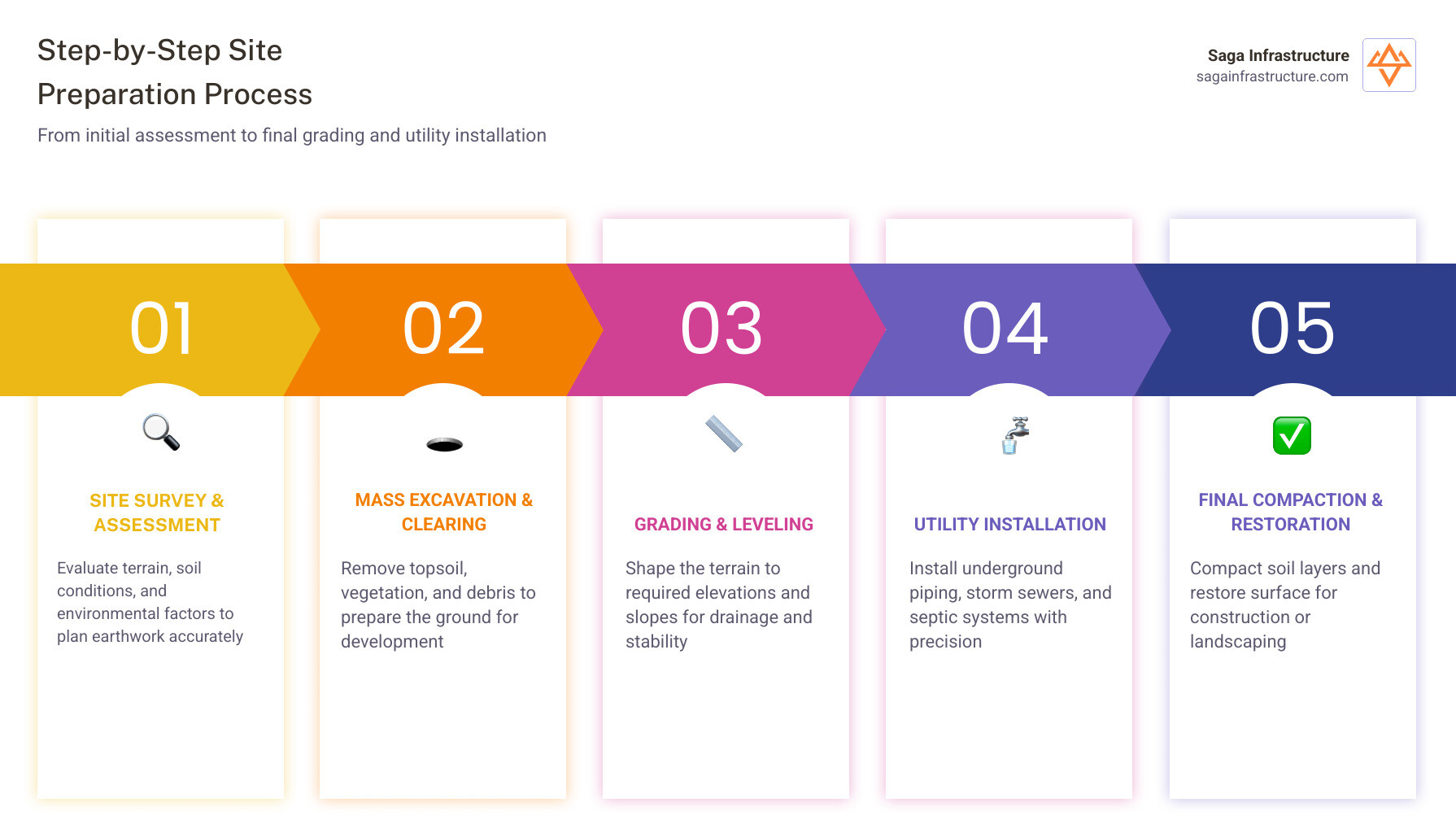
Earthwork is more than just digging holes. Modern earthwork contractors do many jobs to turn wild land into a flat spot for building. This is called a “pad-ready” site.
Mass excavation is a big part of the job. It means moving huge amounts of dirt. For big projects, teams might move enough dirt to fill thousands of trucks.
Site prep also includes clearing the land. This means taking away trees and old buildings. You can see how this works in big infrastructure projects where many jobs happen at once.
Putting in Pipes and Sewers
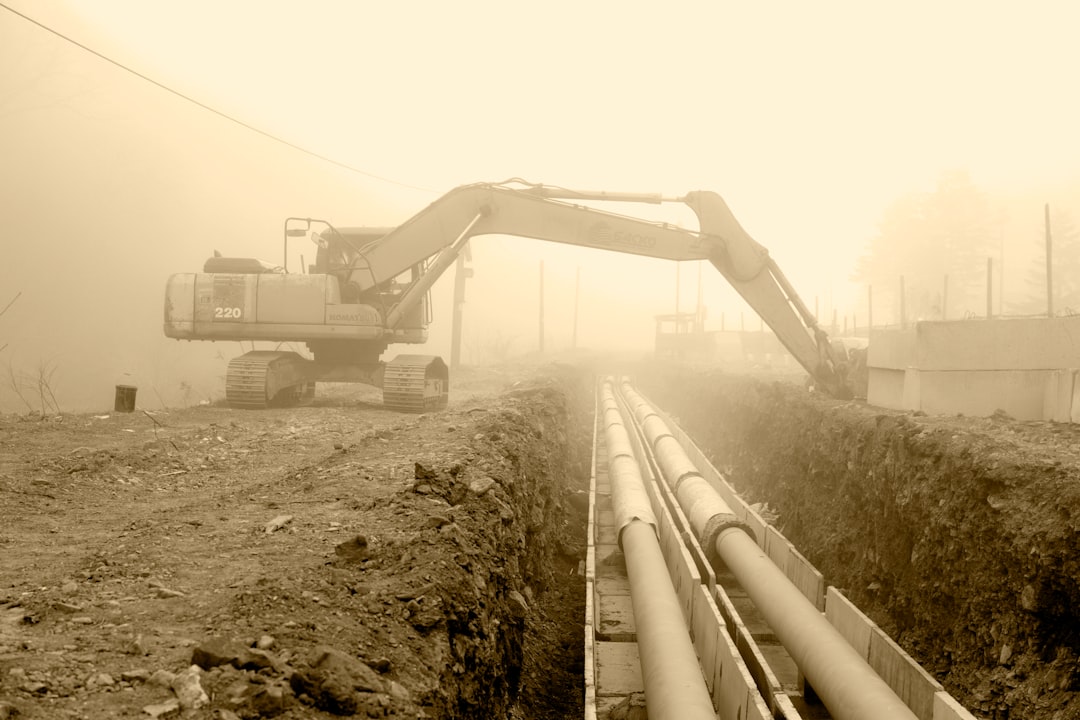
Earthwork contractors also put pipes deep in the ground. This must happen before the building starts.
This includes:
- Stormwater Pipes: These carry rain away so the land does not flood.
- Sewer Lines: These carry waste away from buildings.
- Water Mains: These bring clean water for drinking and fire safety.
In places like Florida and Texas, moving water is very important. Contractors make sure the land stays dry for a long time.
Making the Ground Level
After the big digging is done, the ground must be leveled. This is called grading. It makes sure the land is flat or has the right slope for water to run off.
Contractors use big rollers to pack the dirt down tight. If the dirt is too loose, roads and parking lots will crack. Earthwork contractors make sure the ground is ready for the next crew to build the foundation.
Specialized Projects and Market Sectors
Earthwork contractors work on many different types of jobs. Some jobs are at airports, and some are near the ocean.
In Florida, there is a lot of work for Sitework, Grading & Utility Installation. As more people move there, new roads and pipes are needed. A good example is the Hills of Minneola Crooked Can Infrastructure project.
Roads and Energy Projects
Earthwork is the base for everything we use. This includes:
- Highways: Building the dirt base for new roads.
- Energy: Getting land ready for big solar farms.
- Landfills: Building safe places for trash.
- Bridges: Digging deep holes to hold up heavy bridges.
In places like Arizona, the ground can be very hard. Contractors there use special tools to break through tough rocks.
Helping the Environment
Earthwork is also about fixing the land. Contractors help clean up dirty soil or fix natural areas like wetlands. They also stop dirt from washing away into the water. These jobs take a lot of care and the right machines.
Advanced Technology and Equipment
Workers do not just guess anymore. Modern earthwork contractors use expensive tools and computers to get the job done right.
GPS machines are a big help. A computer map of the site is put into the bulldozer. The driver can see exactly where to move the dirt. The machine can even move its own blade to the right height.
Drones are also used. They fly over the site to take pictures and measure how much dirt is in a pile. This helps us tell the customer exactly what is happening.
Big Machines for Big Jobs
To move a lot of dirt, you need many big machines. Top companies own hundreds of them.
A typical fleet has:
- Big Excavators: For deep digging.
- Dump Trucks: For carrying heavy loads over bumpy ground.
- Rollers: For packing the dirt down.
- Loaders: For moving dirt in small spaces.
Keeping these machines running is a big job. Good contractors have their own shops and mechanics to fix them quickly.
Safety and Taking Care of the Land
Safety is the most important thing. We work around big machines and deep holes. We want every worker to go home safe at the end of the day.
Our teams get special training to work on sites that might have dirty soil. We also learn how to keep dirt from washing into rivers. You can read more about this on our About Us page.
How We Help the Environment
We try to be green by using the “Three Rs”: Reduce, Reuse, and Recycle.
- Recycle: We crush old concrete to use it again for new roads.
- Reuse Soil: We try to keep soil on the site instead of moving it far away.
- Stop Erosion: We use fences and plants to keep dirt from washing away.
This helps the earth and can also save money.
How to Pick the Right Partner
Choosing an earthwork contractor is not just about the lowest price. You need a team with the right tools and a good name.
When you look for a contractor, ask:
- Experience: Have they done this kind of work before?
- Tools: Do they own their own machines?
- Reputation: Do other people like their work?
- Safety: Do they have a good safety record?
Our Saga Team is made of local experts who have worked in their towns for a long time.
The Bidding Process
Bidding is now done on computers. This makes it faster. When you ask for a price, give the contractor all the maps and soil reports you have. This helps them give you a fair price.
A contractor who knows the local rules can save you a lot of time and trouble.
Frequently Asked Questions
What is the difference between digging and grading?
Digging (excavation) is making a hole or a trench. Grading is making the ground flat or sloped so water flows the right way.
How do contractors keep the water clean?
They use special fences to stop dirt from running off. They also use water trucks to keep dust down. Many managers have special training to protect the environment.
Why is GPS used in earthwork?
GPS is very exact. It helps workers know exactly where to dig without using wood stakes. This makes the job faster and cheaper.
Conclusion
At Saga Infrastructure, we know every big project starts with the ground. We are proud to help build the roads and buildings that people use every day. We combine local skill with big resources to build things that last.
Whether you are building a new neighborhood, a big factory, or a solar farm, the right earthwork contractors make a big difference. We want to help you build the future.
Let’s build together. Visit us at sagainfrastructure.com/ to talk to us.