
How to Properly Excavate a Hill for Your Next Retaining Wall
Why Getting Retaining Wall Excavation Right Determines Everything
Retaining wall excavation is digging and getting the ground ready before you build a wall. It is the most important part. If you do it right, the wall lasts a long time. If you do it wrong, the wall will fall down in a few years.
Quick answer: What is retaining wall excavation?
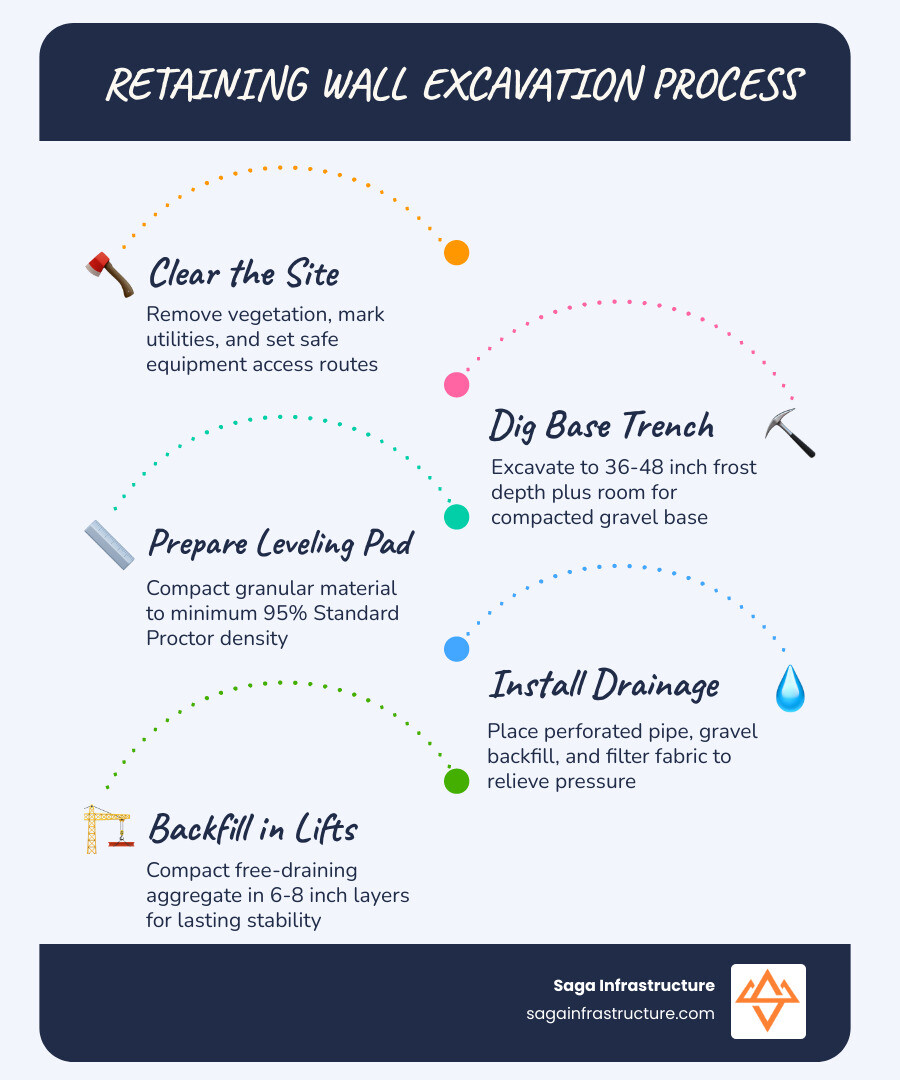
- Clean the area — remove plants and find where pipes are hidden.
- Dig the hole — dig deep enough so the wall does not move when the ground freezes.
- Make a flat base — put down gravel and pack it down very tight.
- Add water pipes — put pipes behind the wall so water can flow away.
- Fill it back up — add gravel in small layers and pack each one down.
Many walls fail because the ground was not ready. If the hole is too shallow or there are no pipes for water, the wall will lean or crack.
I am Don Larsen, the head of Saga Infrastructure. We work with builders all over the country. I have seen how to dig the right way and the wrong way. This guide will show you how to do it right.
Explore more about retaining wall excavation:
What Retaining Wall Excavation Is and Why It Matters
A retaining wall is a strong structure. It holds back a lot of heavy dirt. Retaining wall excavation is getting the ground ready for that fight. Without it, the dirt will push the wall over. Water trapped in the dirt can also break the wall.
Good digging makes sure the wall has a strong floor. It also gives water a way to get out. If you skip this part, your wall will turn into a pile of rocks. To learn more about moving dirt, read Everything You Need to Know About Heavy Earthmoving and Site Development.
Why digging determines how long the wall lasts
The life of your wall starts with the first scoop of dirt. A deep hole keeps the wall from sliding. We dig down to “strong soil” that has not been moved before. This keeps the wall from sinking. If one side sinks, the wall will crack. We also dig extra space behind the wall for gravel. This lets water drain so it does not push the wall out.
Signs a hill needs digging before building
Not every hill needs a wall. But some hills are ready to slide. If you see dirt washing away after rain, it is time to dig. If the ground stays wet and soft, that is a bad sign. These hills cannot hold themselves up. To see how a wall helps your yard, read Why Your Sloped Yard Needs a Retaining Wall Right Now.
Plan the Site Before You Dig
We must plan before we start the big machines. We say “measure twice, dig once.” We mark where the wall will go and where to put the extra dirt.
Site checks before digging starts
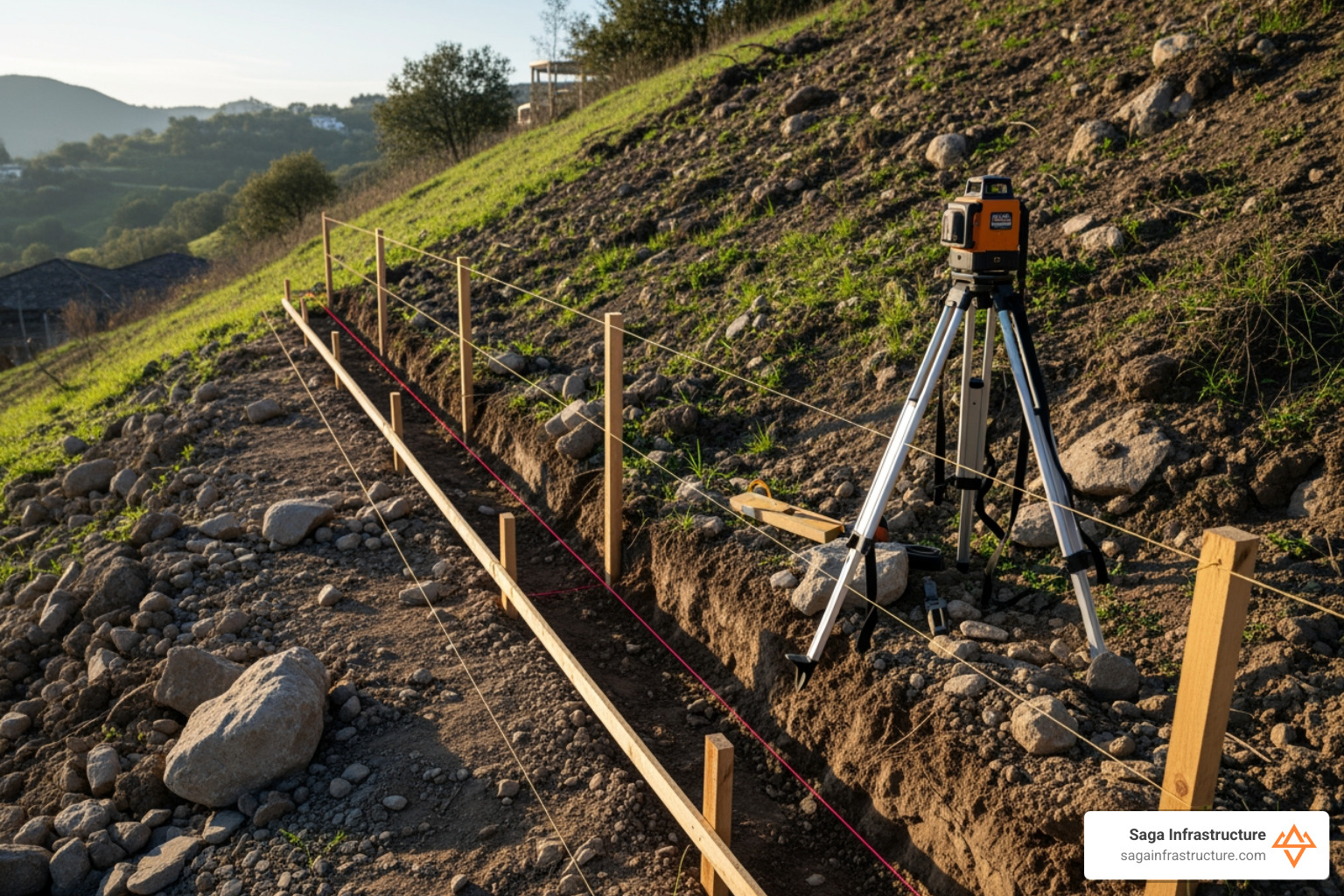
We use lasers to make sure the wall will be straight. We look for nearby buildings like garages. We want to make sure the hill does not fall while we work. We also look for water pipes so we do not break them. For more on site prep, see The Groundwork Essentials for Your New Construction Project.
Rules and permits
There are many rules for building. In some states, small walls do not need a permit. But tall walls always do. If you build near water or wetlands, you must ask for permission first. This can take a long time, so plan ahead.
How deep to dig in the cold
In cold places, the ground freezes and moves. This is called “frost.” We must dig deep to get below the frost. In New York and Connecticut, we dig about 3 or 4 feet deep. This keeps the wall from moving when the ground turns to ice.
Step-by-Step Retaining Wall Excavation on a Hill
Digging on a hill is different. We cut the hill into steps. This keeps the workers safe and makes the wall easier to build. For more on grading, visit From Dirt to Driveway: Mastering Grading and Paving.
Clear the hill and make a path
First, we remove trees and grass. We need a wide path for the machines. We save the good dirt to use later and move the bad dirt away.
Dig the main hole
The bottom hole is the most important part. It must be wide enough for the wall and some gravel. We dig into hard dirt so the wall does not sink. If the hill is steep, we make the hole look like stairs.
Make a flat floor and pack it down
We put 6 inches of crushed stone in the hole. This is the floor for the wall. We pack it down until it is hard as a rock. We drive heavy machines over it to make sure it does not move.
Add pipes for water
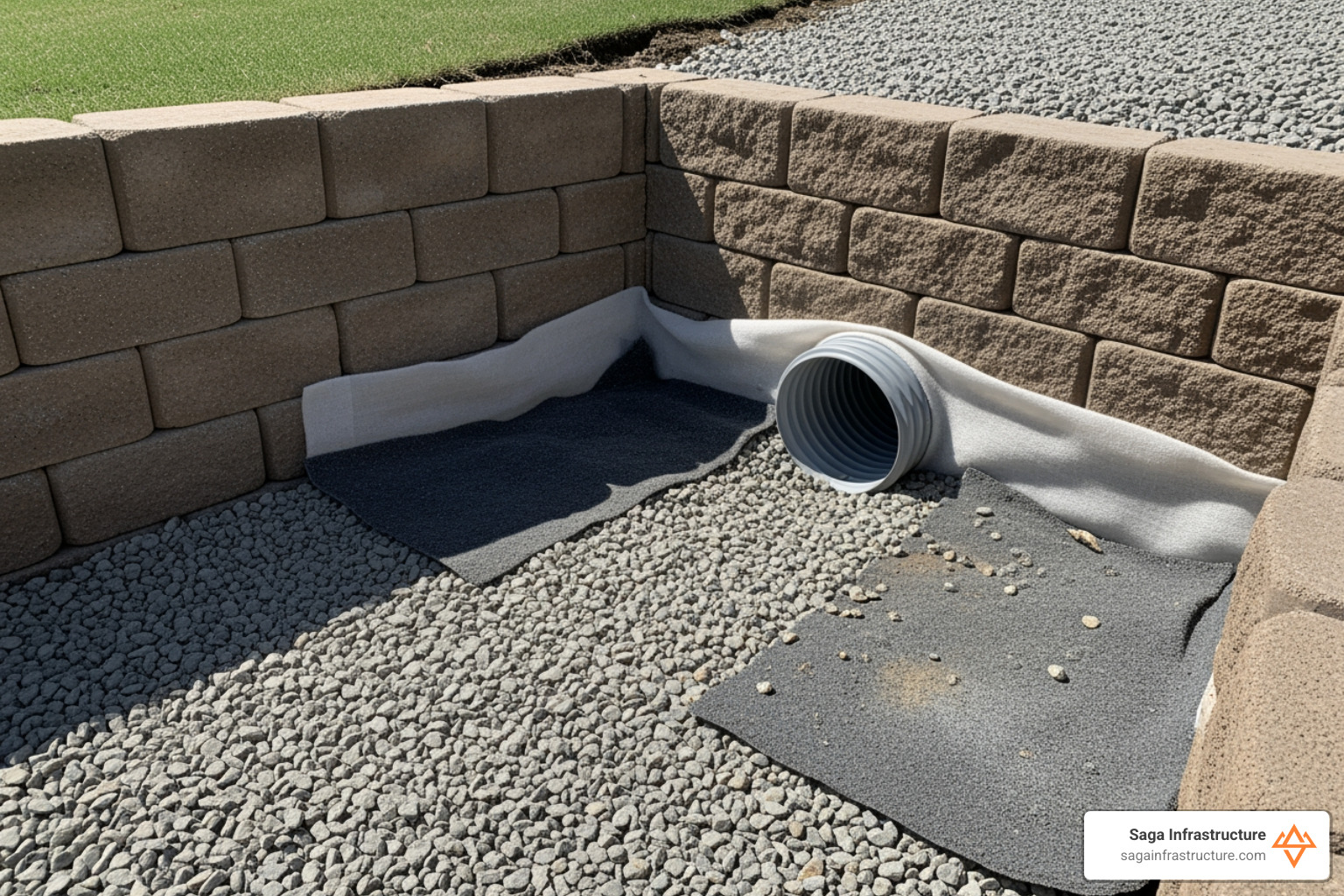
Water is the biggest enemy of a wall. We put a pipe behind the first row of blocks. This pipe carries water away. We cover it with gravel and special fabric so it does not get clogged. For more on this, see Retaining Wall Design.
Fill it back up in layers
We do not throw all the dirt back at once. We add a little bit of gravel and pack it down. Then we add more. We finish with a layer of dirt on top that helps rain slide away from the wall.
| Wall Type | How Deep to Dig | What is on the Bottom | Why it is Different |
|---|---|---|---|
| Block Wall | Below frost + 6″ | Packed Gravel | Uses a plastic mesh for strength |
| Concrete Wall | 42″ – 48″ | Hard Footing | Very stiff and uses metal bars |
| Big Hill Wall | Very Deep | Metal or Wood Posts | Used for huge hills |
Soil, Water, and Wall Choices
The dirt on your land tells us what tools to use. Some clay grows and shrinks like a sponge. This means we have to dig more and use more gravel. To learn about water, check out The Essential Guide to Grading and Drainage Systems.
The best dirt for a wall
We like sandy soil because water flows through it. We do not like dirt with roots or old leaves because it rots and sinks. We never use frozen dirt to fill the hole. When it melts, the wall will fall.
Pipes that keep the wall safe
Tall walls need extra pipes and gravel. These help catch water deep in the hill. This keeps the wall standing even during a big storm.
Different walls need different holes
A wood wall is easy to dig. A block wall needs a wider hole for a plastic mesh that holds it to the hill. For very big jobs, we drive metal sheets deep into the ground. You can see more rules here: Allan Block Best Practices for retaining wall construction.
Safety, Costs, and Mistakes
Digging can be dangerous. Dirt is very heavy. If a hole falls in, it can hurt someone. We follow safety rules to keep everyone safe. For more on safety, see Step-by-Step Guide to Erosion Control Solutions.
Safe digging on steep hills
We look at the dirt to see if it is loose or hard. Loose dirt needs more steps or slopes so it does not fall. We keep the big pile of extra dirt away from the edge of the hole.
What does it cost?
A home wall usually costs between $3,500 and $9,645. Digging is about one-fourth of that price. If we hit big rocks or cannot get our machines into the yard, it will cost more. Most jobs take 2 to 6 weeks to finish.
Common mistakes
The biggest mistake is not digging deep enough. If the hole is shallow, the hill will push the wall over. Other mistakes include using the wrong dirt or not getting a permit. These mistakes can cost a lot of money to fix.
Frequently Asked Questions
How deep should I dig?
In warm places, you might only dig 6 inches. In cold places like New York, you must dig 3 or 4 feet deep. A good rule is to bury one block for every foot of wall height.
Do I need a permit to dig?
If the wall is taller than 3 feet, you usually need a permit. If the wall holds up a driveway or a house, you will need a special plan from an engineer.
Can I dig near an old wall?
Yes, but it is hard. We dig in small sections. We dig a little, build the wall, and fill it back up. Then we move to the next part. This keeps the old wall from falling down.
Conclusion
At Saga Infrastructure, we believe in building things the right way. Whether we are in Florida or Texas, we know that digging is the start of a good wall. We focus on water pipes and deep holes. This keeps your wall standing for a long time.
If you are ready to build, let’s talk. Good digging is the best way to protect your home.
Learn more about the next steps: