What Landscape Grading Contractors Do and Why It Matters
Landscape grading contractors change the shape of the ground around your house. They do this to control where rainwater flows. This is very important for your home.
What do landscape grading contractors do?
- They slope the dirt to push water away from your house.
- They fix wet lawns and muddy spots.
- They get the ground ready for new patios, pools, or grass.
- They put in drains and pipes to carry water away.
- They pack the dirt down tight so it does not sink later.
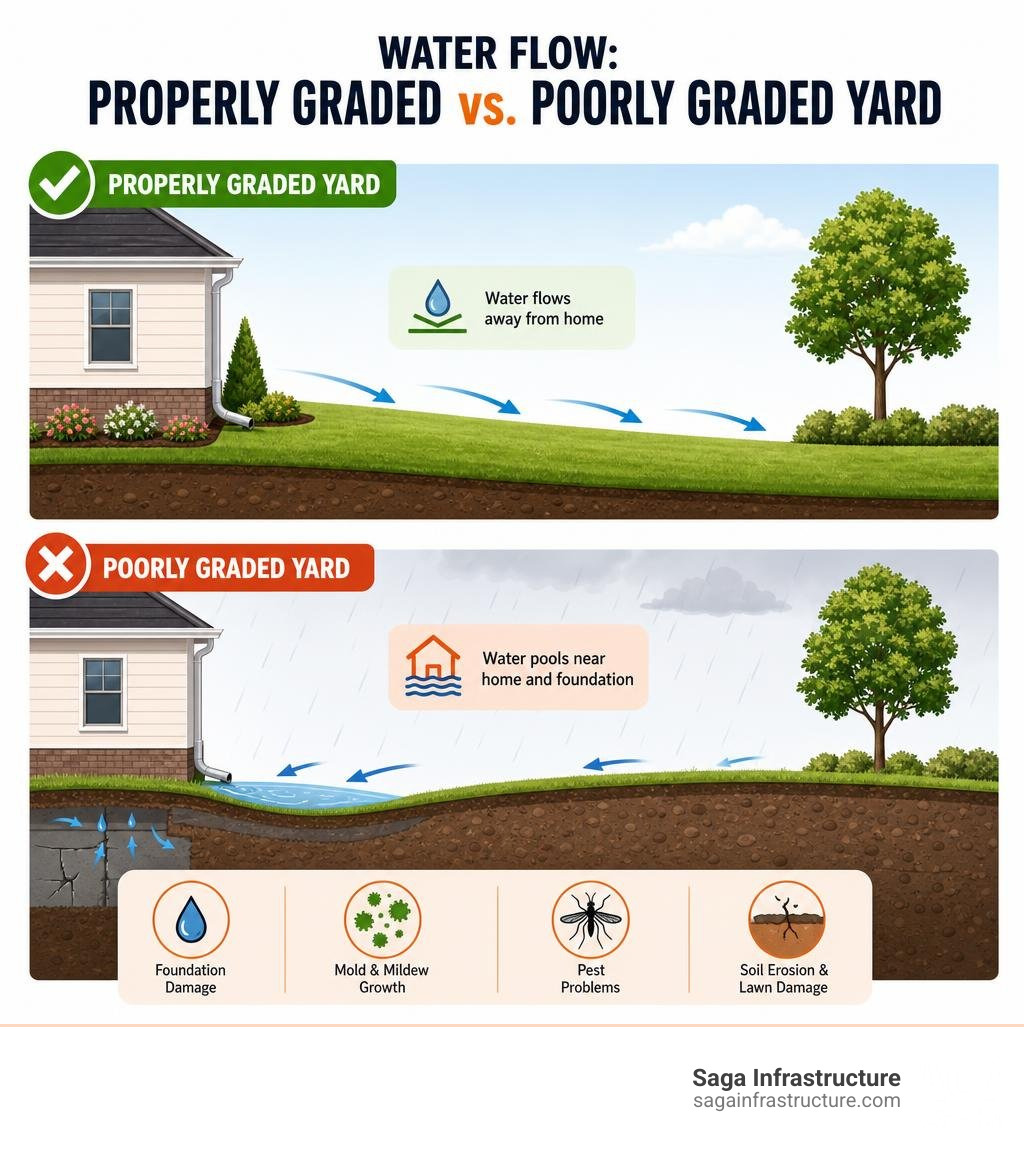
Water can hurt your house. If your yard does not drain well, water can get into your basement or crawl space. Standing water can also bring thousands of mosquitoes in just a day or two. Bad grading is a big problem that gets worse every time it rains.
Grading is the best way to protect your home. It is not just about moving dirt. It is about planning where the water will go.
My name is Don Larsen. I am the boss of Saga Infrastructure. We help local construction companies across the country. This includes the landscape grading contractors who do this work. I know what makes a grading job good or bad. I want to help you avoid costly mistakes.
Simple landscape grading contractors glossary:
Why Your Yard Needs Professional Landscape Grading Contractors
When you look at your yard, you see grass and trees. But professional landscape grading contractors see slopes and paths. If these paths are wrong, your whole yard is in danger.
The biggest sign of bad grading is standing water. If your grass stays wet for days after it rains, you have a drainage problem. Water will collect in low spots. Then, it will leak toward your house. This water can get into cracks under your home. When water sits next to your house, it can crack the concrete foundation. Fixing a foundation can cost a lot of money.
Another problem is soil erosion. This is when rain washes your dirt away. Without good dirt, your plants cannot grow. In places like Florida or Arizona, heavy rain can wash away loose dirt very fast if the yard is not graded right.
Wet yards also bring bugs. A simple puddle can become a home for thousands of mosquitoes in just one or two days. Nobody wants a swamp in their yard.
To learn more about how slopes protect your land, read The Straight Dirt on Land Grading and Leveling. You can also check out The Essential Guide to Grading and Drainage Systems to see how drains work. Hiring Why You Need Professional Land Leveling Contractors is the best way to stop these problems early.
Grading vs. Leveling: What is the Difference?
Many people think “grading” and “leveling” are the same thing. But they are actually different. Knowing the difference helps you choose what your yard needs.

Here are the main words landscape grading contractors use:
- Rough Grading: This is the first step. Workers use big machines to move lots of dirt. They make the basic shape of the yard. This helps water flow the right way.
- Finish Grading: This is the final touch. Workers smooth out the top dirt. They pick up rocks and sticks. This gets the ground ready for grass or plants.
- Land Leveling: This makes the ground completely flat. You need flat ground before you build a patio, pool, or driveway. Leveling makes things flat, while grading makes a slope.
- Resloping: This means changing how steep a hill is. Workers move dirt from high spots to low spots. This stops dirt from washing away.
Packing the dirt down is very important. If you just throw loose dirt into a hole, it will sink when it rains. Workers pack the dirt down in thin layers. This keeps the ground strong and steady for a long time.
After the ground is packed, we add good topsoil. For a healthy lawn, we use about 4 to 6 inches of topsoil. This helps grass roots grow deep and strong.
Here is a simple table to show the differences:
| Service Type |
Main Goal |
Typical Equipment Used |
Common Use Case |
| Rough Grading |
Shape main slopes |
Bulldozers, large excavators |
Preparing a new home site |
| Finish Grading |
Make a smooth surface |
Skid steers, hand rakes |
Getting ready for grass |
| Land Leveling |
Make a flat surface |
Laser levels, small tractors |
Building a new patio |
| Resloping |
Change a hill’s angle |
Skid steers, mini excavators |
Fixing a steep hill |
For more tips on how to flatten your yard, read Leveling Up Your Landscape Without the Heavy Lifting. If you want to get ready for a new driveway, read From Dirt to Driveway Mastering Grading and Paving.
How Much Does Yard Grading Cost and How Long Does It Take?
How much does it cost to hire landscape grading contractors? The price depends on how big your yard is and how hard the job is.
Most homeowners pay between $1,216 and $4,356 to grade a yard. A small, simple yard will cost less. A big yard with lots of hills will cost more.
Most of the cost goes to pay for the workers and their big machines. Workers usually cost $25 to $50 per hour for each person. If you have two workers with machines, it might cost $50 to $100 per hour.
A few things can change the price:
- Yard Size: A small area for a patio is cheaper than a huge yard.
- Hills: If the workers have to cut into a steep hill, it takes more time and bigger machines.
- Type of Dirt: Sandy dirt is easy to move but washes away fast. Clay dirt holds water and is very hard to dig.
- Space: If your gate is too small for big machines, the job will take longer and cost more.
Most home projects do not take very long. Small yards take 1 to 3 days. Bigger yards take 3 to 7 days. But rain can stop the work. You cannot pack wet dirt, so rainy days will cause delays.
To learn more about prices, read How Much Does Land Grading Cost. If you are building a new house, read Why Site Prep for House Construction Is Your Most Important Step to see how grading fits your budget.
How to Choose the Best Grading Experts Near You
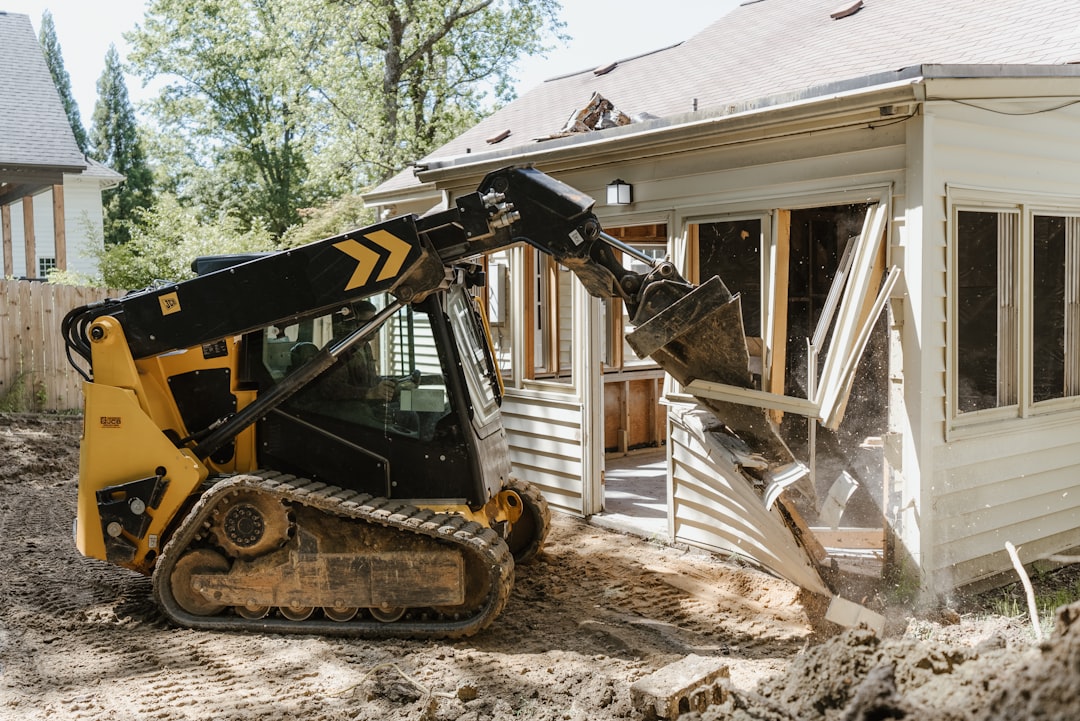
Picking the right worker is the most important step. If they do not understand water flow, they can make your problems worse. They might even send water toward your neighbor’s house. This can cause big arguments.
When looking for landscape grading contractors, check for these things:
- License: Make sure they have the right permits to do this work in your town.
- Insurance: This protects you if they break something or if a worker gets hurt.
- Local Knowledge: A local team knows your soil and weather. A team in Arizona knows about dry sand, while a team in Florida knows about heavy rain.
To start your search, check out local lists like Grading Contractors near Clermont, FL . You can also look at regional experts like Precision Land Grading in Plant City & Central Florida or Landscape Grading & Excavating Contractor Services for Texas. If you are in the Southwest, Grading Contractor | Phoenix, Scottsdale, Peoria, Glendale AZ is a great help. You can also read our guide on How to Find the Best Local Excavation Services Without Breaking a Sweat.
Questions to Ask Your Contractor
Before you hire a company, ask them these questions:
- Are you licensed and insured? (Always check this yourself.)
- Do you promise the dirt won’t sink? (A good contractor should guarantee their work for a year.)
- Will you call 811 before you dig? (They must mark water, gas, and power lines first.)
- Can I see a list of all costs? (Do not accept a single price without details.)
- How will you keep the dirt from washing away while you work? (They should use special fences to hold the dirt.)
Why You Should Not Do It Yourself
It might seem fun to rent a big machine and grade your yard yourself. But doing this alone is very risky.
Big machines are hard to drive. You can easily tip them over or hit your house. Also, without special tools, you might slope the ground the wrong way. If you send water toward your house instead of away from it, you will cause major damage.
Packing the dirt is also hard. Without the right tools, the dirt will sink later. In a few months, your wet spots and puddles will come back.
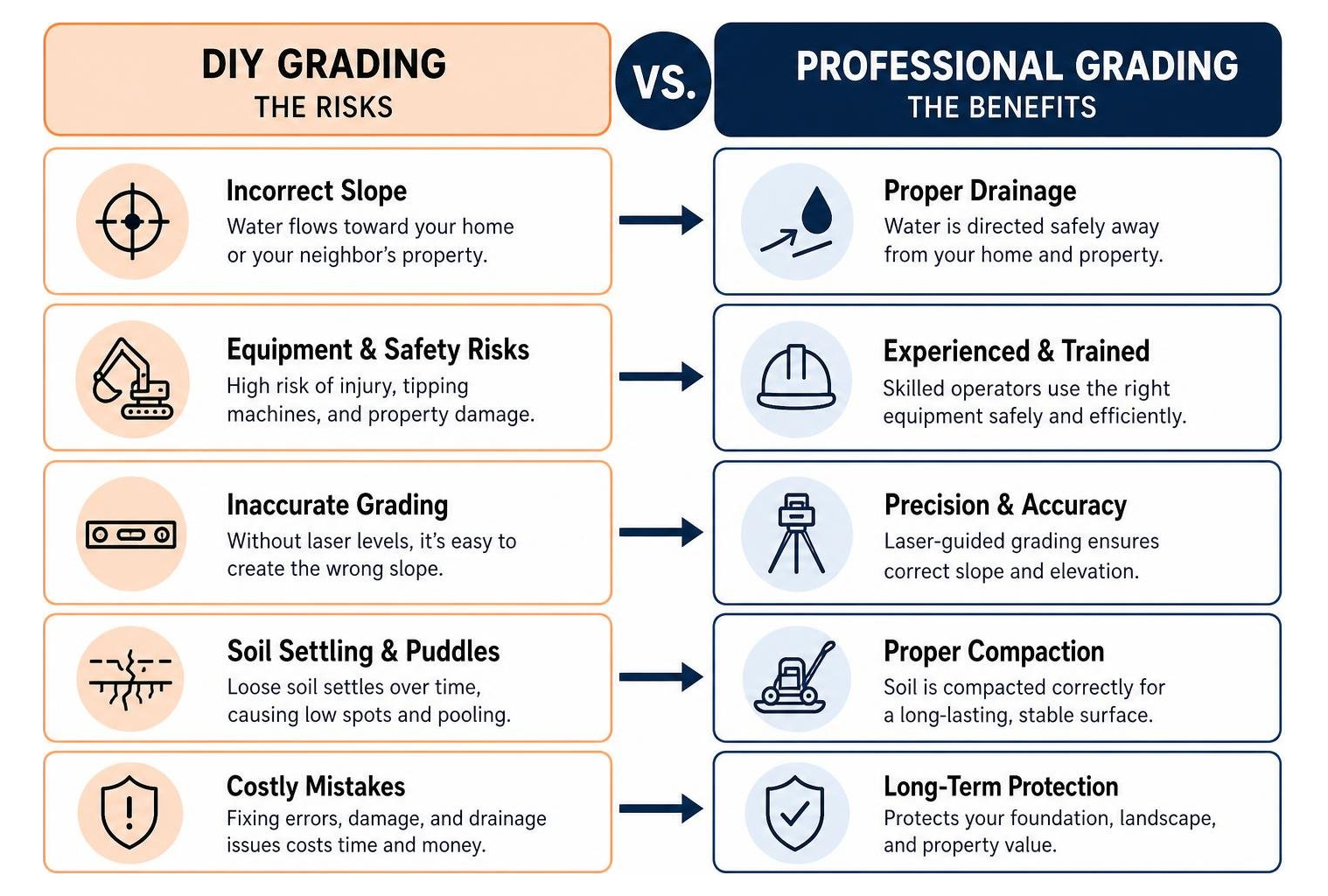
To protect your home and save money, let the pros do it. Read Don’t Build Your Dreams on Shaky Ground to learn more about why good prep work matters.
Common Questions About Yard Grading
Here are some simple answers to common questions about yard grading.
How long does the work take?
For most homes, the work takes 1 to 3 days. If you have a big yard with lots of trees to clear, it can take 3 to 7 days. Rain can make the job take longer. If the ground is too wet, big machines will make a muddy mess.
Do I need a permit?
It depends on where you live. In many places, you need a permit if you move a lot of dirt. This is to make sure you do not flood your neighbor’s yard. A professional contractor will know the rules and get the permits for you.
How does the type of dirt change the job?
Different dirt acts in different ways. Clay dirt holds water and gets very heavy. Sandy dirt drains fast but washes away easily. Workers must pack sandy dirt down tight and add good topsoil so grass can grow. In dry places, the ground can be hard as rock. Workers need special tools to break through it.
If you have a steep yard, you might need a wall to hold the dirt. Check out Why Your Sloped Yard Needs a Retaining Wall Right Now and How to Properly Excavate a Hill for Your Next Retaining Wall to see how walls help.
Conclusion
At Saga Infrastructure, we know that good homes need a strong foundation. Our goal is to help local builders across the country. We partner with great local companies. We give them more tools and resources while keeping their local teams and names the same.
For example, we partnered with Foshee Construction in Florida. The owners, Kevin and Cindi Foshee, said:
“We wanted a buyer who cared about our team and our company. Saga was the perfect partner. They respected our team and made the process very easy.”
We are here to help you protect your home. We combine local skill with national strength to make sure your project lasts.
If you own a business and want a partner to help you grow, we want to talk to you.
Let’s start the conversation.