
Why Site Prep for House Construction is Your Most Important Step
Essential Steps for Site Prep for Pole Barn Projects
When we talk about site prep for pole barn work, we mean making a strong base. This base must hold up a heavy barn for fifty years. In places like Florida, Texas, and Arizona, the dirt can be sandy or sticky. You must get the first steps right.
Start by clearing the area. Clear 10 feet past where the barn will be on all sides. This gives workers room to move. It also helps water flow away from the building.

Call 811 before you dig. This is a free service. They mark where gas and water lines are so you stay safe. Next, take away all grass and soft top dirt. Soft dirt has roots that rot. This can make your barn sink later. To learn more, read Ready, Set, Build: A Complete Checklist for Commercial Site Preparation.
How to Level the Site Prep for Pole Barn Foundations
How level should the ground be? For most barns, the ground should be very flat. If one side is much higher than the other, you might need longer posts. That costs more money.
We use tools like laser levels to make the ground flat. As Building Site Preparation – Hansen Buildings says, put your barn on hard dirt, not soft fluff. If you build on a hill, you must cut into the dirt to make a flat spot.
Permits and Safety Before You Dig
Check your local rules before you start. You might need a permit. Some towns say you must build 15 feet away from the property line. In cold places, you must dig deep holes. This stops the ice from pushing the barn up in the winter.
Mastering Drainage and Grading for Long-Term Stability
Water is the biggest problem for a barn. If water stays near the posts, they will rot. If it gets under the floor, the floor will crack.
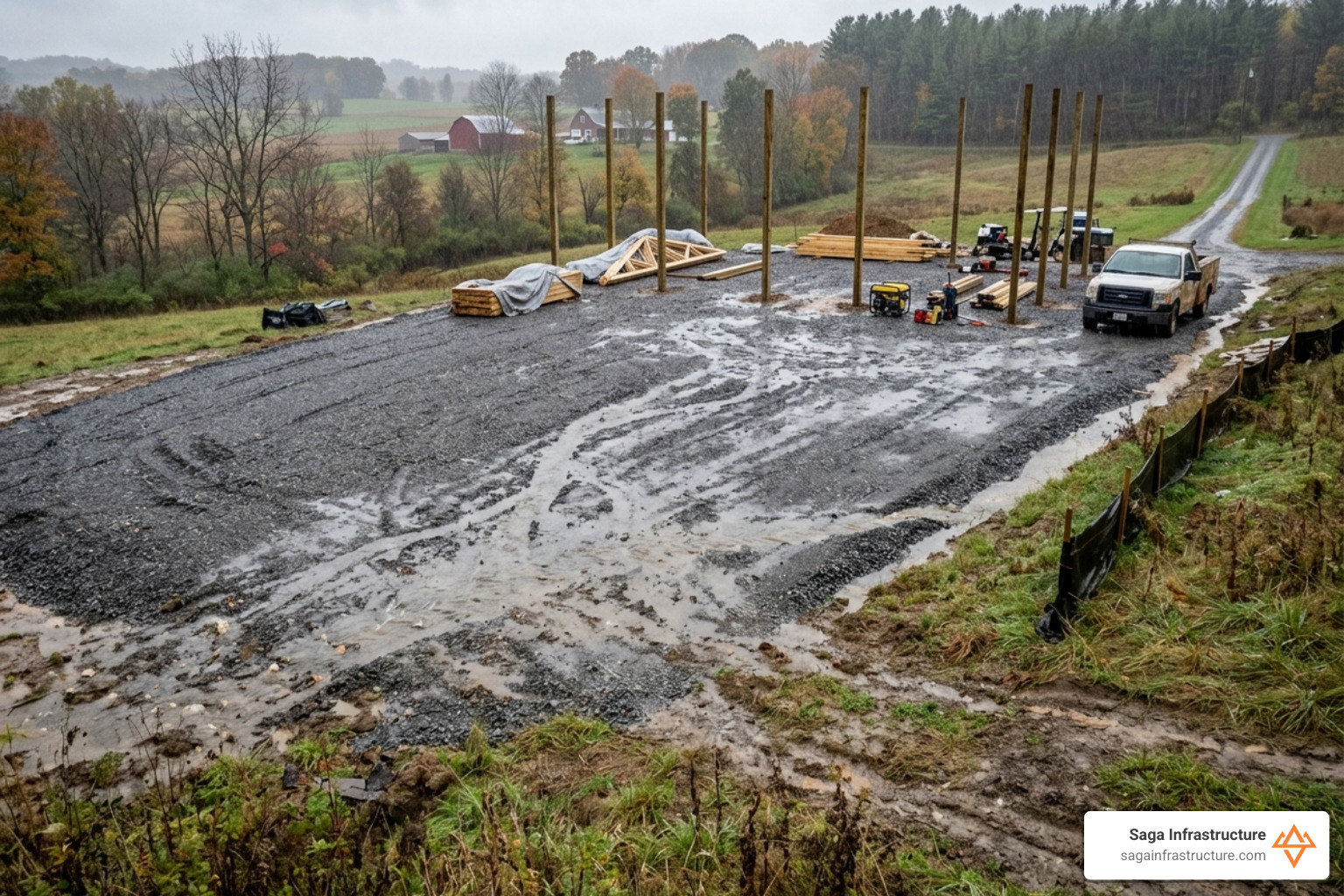
The ground should slope down away from the barn. For every 10 feet you move away, the ground should drop 6 inches. This keeps the barn dry during big storms.
For more tips, see The Essential Guide to Grading and Drainage Systems. You can also use drains or gutters to move water far away from the base.
Choosing the Right Gravel and Fill Materials
The dirt you use must be strong. We add dirt in thin layers. Then we use a heavy machine to pack it down tight. If you just dump a lot of dirt at once, it will stay soft and sink later.
Different dirt needs different care. Sandy soil in Florida needs a little water to pack down. Clay soil in Texas can grow or shrink when it gets wet.
| Material Type | Best Use | How Tight? |
|---|---|---|
| #2 Gravel | Big rocks for drainage | Very High |
| #53 Stone | Top layer to stay still | Great |
| Clean Sand | Under concrete floors | Good |
| Topsoil | For grass only | Bad |
As Site Prep for Pole Barns says, mixing big and small rocks makes a very hard floor.
Calculating Gravel Needs for Site Prep for Pole Barn Pads
You need to know how much rock to buy. Use this math: (Length x Width x Thickness in feet) / 21.6 = Tons of Rock.
Make sure big trucks can reach your site. They need a wide path to turn around. Read more at The Groundwork Essentials for Your New Construction Project.
Digging Post Holes and Foundation Requirements
Now it is time to dig. Most barn holes are 18 inches wide. Some are 24 inches wide for big parts.
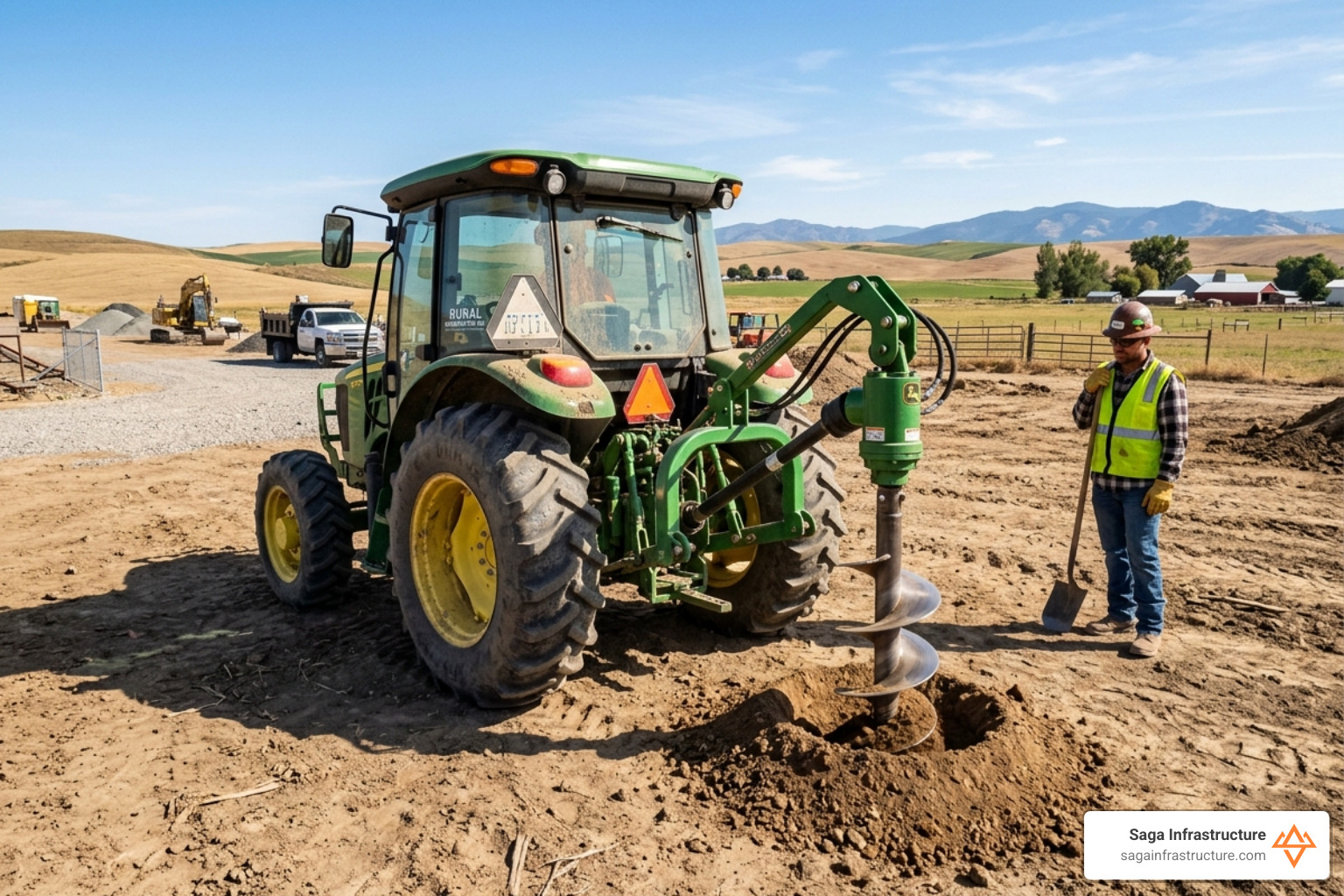
We dig about 40 inches deep. We put concrete at the bottom of the hole. This stops the post from sinking into the ground. If you want a concrete floor, use wood boards around the edge. These hold the rocks in place. See How to Prep Your Shed Site Like a Pro for more help.
Frequently Asked Questions about Pole Barn Site Prep
Should I put rocks down before or after digging?
Put rocks down first. It is easier to move machines on rocks than in mud. Then dig your holes through the rocks.
What is the best rock to use?
Use big rocks first. Then put smaller rocks on top. This makes a hard, dry surface that you can drive on.
How much does it cost?
It depends on your land. Flat land is cheaper. Land with a hill costs more because you need more dirt and work. It usually costs about 10% to 20% of the total barn price.
Conclusion
At Saga Infrastructure, we want to help you build things that last. We work with local teams to do a great job. Proper site prep for pole barn projects keeps your barn safe for a long time.
If you follow these steps, your barn will stay dry and level. If you need help with a big project, Let’s start the conversation at Saga Infrastructure. We build things the right way from the ground up.