
What You Need to Know Before Breaking Ground on Your New Home
Land preparation for building a house is the very first step of building a home. It happens long before you build any walls.
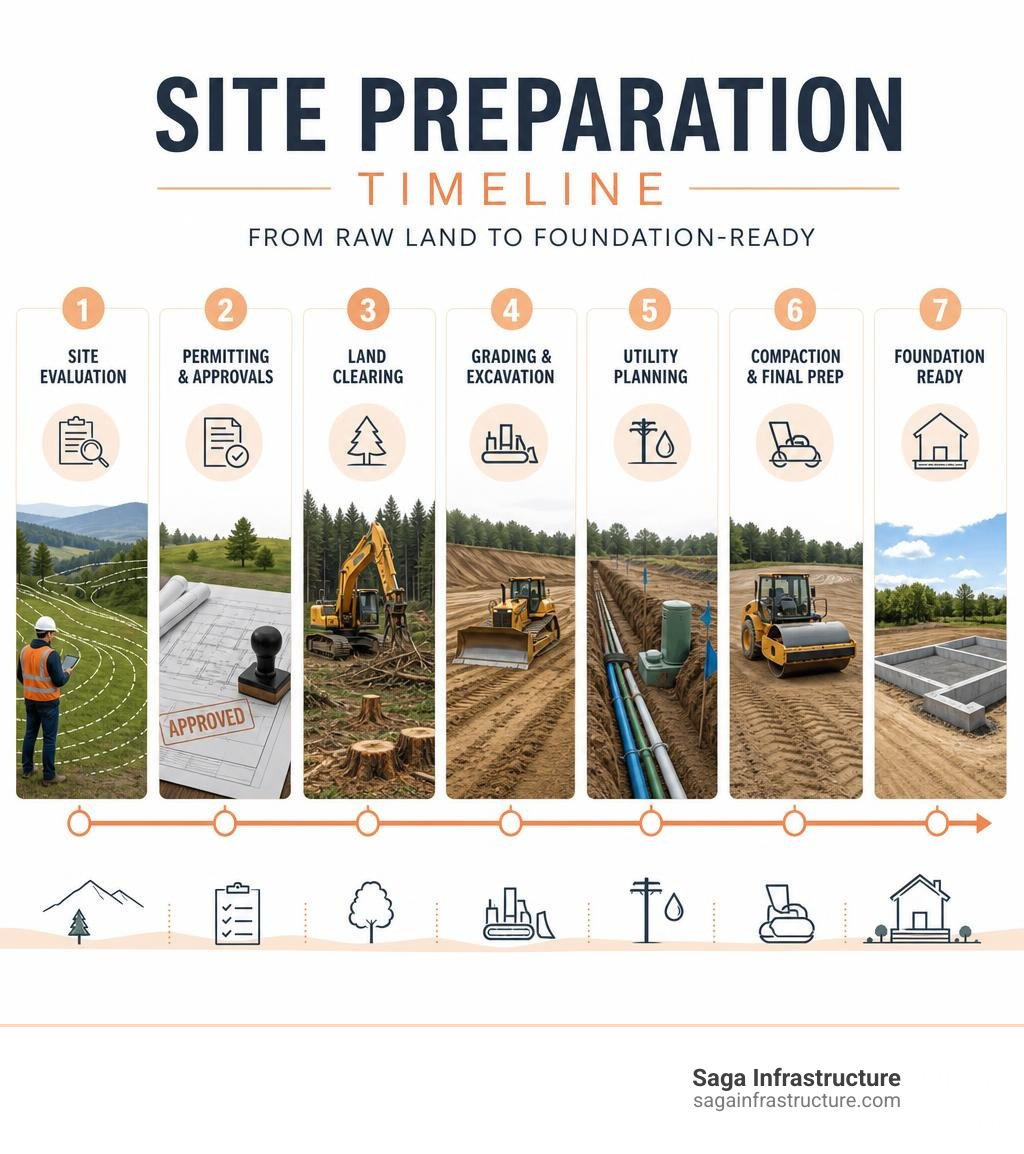
Here is a quick list of the main steps:
- Checking the land — look at the slope, water flow, and soil.
- Surveys and permits — find the property lines and get official permission.
- Testing the soil — make sure the dirt can hold a heavy house.
- Clearing the land — remove trees, bushes, and rocks.
- Grading and digging — flatten the ground and make water flow away from the house.
- Planning utilities — plan for power, water, and sewer lines.
- Packing the dirt — press the soil down tight so it is strong.
Many people do not realize how important this is. Preparing the land usually costs between $15,000 and $50,000. That is about 5 to 10 percent of the total cost to build the house. If you skip these steps, you can have big problems later. Fixing a bad site can cost 20 to 30 percent more later on.
For example, one builder skipped testing the soil on a $400,000 home. The house sank three inches on one side. It cost $87,000 to fix! That is a huge price for a mistake that was easy to avoid.
This guide will show you how to prepare your land the right way. You will save money and build a strong home.
I am Don Larsen, CEO of Saga Infrastructure. We help local contractors across the country do great work. I have worked on many big building projects. I know that preparing the land is the most important part of building a house. It is the foundation for everything else.
Land preparation for building a house terms simplified:
The Essential Steps of Land Preparation for Building a House
When you look at empty land, you might just see a nice view. But builders look at the dirt. We must follow a strict plan before we start building.
Skipping steps in site prep is like putting on your shoes before your socks. It does not work. You will have to start over. Good site clearing and excavation turn wild land into a safe place for a house.
Why Soil Testing is Critical in Land Preparation for Building a House
You cannot tell if soil is good just by looking at it. Dirt that looks dry might have big problems underneath. Testing the soil is a must. It costs between $500 and $2,000. But it can save you from a $50,000 foundation failure.
A soil report tells us how strong the dirt is and how it moves.
- Florida: The soil here has a lot of sand. Sand drains water well, but it can shift easily. We also have to watch out for deep holes that can cause sinkholes.
- Texas: Much of Texas has clay soil. Clay acts like a sponge. It swells up when wet and shrinks when dry. This movement can crack concrete foundations easily.
- Arizona: Here, we find a very hard layer of dirt called caliche. It is like rock. It is very hard to dig and needs big machines to break it.
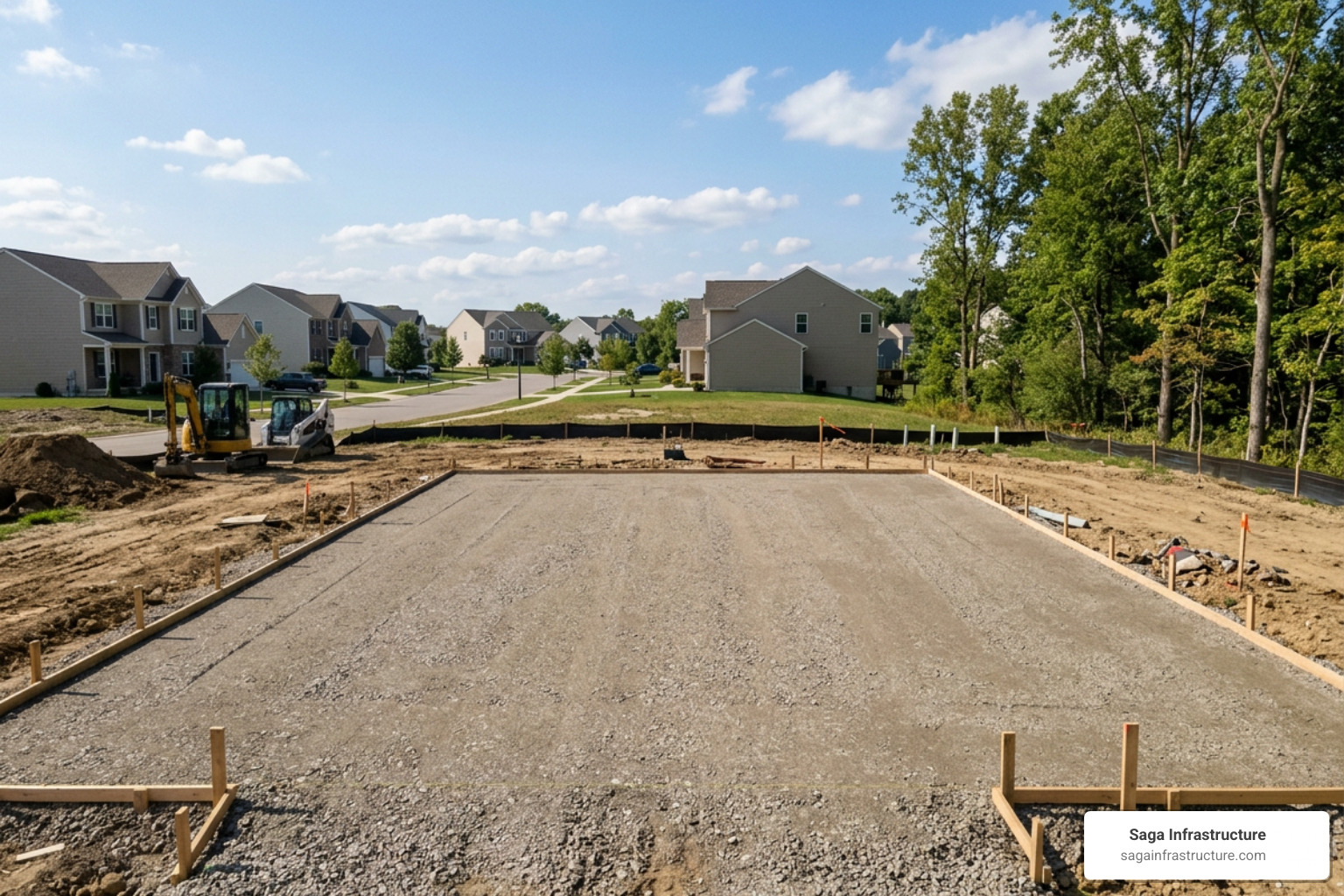
Once we know the soil type, we pack it down. This is called compaction. The dirt under your house must be packed very tight. We do this in thin layers. Never just trust a builder who says the dirt is packed. Always ask for the official test results.
Surveying, Zoning, and Securing Permits
Before we cut down any trees, we must find the exact property lines. A land survey costs between $800 and $2,000. It shows where your land ends and where you cannot build.
Next are setbacks. These are local rules about how far your house must be from roads and neighbors. If you ignore these rules, the city might make you tear down your work.
You also need permits. These are official permissions from the city. They can cost from a few hundred dollars to over $20,000. If you clear a lot of land, you will need special permits to protect local water from mud and dirt.
Clearing, Excavation, and Rough Grading
Now, the big machines can start. First, we clear the land. This means removing trees, bushes, and rocks. We also must dig up tree roots and stumps.
If you leave tree stumps under your driveway or house, they will rot over time. This leaves empty holes underground. Then, your concrete will crack and sink.
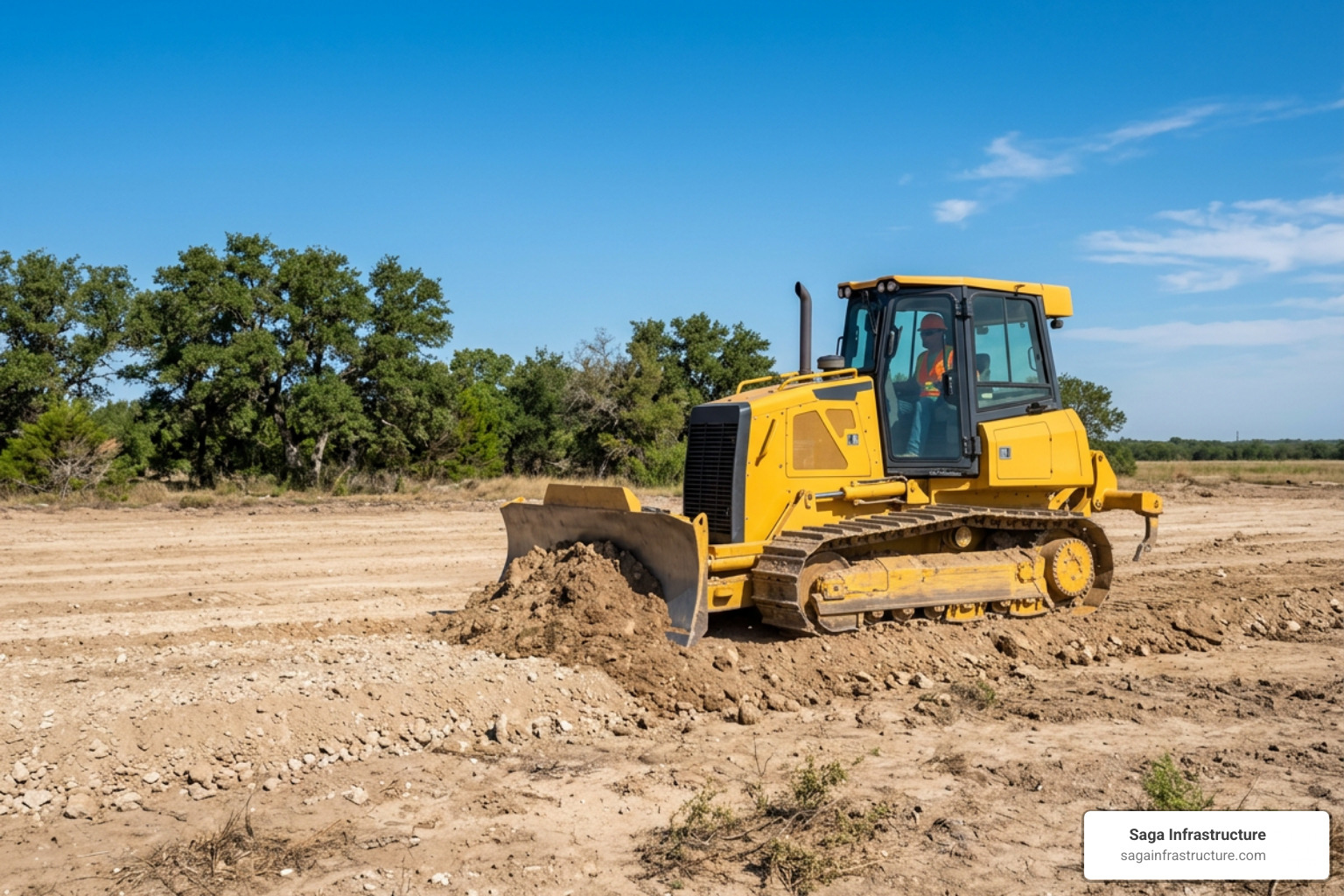
Next, we shape the land. We dig dirt from high spots and use it to fill in low spots. This makes a flat area for the house. It also makes sure the ground slopes away from the house so water runs off.
Managing Utilities, Drainage, and Site Differences
Preparing a lot is not just about the house. We also have to plan for water, power, and waste. This means we need good grading and drainage systems.
Planning and Installing Essential Utilities
If you build on wild land, you must bring in your own power, water, and sewer.
- Power: If there are no power lines nearby, bringing them to your site can cost $10,000 or more. You will also pay $1,700 to $4,500 for temporary power during construction.
- Water: If you cannot connect to city water, you must drill a well. This costs between $5,000 and $15,000.
- Sewer: If there is no city sewer, you need a septic system. This costs between $6,000 and $20,000.
We must be very careful when digging. In the United States, workers hit underground lines 400,000 times a year. This can stop your project for weeks and cost a lot of money. Always call 811 to mark underground lines before you dig.
Designing Drainage and Grading to Protect Your Foundation
Water always finds a way in. If water flows toward your house, you will have big problems. Poor drainage is the main cause of wet basements and cracked foundations.
To prevent this, we slope the ground away from the house. The ground should drop at least one-quarter inch for every foot. This slope should go out for at least ten feet.
We also dig shallow ditches called swales. These swales guide rainwater safely away. We use special fences to keep loose dirt from washing onto your neighbor’s yard.
How Site Prep Differs for Flat, Wooded, and Sloped Lots
Every piece of land is different. The type of lot you have changes how we prepare it.
- Flat Lots: These are the easiest and cheapest to prepare. But even flat lots usually have small bumps. They also need careful planning so water does not puddle.
- Wooded Lots: Cutting down trees takes a lot of work. It can add $5,000 to $15,000 to your budget. We want to save nice, mature trees. Mark the trees you want to keep with bright orange tape so they do not get hurt.
- Sloped Lots: Building on a hill requires a lot of digging. We often have to build strong walls to hold the dirt in place. These lots also need smart plans to handle fast-moving rainwater.
Cost Breakdown and Timelines for Site Prep
Preparing your land costs a lot of money and takes time. Knowing the real costs of site prep helps you plan your budget.
Budgeting for Land Preparation for Building a House
Costs can change a lot depending on your land. Normal digging is cheap. It costs about $5 to $15 per cubic yard. But if we hit hard rock, we have to use heavy hammers. This can cost $50 to $200 per cubic yard. That is a huge jump in price!
Here is a simple guide to typical costs:
| Lot Type | Description | Estimated Site Prep Cost |
|---|---|---|
| Flat & Cleared | Easy to reach, nearby utilities, very few trees | $10,000 – $20,000 |
| Standard Residential | Some trees to clear, minor grading, normal utilities | $15,000 – $35,000 |
| Sloped or Wooded | Lots of trees, lots of digging, no utilities nearby | $40,000 – $60,000+ |
| Challenging/Remote | Steep hills, hard rock, very long utility lines | $75,000+ |
Understanding the Site Prep Timeline
How long does it take to get land ready? For a flat lot, the physical work might only take 2 to 3 weeks.
But if we have to clear many trees, break rock, or run long power lines, it can take 6 to 8 weeks.
Getting permits from the city is the biggest wildcard. It can take from 4 weeks to several months. Bad weather can also slow things down. Heavy rain or extreme heat can stop the work completely.
Choosing the Right Contractor and Avoiding Costly Mistakes
Preparing land is a technical job. You need to find the best local excavation services and avoid common mistakes.
Common Site Prep Mistakes to Avoid
Most big mistakes are easy to avoid. Here are the most common ones:
- Skipping the Soil Test: Trying to save $1,000 on a soil test can cause your house to sink. This can cost tens of thousands of dollars to fix later.
- Bad Drainage Planning: If you do not plan where rainwater will go, you will get puddles and leaks in your basement.
- Forgetting to Call 811: Hitting a gas or power line is very dangerous. It will stop your project and cost a lot of money.
How to Hire a Qualified Excavation Contractor
Do not just hire the cheapest contractor. Look for a team with local experience.
Make sure they have a license and insurance. Ask to see their past work. A good contractor will gladly show you their work and explain how they pack the soil and handle water.
This is where Saga Infrastructure can help. We partner with the best local construction teams. We combine their local knowledge with our national resources. This ensures your land is prepared the right way.
Frequently Asked Questions about Site Preparation
How long does land preparation typically take?
For most normal lots, the physical work takes 2 to 4 weeks. But when you add soil testing, surveying, and getting permits, the whole process takes 1 to 2 months.
Do I need permits for land clearing and site preparation?
Yes. In almost all areas, you need permits before you can cut down trees or move dirt. If your land is near water or protected areas, you may need special environmental permits too.
What happens if soil conditions are worse than expected?
If the soil is weak, we can dig it out and replace it with strong dirt. In areas with clay, we might need to change the foundation design. We can use extra steel or deep supports to keep the house safe.
Conclusion
Preparing your land is the most important step of your build. It protects your investment and keeps your home strong for a long time.
At Saga Infrastructure, we work with the best local builders to get great results. We help you from the very first shovel of dirt to the final grade.
If you are ready to prepare your land, let’s talk. Partner with Saga Infrastructure Solutions and build your dream home on a foundation you can trust.