
How Much Does Site Prep Really Cost
What Does Site Prep Really Cost Per Square Foot?
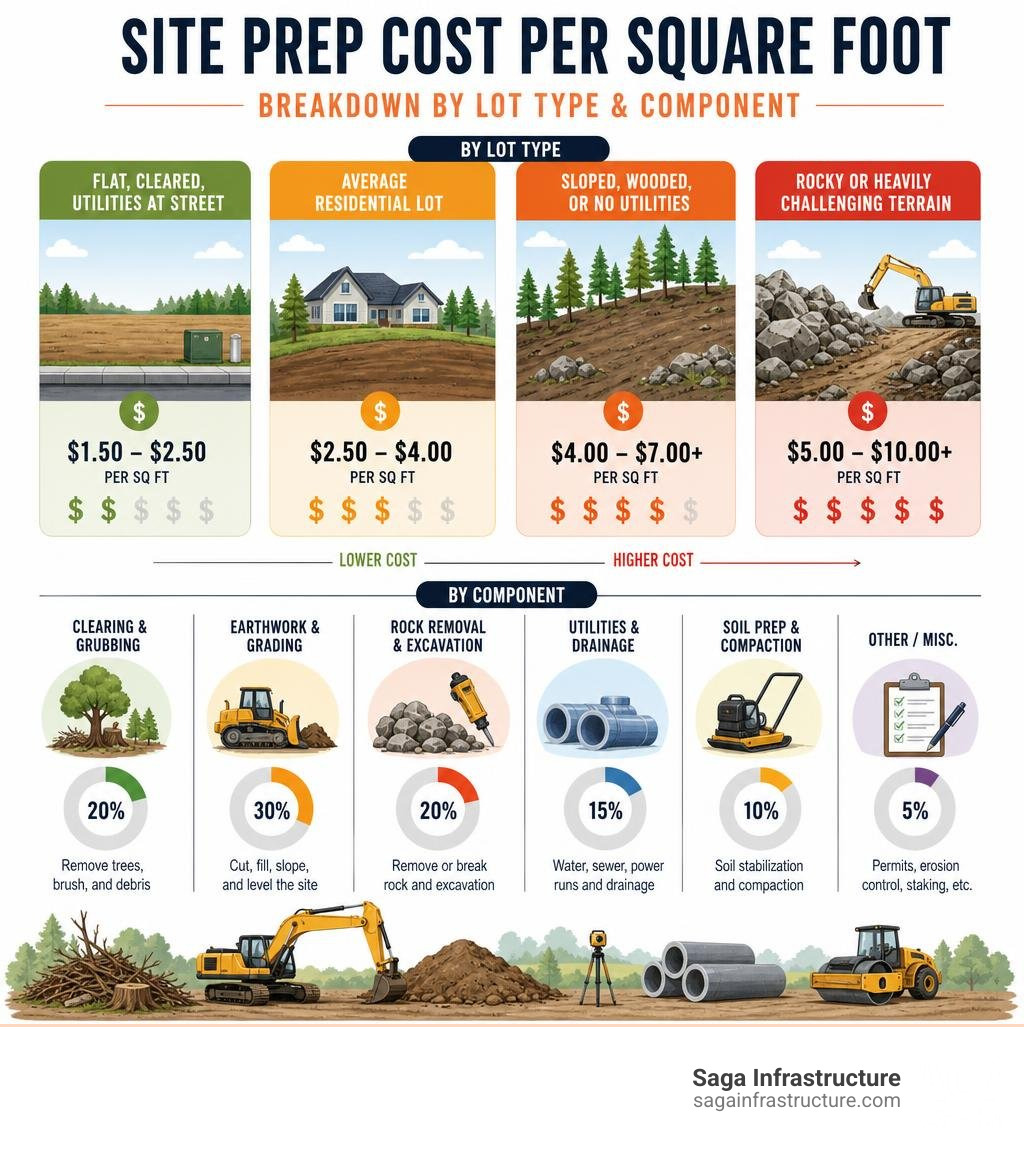
Preparing your land for building usually costs $1.50 to $5.00 per square foot. Most people pay about $3.80 per square foot in 2026. Here is a quick look at the costs:
- Flat, clean lot with utilities nearby: $1.50 to $2.50 per sq. ft., or about $10,000 to $20,000 total.
- Normal yard: $2.50 to $4.00 per sq. ft., or about $15,000 to $35,000 total.
- Sloped lot with lots of trees and no utilities: $4.00 to $7.00+ per sq. ft., or about $40,000 to $70,000+ total.
- Rocky or very hard land: $5.00 to $10.00+ per sq. ft., or about $50,000+ total.
These prices can change fast. It depends on your soil, trees, and how close you are to power and water.
Many people get surprised by the cost. Builders often do not include site prep in their first price. Removing trees, blasting rocks, and putting in pipes cost extra. One homeowner skipped a $1,500 soil test. Later, they had to spend $18,000 to fix their foundation because the clay soil was bad. That is a huge surprise!
Knowing these costs before you start helps you save money.
My name is Don Larsen. I am the boss at Saga Infrastructure. I have spent my career working on big building projects. I know how to keep site prep costs low. In this guide, I will help you understand these costs so you can plan your project.
Quick links to help you:
Average Site Prep Cost per Square Foot in 2026
When you build a new house, you need to plan your budget. In 2026, preparing a basic yard costs about $3,800. But a full home site usually costs between $15,000 and $35,000. If the land is wild and has no roads or power, it can cost $50,000 to $70,000 or more.
The cost per square foot goes down when the project is bigger. This is because moving big machines to the site costs the same whether the land is small or large.
According to How Much Does Site Preparation Cost? [2026 Data] | Angi, here are the average costs for 2026:
- Small pad, 1,000 sq. ft.:
- Easy flat, cleared lot: $1.50 to $2.00 per sq. ft.
- Moderate lot with some trees or slope: $2.50 to $4.00 per sq. ft.
- Difficult lot with heavy woods, rock, or slope: $5.00 to $10.00+ per sq. ft.
- Typical home site, 2,500 sq. ft.:
- Easy flat, cleared lot: $1.50 to $2.50 per sq. ft.
- Moderate lot with some trees or slope: $3.00 to $5.00 per sq. ft.
- Difficult lot with heavy woods, rock, or slope: $6.00 to $12.00+ per sq. ft.
- Large lot, 1 acre or 43,560 sq. ft.:
- Easy flat, cleared lot: $0.11 to $0.25 per sq. ft.
- Moderate lot with some trees or slope: $0.25 to $0.50 per sq. ft.
- Difficult lot with heavy woods, rock, or slope: $0.60 to $1.50+ per sq. ft.
- Acreage, 5+ acres:
- Easy flat, cleared lot: $0.05 to $0.15 per sq. ft.
- Moderate lot with some trees or slope: $0.15 to $0.35 per sq. ft.
- Difficult lot with heavy woods, rock, or slope: $0.40 to $1.00+ per sq. ft.
Preparing a small yard might cost more per square foot than a huge field. But the total cost for a big field is still much higher because there is so much more land to clear.
Key Components of Site Preparation and Their Costs
Site prep is not just one job. It is a list of steps to make wild land ready for a building. If you skip a step, your building could crack or sink later.
To see where your money goes, you can read The Groundwork Essentials for Your New Construction Project. The work usually goes in this order:
- Clearing the Land: Taking away trees, bushes, and roots.
- Digging and Moving Dirt: Shifting dirt to make the ground flat.
- Grading: Making the ground slope slightly so water flows away from the building.
- Packing the Soil: Pressing the dirt down hard so it can hold a heavy building.
Let us look at each step and what it costs.
Land Clearing and Tree Removal Costs
Before tractors can flatten the ground, we must clear the plants. Clearing land usually costs $5,000 to $11,000 per acre. That is about $0.11 to $0.25 per square foot.
If there are many trees, it costs more. According to How Much Does Site Prep Cost Before Building a House? (2026 Breakdown) – BuildWithEmil, removing trees for a normal home costs $1,500 to $6,000.
You also have to pull out the tree stumps and roots. This is called “grubbing.” If you leave roots in the dirt, they will rot. This leaves empty holes under the ground. Then, the ground sinks and cracks your house. Grubbing can cost $5,000 to $15,000, but it is very important.
Excavation, Grading, and Compaction Site Prep Cost per Square Foot
After clearing, we move the dirt. We want the ground flat where the house goes, and sloped elsewhere so rain runs away.
You can learn more about this in The Straight Dirt on Land Grading and Leveling. Here are the costs:
- Digging (Excavation): Costs $0.50 to $2.00 per square foot. This is for digging the hole for the foundation.
- Leveling (Grading): Costs about $0.06 to $0.11 per square foot.
- Packing (Compaction): Costs $0.20 to $0.50 per square foot.
Workers use big machines to scoop dirt from high spots and dump it in low spots. Then, they roll heavy machines over the dirt to pack it tight. This keeps the house from shifting.
Concrete Slab Site Prep Cost per Square Foot
If you are building on a flat concrete floor, the prep work must be very neat. You cannot just pour concrete on loose dirt.
According to Concrete Slab Site Prep Cost 2026: $1 to $5 Per Square Foot | concreteslabcost.com, preparing the ground for a concrete floor costs $1.00 to $5.00 per square foot. This work includes:
- Digging the Hole: Digging down 6 to 12 inches.
- Adding Gravel: Putting down 4 to 6 inches of crushed stone. This costs $0.50 to $1.50 per square foot. It stops water from rising into the concrete.
- Plastic Barrier: Laying down thick plastic sheeting. This costs $0.10 to $0.40 per square foot. It keeps the floor dry and stops mold.
- Final Packing: Making sure the gravel and dirt are locked tight.
Skipping these steps to save money is a bad idea. Fixing a cracked floor later can cost ten times more than doing it right the first time.
Environmental, Utility, and Lot Condition Cost Drivers
Now let us talk about other things that can change your costs.
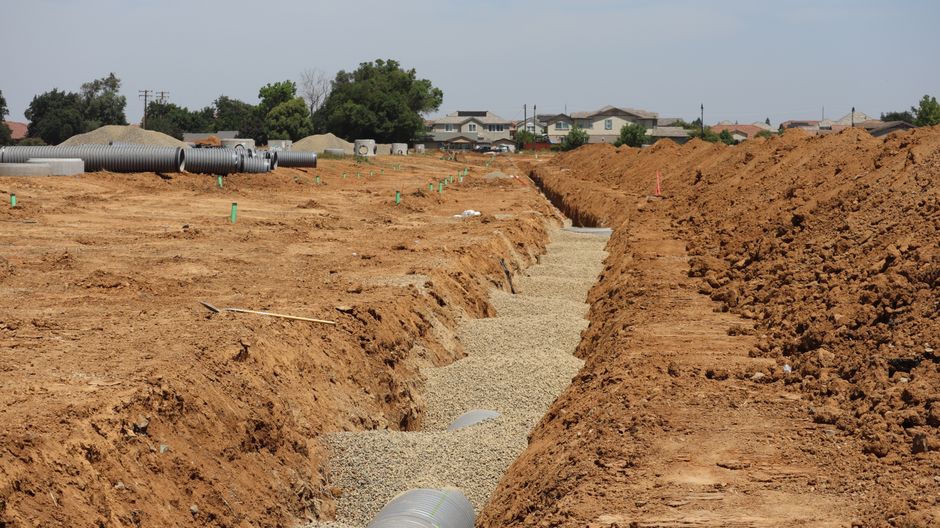
These factors are hard to see at first, but they can make your site prep cost much more.
Soil Testing, Erosion Control, and Drainage Systems
Before big trucks start, you must test the soil. A soil test costs $500 to $2,500. It tells you if your soil is sandy, rocky, or full of sticky clay.
When it rains, you must stop mud from washing away. Special fences and gravel paths help keep the dirt on your lot. These cost $1,000 to $4,000. You can read more in our Step-by-Step Guide to Erosion Control Solutions.
You might also need pipes to carry water away. These are called French drains. They cost $4 to $10 per foot. They protect your house from water damage.
Utility Connections and Site Access
If your land is wild, you need to bring in power, water, and sewer. This costs $20 to $120 per foot.
If the pipes are close to your house, it might cost $10,000 to $25,000. But if your house is far from the road, it can cost $30,000 to $50,000 or more.
You also need a road for heavy trucks to drive on. A temporary gravel road costs $2,000 to $12,000. Read more about this in our guide: Ready Set Build: A Complete Checklist for Commercial Site Preparation.
Flat and Cleared vs. Sloped and Wooded Lots
The shape of your land matters a lot.

A flat, clean lot with power nearby is the best. Preparing this land is easy and costs $10,000 to $20,000.
But a steep, woody lot is much harder. You have to cut down trees and move lots of dirt. You might also need to build strong walls to hold back the dirt. These walls cost $20 to $50 per square foot.
Steep hills also change how you build your house. You might need a basement instead of a flat concrete floor. This costs more money. To see why these choices matter, read Why Site Prep for House Construction Is Your Most Important Step.
Regional Cost Variations Across the US
Where you build changes the price. Labor and materials cost different amounts in different states. Saga Infrastructure works in several fast-growing states. Here is how the location affects costs:
- Florida (Minneola, Clermont): Florida has sandy soil. It is very easy to dig. But Florida is flat and wet. You must spend more money to keep water away from your house.
- Texas: Texas has clay soil. Clay swells up when wet and shrinks when dry. This can crack a house. You need special soil tests and strong foundations here.
- Arizona: Arizona is dry, but the ground is very rocky. Digging through hard rock requires special, expensive tools.
According to US Construction Costs by State: 2026 Guide & Pricing – 247Pro, knowing your local soil helps you avoid big surprises.
Frequently Asked Questions About Site Prep Costs
Here are answers to common questions about preparing your land.
How much extra money should I save for surprises?
You should save 15% to 20% extra money just for site prep.
When you dig underground, you never know what you will find. Workers might find buried trash, old pipes, water, or huge rocks. Having extra money ready means your project will not have to stop.
Does the builder’s price include site prep?
Usually, no. This is a mistake many people make.
Most builders will flatten the dirt at the very end. But they do not pay to clear trees, blast rocks, or bring in power lines. Always read your contract carefully. Ask your builder what is included and what you have to pay for yourself.
How long does site prep take?
For a normal, flat lot, site prep takes 1 to 3 weeks.
If you have lots of trees, rocks, or need long pipes, it can take 4 to 6 weeks. Bad weather can also slow things down. Heavy rain turns dirt into mud, and you cannot work on muddy ground.
Conclusion
At Saga Infrastructure, we know that a good building needs a strong start. We partner with great local construction companies, like Foshee Construction in Minneola, Florida. We give them the money and tools they need to grow, while keeping the local names and teams you already trust.
Whether you are building a house, a store, or putting in utility pipes, knowing your site prep cost per square foot is the first step. Working with local experts who know your soil and weather will help you start on solid ground.
Do you own a construction business and want to plan for the future? Or are you starting a big building project and need a partner you can trust?
Let us talk. Visit us at Saga Infrastructure today to see how we can build the future together.