Categories
Blog

Acquiring a Construction Company What You Need to Know

Acquiring a Construction Company What You Need to Know

Acquiring a Construction Company What You Need to Know

Why Buying a Construction Company is a Smart Choice

Buying a construction company is faster than starting a new one from zero. You get a business that is already making money. You also get workers, tools, and the licenses you need. You don’t have to spend years trying to find customers. You start with everything ready to go on the first day.

Good things about buying a company:

  • Money Right Away – You get paid from jobs that are already started.
  • Ready Workers – You have a team that already knows how to do the work.
  • Tools and Trucks – You get the machines you need without buying them new.
  • Licenses – The company already has the permits to work.
  • Happy Customers – People already know and trust the business name.

Many older owners are ready to retire soon. This means there are many great companies for sale. These businesses are strong, but they need a new leader to keep them growing.

But you must be careful. You need to check the tools and the work history. You should also look at the taxes. My name is Don Larsen. I lead a company called Saga Infrastructure. We buy construction businesses in the South. I have learned that you must look at the money and the people to do a good job.

Infographic showing the 7 steps of acquiring a construction company: 1. Define your acquisition criteria and investment thesis, 2. Research the market and find target companies, 3. Conduct preliminary due diligence and financial analysis, 4. Submit letter of intent and negotiate terms, 5. Perform comprehensive due diligence on operations and legal matters, 6. Secure financing and finalize purchase agreement, 7. Execute transition plan and integrate operations - Buying a construction company infographic

Why Buying a Company Helps You Grow

Completed infrastructure project - Buying a construction company

Buying a business is safer than starting a new one. The government says that old businesses stay open longer than new ones. Only about 3 out of 10 new businesses last for ten years.

When you buy a company, you skip the hard first years. You buy a name that people already like. This helps you grow in places like Florida, Texas, and Arizona. In these states, knowing people is very important.

Having Workers and Tools

Right now, it is hard to find good workers. When you buy a company, you get a team that already knows the rules. You also get trucks and machines. Buying new machines takes a long time and costs a lot of money. If you buy a company, you get the tools right away.

Making Money

Is it a good deal? Most owners make about $100,000 a year, but many make much more. Some big companies make over $1 billion!

What You Get Starting New Buying a Company
Time to make money 6 to 18 months Day 1
Tools Costs a lot Costs less
Workers Hard to find Already there
Risk Very high Medium

How Much is the Company Worth?

Figuring out the price of a company is not just simple math. We look at how much money the company makes before paying bills like taxes.

Other ways to find the price:

  • Look at the tools: Add up the value of all the trucks and machines.
  • Look at the future: Guess how much money the company will make later.
  • Look at other sales: See what other companies nearby sold for.

Two Ways to Buy

How you buy the company matters for taxes.

  • Buying Assets: You buy the trucks and the tools. This is usually better for the buyer. It helps you pay less in taxes later.
  • Buying the Whole Entity: You buy the whole legal name. Sellers like this because they pay less tax. But you might also get the company’s old problems.

Location Matters

Where the company is located is very important. We like the “Sun Belt” because many people are moving there. A company in a growing town is worth more than one in a town where no one is building.

Checking the Business Carefully

You must check everything before you buy. Look at the list of jobs the company is doing now.

A long list of jobs is good, but only if the company makes money on them. We check:

  • Future Jobs: Is there enough work for the next year?
  • Getting Paid: Do the customers pay their bills on time?
  • Suppliers: Does the company owe money to people who sell them dirt or pipes?

Reading the Rules

Construction has many contracts. You must read them to make sure they stay valid after you buy the company. You also need to check for old mistakes. If a pipe breaks in three years, who has to fix it? You also need to make sure the company can get insurance for big jobs.

Checking the Team

A company is only as good as its workers. Check their safety record. If workers get hurt a lot, insurance will cost too much. If only the owner knows how to do the work, the company will be hard to run without them.

How to Find and Pay for a Company

Finding a good company to buy takes work. Some are listed on websites like LoopNet. But the best deals are found by talking to people in the industry. At Saga, we talk to owners long before they are ready to sell.

Ways to Pay

You do not need all the cash at once. You can:

  • Get a Government Loan: The SBA helps people buy small businesses.
  • Pay the Owner Over Time: The seller lets you pay them back using the money the business makes.
  • Find Partners: Other people can give you money to own a part of the business.

Where to Look

You can look at:

  • Groups for Builders: Local clubs for construction workers.
  • Experts: Ask accountants or lawyers if they know anyone retiring.
  • Just Ask: Sometimes you can just ask an owner if they want to sell.

Managing Risks and Starting Out

Buying a business is like getting married. The wedding is easy, but the marriage takes work.

The biggest risks are:

  1. The Owner Leaves: Customers might only like the old owner.
  2. Hidden Problems: Old lawsuits or unpaid taxes.
  3. Safety Issues: A bad safety record can stop you from getting government jobs.

How to Stay Safe

We test the business. We ask, “What if the market gets bad?” We use insurance and experts to check the books. Always have a pro look at the trucks to make sure they aren’t broken.

Making a Good Start

At Saga, we want to keep the good things the old owner built. To do this:

  • Keep the Workers: Tell the team their jobs are safe.
  • Meet the Customers: Have the old owner introduce you to the big bosses.
  • Go Slow: Don’t change everything on the first day. Keep what works and fix the rest slowly.

Common Questions

Why is buying better than starting new?

Buying gives you a history. In construction, having a history helps you win jobs. You get a head start that a new business does not have.

How do I know the price of a trade company?

Companies like electricians or plumbers make good money. We look at their tools and their list of future jobs to find the right price.

What are the biggest risks?

The biggest risks are hidden money problems, losing the best workers, or the housing market going down. Checking everything carefully is the best way to stay safe.

Conclusion

Buying a construction company can help you make a lot of money. It is about more than just math. It is about taking over a business that someone worked hard to build.

At Saga Infrastructure, we want to help these businesses grow. We partner with owners in Florida, Texas, and Arizona. We keep their local name but help them get bigger. If you own a business and want to retire, talk to us today. Let’s build the future together.

Categories
Blog

Don’t Get Caught Flat-Footed: Master Construction Firm Succession Planning

Don’t Get Caught Flat-Footed: Master Construction Firm Succession Planning

Don’t Get Caught Flat-Footed: Master Construction Firm Succession Planning

Why Construction Succession Planning Can’t Wait

Succession planning construction firms is very important. Many workers will retire by the year 2031. You need a plan for your business when you stop working.

Here is what you need to do:

  1. Start Early – Start 5 to 10 years before you want to leave.
  2. Pick a Path – Give it to family, sell it to workers, or sell it to another company.
  3. Keep Trust – Make sure the bank and insurance companies trust the new boss.
  4. Fix Legal Stuff – Use a lawyer to help with the move and taxes.
  5. Share Knowledge – Teach the new boss what you know and introduce them to clients.

Many companies do not have a plan. This is a big risk. If the boss leaves suddenly, the company could fail. You worked hard to build your business. You want it to stay strong after you leave.

The good news? You have many choices. You can pass the business to your kids. You can sell it to your team. Or you can find a partner who likes what you built. The best thing to do is start talking about it now.

I am Don Larsen. I help succession planning construction firms across the country. I have seen how a good plan helps a business grow even after the owner leaves.

Infographic showing the 5-step succession planning timeline: 1) Assess current state and define goals (Year 1), 2) Identify and develop successors (Years 1-3), 3) Obtain business valuation and structure deal (Years 2-4), 4) Execute legal agreements and begin transition (Years 3-5), 5) Complete knowledge transfer and finalize exit (Years 5-7) - succession planning construction firms infographic

Why Succession Planning for Construction Firms is Important

construction blueprint and hard hat - succession planning construction firms

Construction workers are great at planning buildings. But many do not plan for the future of their company. Over half of companies do not have a plan for when the owner leaves.

This is a big risk. In construction, the owner is often the person who keeps everything moving. If the owner leaves without a plan, the company might fall apart. Planning ahead is the only way to keep the business safe.

Many Workers are Retiring

Many workers will retire soon. By 2031, almost half of the workers in the U.S. will be old enough to retire. This includes bosses and managers. When they leave, they take their knowledge with them. You need to find new people to take their place so your company can keep growing.

Keeping the Bank Happy

In construction, you need the bank and insurance companies to trust you. They give you the money and bonds you need for big jobs. They trust the people running the company. If the boss changes suddenly, they might stop helping. You need to train the new boss for a long time so the bank stays happy.

Choosing the Best Way to Leave Your Business

There are many ways to leave your business. The best way depends on what you want for your team and your money.

Way to Leave Best For… Good Part Hard Part
Family Family businesses Keeps the name Family fights
Sell to Workers Large teams Good for workers Costs a lot to start
Sell to Others Getting cash fast Quick money Culture might change
Partnership Keeping a legacy More growth Learning to work together

Giving the Business to Family

Many construction firms are family businesses. But you cannot just guess that your kids want to run the company. You need to talk to them. You also need legal papers to make sure everything is fair. It helps to have a team of experts to help with these talks.

Selling to Your Workers

Selling to your workers is called an ESOP. This is a great way to leave slowly. You can sell parts of the company over 5 or 10 years. This makes your workers feel like owners. They will want to stay and work hard because they own part of the business.

You would not build a bridge without a plan. Your business needs a plan too. You need to know how much your company is worth and how to handle taxes.

What is Your Company Worth?

How much money is your business worth? A pro can help you find the right price. They look at your tools, your jobs, and your good name. Knowing this price helps you plan for your retirement.

Taxes and Rules

The government will want some money when you sell your business. This is called a tax. A good plan can help you pay less in taxes. You also need to decide who makes the big choices when you are gone. These are the hidden traps that can cause problems if you do not have a plan.

Training the Next Boss

You need to find and train new leaders. This is a very important part of succession planning construction firms. You need to find people who are good at the work and good at leading others.

Finding the Right Person

A new boss needs to know how to build things and how to run a business. They need to learn about money and how to win new jobs. You can teach them by letting them watch you work. This is the best way to see if they are ready.

Sharing What You Know

How do you teach someone 40 years of work in a short time? You start by writing down how you do things. Use computers to keep track of your work. You should also take the new boss to meet your best customers. Show everyone that you trust the new leader. This helps the company stay strong for a long time.

Avoiding Mistakes

Even good plans can have problems. The biggest mistake is waiting too long to start.

Do Not Wait Until the Last Minute

If you try to leave in only two years, you will have fewer choices. It is best to start 5 or 10 years before you want to stop working. This gives you time to fix any problems. It also gives the new boss time to learn.

Learning to Let Go

Leaving your business is hard. Many owners find it tough to stop being the boss. The best way is to move into a smaller role. If a worker calls you with a problem, tell them to call the new boss. If you keep fixing everything, the new leader will never learn how to lead.

Common Questions

How long does it take to make a plan?

It usually takes 3 to 7 years. Starting early gives you time to train new leaders and keep the bank happy.

What is a big mistake people make?

The biggest mistake is waiting too long. Another mistake is thinking your kids want to run the business without asking them first.

Why is selling to workers good?

It lets you leave slowly and helps with taxes. It also makes workers want to stay because they own part of the company.

Conclusion

At Saga Infrastructure, we care about the history of your business. We do not want to change what you built. We want to help it stay strong. We use our money and tools to help local firms grow.

If you own a business in Florida, Texas, or Arizona, let’s talk. We can help you plan for your next step. Do not wait until it is too late. Let’s build the future of your firm together.

Categories
Blog

The Blueprint for Success: Understanding Construction Funding Options

The Blueprint for Success: Understanding Construction Funding Options

The Blueprint for Success: Understanding Construction Funding Options

What is Capital for Construction?

Capital for construction is not just money in a bank. Capital is anything that helps you make money. It is the cash in your pocket. It is the big machines in your yard. It is also the wood and bricks on the job site.

Business Owners must manage these things carefully. You need cash to pay bills. You also need tools to do bigger jobs. Most builders use three main types of capital to keep working.

Working Capital

Working capital is very important. It is the money you have right now to pay for things. It helps you pay your workers every Friday. It helps you buy materials before the price goes up.

In places like Florida or Arizona, work can change fast. Having cash on hand helps you stay in business. Business Funding for Construction Companies helps you get cash when you are waiting to be paid by a customer.

Debt Capital

Debt capital means borrowing money. You must pay it back with a little extra called interest. This is a good way to buy big things that last a long time.

Builders use debt for:

  • Big Machines: Buying a new digger without using all your cash.
  • Land: Buying a place to park your trucks and tools.
  • Trucks: Getting your team to the job site in Texas or Arizona.

Using debt keeps your cash free for daily costs. If the new machine helps you make more money than the loan costs, it is a smart move. But you need a good credit score to get these loans.

Construction Loans vs. Regular Loans

Regular business loans give you all the money at once. Construction is different. Money for building comes in steps.

Banks give you money as you finish parts of the project. For example, you get money after the floor is done. This keeps the bank safe. It also makes sure you have money when you need it for the next part of the build.

Type of Loan What it is for How long it lasts
Construction Loan Building from the ground up 6 to 24 months
Bridging Loan Quick money for a short time 1 to 12 months
Development Finance Very big projects Up to 36 months

Getting these loans can be hard for First-Time Property Developers. Banks want to know you can finish the job on time and stay on budget.

Big Projects and Quick Loans

Development finance is for big projects like many houses or new roads. Bridging loans are for moving fast. If you see a great piece of land in Florida, you might use a bridging loan to buy it quickly before someone else does. Our Saga Team sees many builders use these.

Getting Paid Faster

Sometimes you finish a job but have to wait 90 days to get paid. Invoice financing helps you get that money sooner. You sell your bill to a company. They give you the cash right away. This is not a loan. It is just getting your own money faster so you can start the next job.

How to Get the Money You Need

You must know how much money you need before you talk to a bank. You need a good plan.

contractor in a hard hat reviewing financial documents and blueprints - Capital for construction

At Saga, we help you look ahead. You need to know the Gross Development Value (GDV). This is what the project will be worth when it is finished.

Always save extra money for surprises. We suggest saving 10% more than you think you need. Things like rain or high prices can happen. You can see how we help on our About Us page.

What Banks Want to See

To get a loan in Texas or Florida, you need:

  1. A Plan: A list of what you will build and when.
  2. Permits: Papers from the city saying you are allowed to build.
  3. Money Records: Papers showing how much money you made in the past.
  4. Insurance: To protect you if something goes wrong on the site.

Picking the Right Partner

Don’t just pick the bank with the lowest price. Pick a partner who knows building. If a storm hits Florida, will they help you change your plan? Look for a partner who understands your town. If you work in Minneola or San Antonio, Contact Us to talk.

Common Questions

How long does it take to get a loan?

It usually takes 4 to 8 weeks. It takes time to check your plans and get all the papers ready.

How much can I borrow?

Most banks lend 70% to 80% of the total cost. You must pay for the rest with your own money.

Can new builders get loans?

Yes, but it is harder. Banks might charge more interest because they don’t know you yet. It helps to have an expert on your team to show the bank you can do the work.

Conclusion

Getting Capital for construction is about finding the right help. You need money to run your business every day and money to grow.

finished infrastructure project showing a clean new road and utility layout - Capital for construction

At Saga Infrastructure, we believe in local builders. We want to help you grow your business in Florida, Texas, and Arizona.

If you have a great company and want to grow, let’s talk. We can build a great future together.

Categories
Blog

From Local to National: Uncovering the Best Construction Companies for Your Project

From Local to National: Uncovering the Best Construction Companies for Your Project

From Local to National: Uncovering the Best Construction Companies for Your Project

What Highway Construction Companies Do

Highway construction companies are teams that build roads. They do everything from moving dirt to painting lines. In states like Florida, Texas, and Arizona, many people are moving in. These states need more roads and bridges to help people get around. A good company helps cities grow safely.

These companies do many kinds of jobs. Moving dirt is usually the first step. They move huge piles of earth to make the ground flat for new roads.

Common jobs include:

  • City Roads: Building big highways in busy cities.
  • Country Roads: Connecting small towns with simple roads.
  • Entry Roads: Making paths to new houses or stores.
  • Bridges: Building roads that go over water or other roads.
  • Water Pipes: Putting in pipes so rain does not flood the road.

They also fix old roads. They fix holes and paint new lines so drivers can see at night.

Special Jobs

Companies have different teams to make sure every part of the job is done right. Some companies do all the work themselves. They use their own workers and tools. This helps them do a better job.

Special jobs include:

  • Leveling: Making the ground flat.
  • Paving: Laying the smooth black asphalt we drive on.
  • Concrete: Building walls and bridge supports.
  • Pipes: Putting water and power lines under the ground.
  • Clearing Land: Getting the ground ready for big buildings.

New Tools

Companies now use high-tech tools. This helps them work fast and save money. It also makes the road last a long time.

They use GPS on big tractors. This helps the machines move dirt perfectly. They also use drones to fly over the site and take pictures. This helps them see the progress and find problems early.

U.S. Industry Rates and trends - highway construction companies infographic

Other new tools include:

  • 3D Maps: Making a computer model of the road first.
  • Smart Machines: Using sensors to guide big tools.
  • Road Sensors: Putting small tools in the road to check traffic.

How Big Road Projects Work

construction site plan - highway construction companies

Building a road is like leading a big team. There are many parts that must happen in the right order. At Saga Infrastructure, we help local companies manage these big jobs. You can learn more About Us.

Here are the steps to build a road:

  1. Planning: Deciding where the road goes and finding money.
  2. Design: Engineers draw the plans for the road.
  3. Building: Workers clear the land and lay the foundation.
  4. Managing: Keeping the work on time. This means making sure there is enough gravel and asphalt. Good managers plan for rain or other delays.

Ways to Buy a Project

There are different ways to pay for and plan a project.

Way What it is Best For
Bid-Build The plan is finished first, then companies give a price. Simple roads.
Design-Build One team does the plan and the building. Fast projects.
Partnerships Private companies help pay for the road. Very big projects.

Costs and Rules for Companies

Building a highway costs a lot of money. It can cost millions or even billions of dollars. A few things change the price:

  • The Land: Is it flat or a mountain? Rocks and swamps make it cost more.
  • Materials: The price of asphalt and concrete changes often.
  • Water: If the area floods, the pipes must be bigger and cost more.

Because roads use public money, highway contractors must be checked first. This makes sure the company is good at its job and has enough money.

Applying can take 60 days. The state looks at the company’s safety and money. They want to know the job will be finished. Small companies can join Saga Infrastructure to get the money help they need to win big jobs.

Safety and the Earth

Safety is the most important thing. Working near cars is dangerous. Companies use strict rules and training to keep everyone safe. They have meetings every day and wear bright gear to prevent accidents.

Companies also care about the earth. They try to recycle 80% of what they use. They can grind up old roads and use them to make new ones. This saves money and keeps the earth clean.

Ways they help the earth:

  • Protecting Animals: Keeping local animals and water safe.
  • Recycling: Using old road bits again.
  • Cleaning Dirt: Fixing any dirty soil they find.
  • Filtering Water: Cleaning rain water before it goes into streams.

Companies use special codes to show what kind of work they do.

Common Questions

Why do roads cost so much?

Roads cost more if the land is hard to build on, like a swamp. The price of materials and workers also adds up. If many heavy trucks use the road, the pavement must be thicker. Thicker roads cost more but last longer.

How do workers stay safe?

Workers use cones and walls to stay away from cars. They also wear special vests. Some vests even vibrate if a truck gets too close. This helps them stay safe in busy areas.

Can I work in road building?

Yes! This industry has many good jobs. You can help your community and earn good pay. Jobs include:

  • Engineers: People who plan the roads.
  • Drivers: People who drive big tractors and pavers.
  • Managers: People who watch the budget and time.
  • Builders: People who work with concrete or power lines.

Conclusion

At Saga Infrastructure, we believe in local companies with big support. We help builders in Florida, Texas, and Arizona. We want these local teams to stay strong.

We give them money and tools so they can grow. They keep their names and their workers. Whether it is a new road or a big bridge, we help build things that last. We are proud to help local builders.

If you want to help your company grow, Contact Us today. Let’s build something great together.

Saga Infrastructure — Protecting What Built America.

Categories
Blog

Essential Infrastructure Projects Explained

Essential Infrastructure Projects Explained

Essential Infrastructure Projects Explained

Why Building Water Treatment Plants is Important

Water treatment plant construction is how we build places that make water safe. These plants turn dirty water into clean water that we can drink. They also clean water from our sinks and toilets before it goes back into the river.

Building these plants has five main steps:

  1. Picking a spot – Finding a safe place near water.
  2. Building the main parts – Making big tanks, pipes, and pumps.
  3. Adding cleaning tools – Putting in systems that kill germs.
  4. Testing – Making sure the water is clean before people drink it.
  5. Planning for the future – Making sure the plant stays in good shape.

These projects are very big. Some cost millions of dollars. A big plant can clean enough water to fill 68 huge swimming pools every day.

Building these plants is hard work. Builders must know how to work with big pipes and strong concrete. They also have to follow many rules to keep the water safe.

I am Don Larsen. I lead a company called Saga Infrastructure. We work with local builders to make these important plants. I have seen how much these plants help towns grow and stay safe.

Infographic showing the key stages of water treatment plant construction: Planning and Design (site selection, capacity planning, treatment technology selection), Permitting and Approvals (environmental review, regulatory compliance, local permits), Site Preparation (excavation, grading, foundation work), Structural Construction (basins, tanks, buildings, pipe installation), Equipment Installation (treatment systems, pumps, controls, SCADA), and Testing and Commissioning (water quality verification, system performance, operational training) - water treatment plant construction infographic

The Main Parts of a Water Plant

A water plant is a big group of buildings and pipes. It has huge pipes to move water and big tanks to hold it. It also has pumps to push water where it needs to go.

The first part of the plant is called the “Headworks.” This part catches big trash like sticks and rocks. This is important because it stops the trash from breaking the expensive machines later on.

Using the Right Materials

We have to use very strong materials. Water and chemicals can wear things out quickly. We use special concrete and metal that does not rust. This helps the plant last for a long time without breaking.

How the Water is Cleaned

Modern plants use special tools to clean water. Two common ways are using Ozone gas and UV light.

Feature Ozone UV Light
How it works A gas is put into the water Special light kills germs
What it does Makes water taste and smell better Kills tiny bugs that make people sick
What is needed Big machines to make the gas Special light bulbs and power

We also use sand and charcoal to filter the water. This catches tiny bits of dirt. Finally, we add a little bit of chlorine to keep the water clean as it travels to your house.

How We Plan and Build

You cannot just start digging to build a plant. You need a good plan first. You have to pick the right spot. It must be near water and safe from earthquakes.

One plant in Montana was built to hold extra water. This way, if there is a flood or a spill, the town still has clean water for weeks.

New Ways to Build

We use new tools to build better and faster:

  • Computer Models: We make a digital version of the plant first. This helps us find mistakes before we start building.
  • Building in Shops: We build some parts of the plant in a factory and then move them to the site. This is safer and faster.
  • Digital Tracking: We use computers to see how much work was done each day.

Solving Problems

Building is not always easy. Sometimes it rains too much or parts are hard to find. Safety is our most important rule. We want every worker to stay safe on the job.

We also follow many rules. These rules make sure the water is very clean. We want our plants to be the best they can be for the environment.

Fixing Old Plants

Sometimes we have to fix old plants instead of building new ones. Over time, tiny bugs can eat away at the concrete.

sewer repair work - water treatment plant construction

We fix these by:

  • Using special strong cement.
  • Filling cracks so dirty water does not leak out.
  • Putting a new surface on old walls.

New Ideas and Staying Strong

We build plants to be ready for anything. This means they must work even after a big storm or earthquake. We want the water to be back on in two days so families stay safe.

Helping the Earth

We use new ideas to help the earth:

  • Solar Power: We put solar panels on the tanks to get power from the sun.
  • Turning Waste into Power: We can turn the waste from the water into gas to run the plant.
  • Smart Computers: We use computers to watch every part of the plant. This helps us find problems fast.

We also build backup systems. If one pump breaks, another one starts working right away. This keeps the water flowing to the city.

Great Projects and How They Help

We have built many big plants. Some of these projects cost over a billion dollars! They are very important for the people who live nearby.

How These Plants Help You

When a town builds a new water plant, it helps everyone:

  1. Clean Water: You don’t have to worry about dirty water.
  2. Safety: The plant works even during bad weather.
  3. Jobs: New businesses move to towns that have good water.
  4. Nature: The rivers and lakes stay clean for everyone to enjoy.

Common Questions

What are the main parts of a water plant?

Plants have screens to catch trash, tanks where dirt sinks to the bottom, and filters to catch tiny bits. They also use special lights or gas to kill germs.

How long does it take to build a plant?

It usually takes 2 to 4 years to build a big plant. Planning and getting permission can take even longer.

Why must they be strong?

Water is needed to fight fires and help people in hospitals. The plant must stay standing even if there is an earthquake.

Conclusion

At Saga Infrastructure, we care about our communities. We work with local builders to make sure your water is safe and clean. We build things that will last for your children and grandchildren.

If you are a builder who wants to help your town grow, let’s talk. We can build the future together. You can learn more about us on our website.

Categories
Blog

Beyond the Blueprint: Growing Your Construction Business

Beyond the Blueprint: Growing Your Construction Business

Beyond the Blueprint: Growing Your Construction Business

How to Grow Your Construction Company

Growing a construction company is a big goal. It is not just about winning more jobs. You need a good plan and smart choices.

Here are some ways to grow:

  • Plan Ahead: Set clear goals for your future.
  • Good Team: Hire great people and be a good leader.
  • Money: Watch your cash and make sure you can pay bills.
  • Tools: Use new tech to work faster.
  • Ads: Build a good name so people trust you.
  • Safety: Avoid big risks that could hurt the business.

Growing is good. It lets you do bigger jobs. But do not grow too fast. If you grow too fast, you might run out of money. You need a strong base first. Growth does not happen by accident. It takes a good plan.

I am Don Larsen. I help companies grow. This guide will show you how to do it right.

Infographic showing key strategies for sustainable construction company growth, including team building, strategic planning, financial management, technology adoption, effective marketing, and risk mitigation. - construction company growth infographic

The Four Main Parts of Growing Your Business

Real growth stays strong even when times are hard. It is built on four things: your team, your leaders, your work quality, and your money.

Think of these like the legs of a chair. If one is weak, the chair falls. In places like Florida and Texas, many people want new buildings. It is easy to try to grow too fast. But if your workers are too tired, your business will break. You want to grow the right way.

Leading People

You manage tools and money. But you lead people. Your workers are your most important part. To grow, you must keep your workers happy.

A good workplace means people care about each other. We focus on safety and health. When workers feel safe, they do better work. This helps you find the best workers in places like Arizona or Florida.

Doing Good Work

When you get bigger, you cannot be everywhere. You need a system.

To keep doing good work, you need:

  • Checklists: Check every part of the job.
  • Rules: Have a plan for how to fix mistakes.
  • Trust: Your name is only as good as your last job.

If your work gets bad, people will stop calling you. Word-of-mouth is very important in construction.

Picking a Plan to Grow

blueprint and hard hat - construction company growth

Growth is different for every company. You must pick the right path. Do you want to do more of the same work? Do you want to move to a new city? Or do you want to add new types of jobs?

Choosing Your Path

Do not try to do everything at once. That is too hard. Instead, pick one way to grow:

  1. Be the Best: Be the best at one job, like fixing bridges.
  2. Buy a Partner: Buy a company that helps you do your work.
  3. New Places: Move to fast-growing areas like Texas or Arizona.

Working Together

You do not have to work alone. You can partner with other companies. This helps you share the work and the risk.

Type of Growth Good Things Bad Things
Grow on Your Own You are in charge It is slow
Buy a Company You get big fast It costs a lot of money
Partner Up Less risk You have to share the money

Making Your Office Stronger

To get bigger, your office must be strong. Many companies fail because their office work is too slow.

Using Tech to Grow

Computers and apps help you grow. They help you work faster.

  • Job Apps: Keep all notes and plans in one place.
  • Digital Files: No more lost papers or arguments.
  • Smart Tools: Use data to plan for the future.

Finding the Right Jobs

Winning work should be a plan, not a guess. Track how many bids you win. Do not bid on every job. Only bid on jobs where you know you can do great work.

Watching Your Money While You Grow

Growing costs money. For every new dollar you make, you might need 15 cents in the bank. If you grow by $10 million, you need over $1 million in cash. This pays for things while you wait for clients to pay you.

Money Numbers to Watch

You must know your numbers. To grow, watch these:

  • Late Payments: How long do people take to pay you?
  • Debt: Do you owe too much money?
  • Cash on Hand: Do you have enough money to pay your bills today?

If you run out of cash, your business will fail. This has happened to many big companies.

Insurance and Bonds

You need ‘bonding’ to get big jobs. To get this, you need to show you make money and work safely. If you have too many accidents, your insurance will cost too much. This makes it hard to grow.

Following the Rules in Ontario

Growing in Ontario means following many rules. You must work with groups like the WSIB and the HCRA. Following rules is a must.

Safety Rules

In Ontario, safety is the law. You must:

  • Height Training: Workers must learn how to work high up safely.
  • Safety Kits: Many job sites must have first aid kits for drugs (Naloxone).
  • Clearance Papers: Make sure your partners follow the rules too.

Home Rules

If you build houses, you must join the Tarion group. You should also follow energy rules. This helps you win jobs with people who care about the earth. You can use the BizPaL tool to find all the permits you need.

Common Questions About Growing

How fast should I grow?

Most people say 15% to 25% each year is good. It is fast but not too fast. If you go faster, you might have too many problems.

What are signs of growing too fast?

Watch for these signs:

  • You win too many bids (your price might be too low).
  • You start making mistakes on jobs.
  • Your team is working too many hours.
  • You do not have enough cash to pay bills.

Should I do one job or many?

Doing one job well usually makes more money. Doing many types of jobs is safer if one type of work slows down. Most big companies start with one job and then add more later.

Conclusion

Growing a construction company is like a long race. You must protect what you have while you reach for more. At Saga Infrastructure, we know your company is your life’s work.

We buy local construction firms. We give them the money and tools they need to grow. We keep their local name and culture. We believe local builders are very important. We want to help you get stronger.

If you want to grow your business, let’s talk.


To learn more about us, visit our About Us page.

Categories
Blog

Heavy Civil Construction: Trends, Markets, and the Contractors Who Build It

Heavy Civil Construction: Trends, Markets, and the Contractors Who Build It

Heavy Civil Construction: Trends, Markets, and the Contractors Who Build It

Why Heavy Civil Construction Matters to Our Towns

Heavy civil construction is very important. It builds the big things that help us every day. This includes roads, bridges, and water systems. These projects help people move around and keep our cities running.

What is Heavy Civil Construction?

  • What it is: Building big things like highways, dams, and bridges for everyone to use.
  • Size: These are very large projects. They can take many years to finish.
  • Goal: To build things that last for a long time.
  • The Difference: It builds things for the public, like roads. General construction builds private things, like houses.
  • Examples: Roads, bridges, sewers, tunnels, and airports.

Heavy civil construction is different from building a house. First, it is for everyone, not just one person. Second, it is usually flat and long (like a road) instead of tall (like a building). Third, it is built to last a very long time.

About 1.2 million people work in this field. Workers earn good money. They use big machines like excavators and bulldozers. They also use strong materials like special concrete to make sure things do not break.

Why This Work Matters

These projects are hard to do. They need a lot of planning before they start. Many government groups must say it is okay to build. It can be noisy and dusty for people living nearby. But we need this work. Without it, we would not have clean water or good roads.

I am Don Larsen. I lead a company called Saga Infrastructure. We help build these big projects in the Southeast and Southwest. I have spent my career learning how to do this work well. In this guide, I will explain why this work is special and what the future looks like.

Infographic showing the heavy civil construction project lifecycle from initial planning and feasibility studies through design and engineering, permitting and regulatory approvals, procurement and mobilization, construction execution with earth-moving and structural work, inspection and quality control, to final completion and long-term maintenance - Heavy civil construction infographic

Heavy Civil vs. General Construction

Most people think of houses or stores when they hear the word construction. That is called general construction. But heavy civil construction is different. It is about the big things that keep our towns running.

The main difference is who the project is for. General construction is for private owners, like a person building a store. Heavy civil construction is for the public. It builds the roads you drive on and the pipes that bring water to your house.

Another difference is how the work looks. General construction goes “up” to make a building. Heavy civil goes “across” the ground. We move a lot of dirt and lay miles of pipe. We want these things to last for 100 years.

You can learn more here: Heavy Civil Construction: A Comprehensive Guide to Its Differences with General Construction.

Feature Heavy Civil Construction General Construction
Main Goal Things for everyone Things for one person
Project Type Flat (Roads, Bridges) Tall (Buildings, Malls)
Size Very large One building
Tools Big Diggers, Dozers Cranes, Forklifts
Money Government Private owners

Building Water and Power Systems

A big part of our work is underground. You cannot see it, but it is very important. We put in water and sewer lines. In fast-growing places like Florida and Texas, we are always busy.

For example, we worked on the Hills of Minneola – Crooked Can Infrastructure project. We put in big pipes to handle heavy rain. This keeps the neighborhood safe and dry. We also help build power lines and internet lines.

Common Types of Heavy Civil Projects

There are many kinds of heavy civil construction. If it is big and helps the public, it is likely in this group.

Highways and Bridges

These are the projects you see most often. Building a highway is more than just paving. We have to make the soil strong and plan for cars to move safely. Bridges are even harder to build. They need very deep foundations. We are proud of projects like Skyline at Westfall that help people travel safely.

Tunnels

Tunnels are very hard to make. We use giant machines to dig through the earth. We look at big projects like the world’s longest railway tunnel in Switzerland to learn how to do it better.

Dams and Water Control

Dams hold back water. They help make power and stop floods. A huge example is the Grand Ethiopian Renaissance Dam. At home, we build walls and systems to keep water out of neighborhoods.

Marine Ports

Ports are where big ships bring goods. We have to dig deep into the water and build strong docks. Projects like the Contrecœur Terminal help the economy by moving goods in and out.

Strong Materials

We use very strong materials so things last a long time.

  • Strong Concrete: This concrete does not break easily in bad weather.
  • Steel: We use big steel bars to make bridges strong.
  • Special Fabrics: These help keep the dirt in place under roads.
  • Asphalt: We make our own road surface to fit the local weather.

We used these materials at Mirror Lake to make it look good and stay strong.

Challenges and How We Work

Working in heavy civil construction is exciting. Every job site has new things to learn.

massive flood barrier construction site - Heavy civil construction

Getting the Site Ready

Before we build, we must prepare the land. This can take a long time. We move tons of dirt and make sure the ground is solid. Since these are public projects, many people watch our work. This includes the government and the people who live nearby.

The Downtown Flood Barrier is a good example. It is a long wall that protects a city. It has to be perfect to keep people safe.

Protecting the Environment

We must take care of the land. We make sure dirt does not wash into the water. We also try to keep dust down so it does not bother neighbors. We have to get many permits from the government. We follow all the rules to stay safe and clean.

Managing Big Projects

Many big projects are done with the government. This can be complex because plans can change. We also care about the community. Construction is loud and can slow down traffic. We use signs and meetings to help people know what is happening. Projects like The Vue Clermont show how we can build without causing too much trouble.

We use computers to track our work. This helps us see problems early and stay on budget.

Workers and Safety

The people who build our roads and bridges are very important. The Heavy and Civil Engineering Construction field is growing.

Over 1.1 million people work in this job. It is a great career with good pay.

  • Laborers: They earn about $22.74 per hour.
  • Machine Operators: They earn about $62,370 per year.
  • Average Pay: Many workers earn even more.

If you want a good job, you can join our Career team.

Safety is Number One

This job can be dangerous. There are big machines and deep holes. We follow strict safety rules. We want every worker to go home safe every night. We work hard to make sure no one gets hurt on the job.

New Tools and Technology

Construction is changing. We use new tools to make our work better.

  • GPS: We use satellites to find the exact spot to build. It is very precise.
  • Smart Machines: Our bulldozers have computers. They tell the driver exactly where to move the dirt. This saves time.
  • Drones: We fly small drones to see the whole project from the sky. This helps us find problems fast.
  • Recycling: We reuse old concrete and asphalt. This helps the earth and reduces waste.

You can see what is new in our News section.

Common Questions

What is the difference between civil and heavy civil?

Civil construction builds things like libraries or city halls. Heavy civil construction builds much bigger things. It builds the roads, dams, and bridges that everyone needs to use those buildings.

Who pays for these projects?

Most of the time, the government pays for them. Sometimes, private companies help pay for a project, like a road where you pay a toll to drive.

What are the most common jobs?

Most jobs are in building roads and water lines. Many people work as laborers or drive big machines. These roles are the most common in our industry.

Conclusion: Building for the Future

At Saga Infrastructure, we want to build things that last. We help local builders grow by giving them the tools they need. We want to make sure our roads and water systems stay strong for a long time.

When we work with a local company, we want them to keep being great. We provide the money and help they need to do more. Whether it is in Florida, Texas, or Arizona, we work together. We want to keep the hard work of local founders going for many years.

We build for the future, not just for today. To learn more, visit our About Us page or meet the SAGA Team. If you own a business and want to work with us, visit our Business Owners page.

Let’s build the backbone of America together.

Categories
Blog

Navigating the World of Civil Construction Acquisitions

Navigating the World of Civil Construction Acquisitions

Navigating the World of Civil Construction Acquisitions

The World of Civil Construction Acquisitions

Civil construction acquisition is when one company buys another construction business. These businesses build roads, bridges, and water pipes.

Why do companies buy each other? Here are the main reasons:

  • To Grow: To get more customers and become bigger.
  • New Places: To start working in new cities.
  • More Jobs: To learn how to do new things, like fixing water systems.
  • Steady Pay: To get long-term jobs fixing roads.
  • Government Money: To help build projects paid for by the government.
  • Investing: To use money from big investors to grow fast.
  • Retiring: To help owners sell their business when they are ready to stop working.

Many construction companies are being bought and sold right now. In 2024 and 2025, more people are buying these businesses than before. They want to add new teams and skills.

I am Don Larsen, the leader of Saga Infrastructure. I know a lot about buying construction companies. I help businesses grow while keeping their history alive.

Infographic showing key drivers of civil construction M&A: infrastructure spending, geographic expansion, service diversification, and private equity investment. - civil construction acquisition infographic

Why More People are Buying Construction Companies

If you drive through Texas or Florida, you will see many orange cones. This is because there is a lot of building happening. This makes buying a construction company a very good idea right now.

The government is spending billions of dollars on new roads and houses. In states where many people are moving, like Arizona, there is a big need for new pipes and bridges.

Computers and AI are also helping. Big computer centers need special ground work and power lines. Companies want to buy contractors who already know how to do this hard work.

Also, many business owners are getting older. They want to retire. They may not have family to take over the business. They look for Latest news on construction M&A to see how to sell their company and keep it safe.

Why the Market is Busy

  • Government Jobs: Most big road work is paid for by the government. This means the work does not stop, even when the economy is bad.
  • New Laws: New laws give money to build factories and fix old buildings.
  • Big Investors: People with a lot of money see construction as a safe way to grow their savings.

How Much is a Construction Company Worth?

Not all companies cost the same. A company that builds big highways is often worth more than a company that builds small houses. This is because highway work is harder to do and lasts a long time.

Most people value a business by looking at its profit. Heavy construction firms often sell for a higher price because they have steady work for many years.

Fast-Growing Areas

Some types of work are very popular right now:

  1. Water Pipes: Growing cities need new ways to move water.
  2. Rock and Concrete: Companies that own their own rocks or concrete are worth a lot.
  3. Power Lines: We need more power for our homes and computers.

An image of a bridge construction project highlighting the complexity and scale of civil infrastructure. - civil construction acquisition

What Makes a Firm Valuable?

When we buy a company, we look at more than just the trucks. We look at the future work they already have signed up. A company with $50 million in future road work is very stable. This makes them a great choice for buyers.

Type of Work Price Range (Based on Profit) Why it is Worth More
Roads & Streets 5 to 7 times profit Government money, hard to start
Water & Sewer 5 to 8 times profit Everyone needs water, old pipes
Rocks & Dirt 7 to 10 times profit Hard to find new rock mines
Train Tracks 5 to 7 times profit Needs special tools and skills

Why Big Companies Buy Small Ones

Why would a big company buy a local business in a small town? It is usually for three reasons: more customers, new locations, and good workers.

It is faster to buy a local company than to start a new one. A local company already knows the people in town and has a good team. By buying them, a big company can start working in that area right away.

Buying a company also helps them do more types of jobs. A road builder might buy a pipe company so they can do both jobs at once. This makes them better than other builders.

If you want to know how this helps owners, you can find More info for business owners on our website.

Big Money Investors

Some investors buy many small companies and put them together. This makes one big, strong company. They bring in extra money and better tools to help the small companies grow faster.

Other Construction Companies

Sometimes, one construction company buys another. They do this to save money on tools and materials. They also get more skilled workers to help them finish big projects.

Rules and Contracts

Building a bridge is hard, but the legal papers can be even harder! Buying a company involves many rules, especially for government jobs.

There are strict rules for how to bid on jobs and how to stay safe. If a company does not follow these rules, it is very hard to sell it.

Common Words in a Deal

  • GMP: This is the most money a project will cost.
  • ECW: This is the cost of the actual building work.
  • CCA: This is extra money kept for surprises or mistakes.
  • Due Diligence: This is like a home inspection. The buyer checks all the tools, papers, and safety records to make sure everything is okay.

Safety is Important

Safety is not just about wearing hard hats. It is about keeping workers safe so the company can keep working. A company with a bad safety record will have to pay more for insurance. We look for companies that treat their workers like family and keep them safe every day.

Common Questions

How much do construction companies sell for?

Most sell for 5 to 8 times their yearly profit. If the company owns its own rock mine or does special utility work, the price can be even higher.

Does government money help?

Yes! When the government promises to spend money on roads for many years, it makes companies more valuable. Investors love to see steady work.

What makes a company a good target?

Buyers want three things: a good name in town, great workers, and a lot of future work already planned. If people trust your work, your company is a great candidate.

Conclusion: Keeping Your Business Strong

At Saga Infrastructure, we know your company is more than just trucks and tools. It is your life’s work. Whether you are in Florida, Texas, or Arizona, we know how hard you worked to build it.

We want to be a partner for owners who care about their legacy. We do not want to change your name or fire your team. We want to give you the money and tools to help your business grow for the next fifty years.

Kevin and Cindi Foshee worked with us. They said: “Saga was a great partner. They respected our team and made the process easy.”

If you are thinking about the future, look for a partner who will protect what you built. Let’s grow together.

If you are ready to talk, we invite you to Start the conversation. We are here to help you build for the future.

Categories
Blog

From Dirt to Driveway: Mastering Grading and Paving

From Dirt to Driveway: Mastering Grading and Paving

Why Grading and Paving Matter

Understanding grading and paving is crucial for any project that needs a stable, durable surface. These are the two fundamental steps that turn raw land into functional roads, parking lots, or driveways.

Here’s a quick look at what they involve:

  • Grading: This is the process of shaping and leveling the ground to a specific slope and elevation. It’s the foundational work that ensures proper water drainage and a stable base.
  • Paving: This involves applying the final, durable surface material, such as asphalt or concrete, over the carefully prepared and compacted base. It creates the smooth, long-lasting layer you drive or walk on.

Just like building a house needs a solid foundation, any paved surface relies on proper grading. Without it, even the best paving won’t last. Poor grading leads to water issues, cracks, and early failure. It’s truly the secret to a long-lasting paved surface.

As CEO of Saga Infrastructure, Don Larsen brings a strong background in operations and construction leadership, with hands-on experience in preparing sites and laying foundations for durable infrastructure. His expertise in grading and paving ensures quality and longevity in every project.
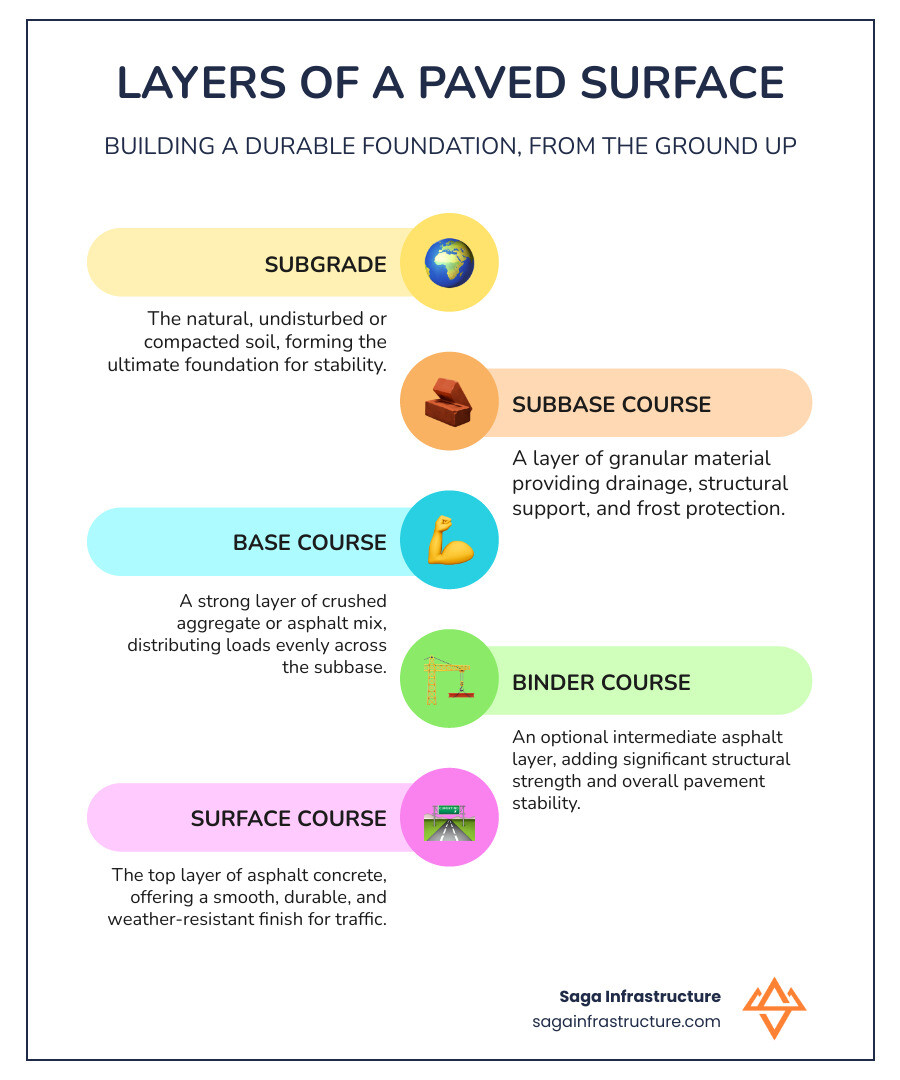
Infographic explaining the layers of a paved surface from subgrade to asphalt - grading and paving infographic infographic-line-5-steps-colors

What is Grading and Paving?

When we talk about grading and paving, we are talking about the “cake” and the “icing” of infrastructure. Grading is the preparation of the cake pan and the batter, and paving is that final, beautiful layer of icing that everyone sees. In our work across Florida, Texas, and Arizona, we’ve seen that you can’t have one without the other.
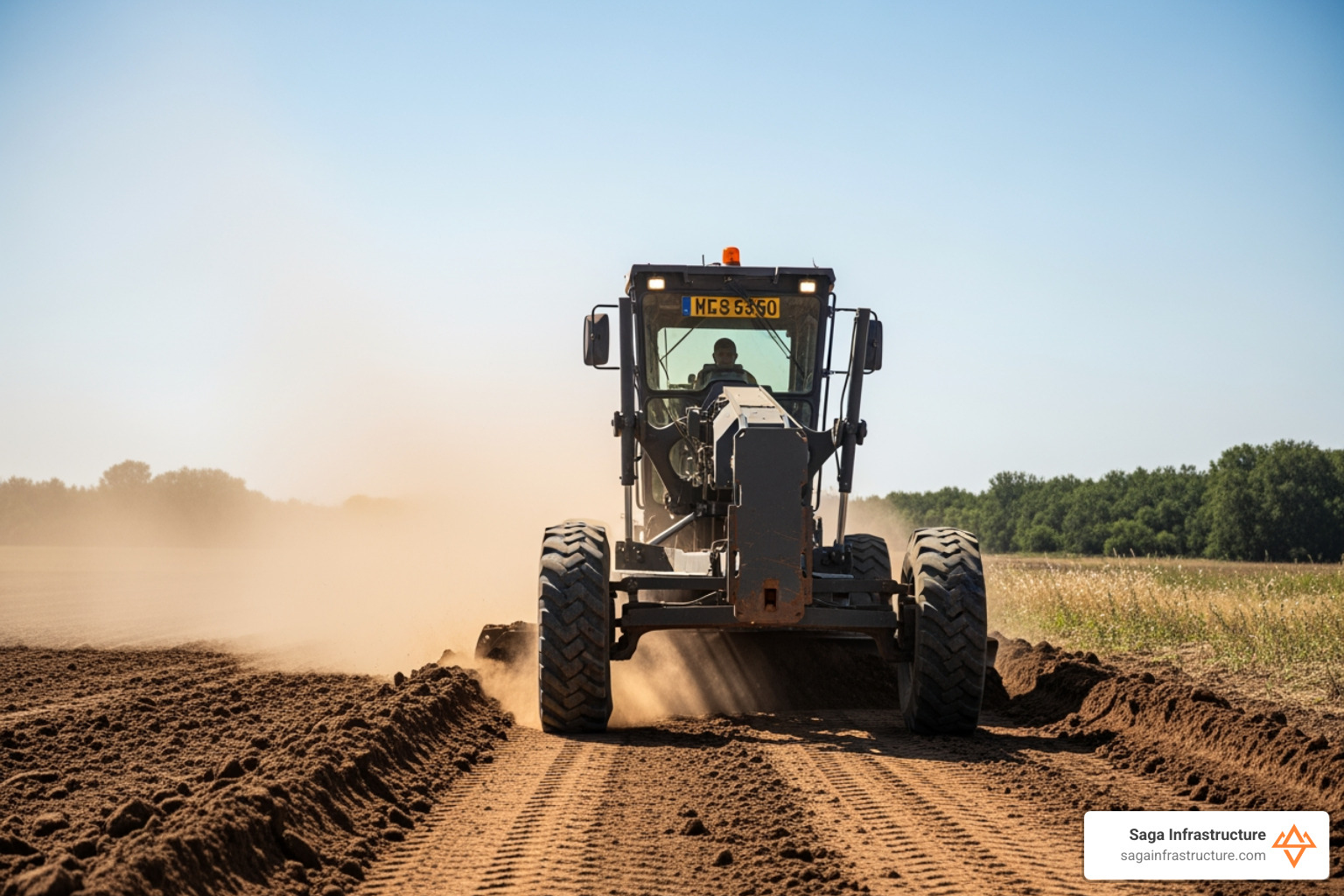
motor grader shaping a dirt path - grading and paving

Defining the Basics

At its heart, grading is the process of moving dirt to create a specific shape. We aren’t just making the ground “flat.” In fact, a perfectly flat piece of land is often a nightmare for builders because water has nowhere to go. Grading involves establishing a “contour”—a fancy word for the shape of the land—to make sure water flows away from buildings and toward drains or ditches.

Paving is the application of the wear surface. Whether it is hot mix asphalt or concrete, this layer protects the ground underneath from the elements and provides a smooth ride for cars and a safe walk for pedestrians.

The Importance of a Solid Base

A paved surface is only as good as the dirt it sits on. If the soil underneath moves, the pavement on top will crack. This is why we focus so heavily on the subgrade and subbase. Proper grading ensures that the ground can handle the “load-bearing capacity”—which is just a way of saying it can hold the weight of heavy trucks without sinking.

The industry is growing fast because people realize how important this foundation is. For example, the global demand for paving asphalt grew from about $30.44 billion in 2021 to an estimated $35.79 billion by 2025. This shows that whether we are working on a project like Mirror Lake or a local driveway, the world is investing more in quality surfaces.

The Step-by-Step Grading and Paving Process

We like to say that a good project starts long before the first shovel hits the dirt. It starts with a plan.

Preparing the Subgrade for Grading and Paving

The first step is site inspection. We look at the soil, the existing slope, and any obstacles in the way. In places like Texas, we might deal with heavy clay that expands, while in Arizona, we might hit rock.

Before we can grade, we have to clear the site. This means removing trees, brush, and old concrete. One tool we love to use is hydro excavation. This is a non-destructive way to dig using high-pressure water. It allows us to expose underground utilities—like water lines or power cables—safely and efficiently. By using hydro excavation, we ensure minimal disruption and keep our teams safe.

Once the site is clear, we move to “subgrade preparation.” We remove the soft topsoil and get down to the “good dirt” that can be compacted. You can learn more about these technical steps in this guide on surface preparation.

Rough Grading vs. Fine Grading

Grading happens in two main stages. Think of it like drawing a picture: first, you do a rough sketch, then you add the fine details.

Feature Rough Grading Fine Grading
Purpose Moving large amounts of dirt to reach approximate elevations. Precise leveling to within a fraction of an inch.
Equipment Bulldozers, large excavators, scrapers. Motor graders with GPS, skid steers.
Goal Establish the general shape and drainage. Create the perfect smooth surface for the asphalt or concrete.

We used these exact precision steps during our work on The Vue Clermont, ensuring the site was perfectly prepped for the final build.

Mastering Water Drainage and Surface Stability

If you remember one thing from this guide, let it be this: Water is the enemy of pavement. When water sits on a parking lot, it seeps into small cracks, weakens the base, and eventually creates potholes.

The Role of Compaction in Grading and Paving

To keep the ground stable, we use compaction. This is like pressing a giant sponge together until it can’t be squeezed anymore. We use heavy rollers to pack the soil and gravel.

  • Soil Compaction: Our goal is usually at least 95% Proctor density. This ensures there are no air voids where water can hide or where the ground can settle.
  • Asphalt Compaction: For the final asphalt layer, we aim for 92% to 96% density.

Proper compaction is what allows a project like Skyline at Westfall to stay smooth and strong even with heavy traffic.

Managing Transition Zones

A “transition zone” is where the new pavement meets something else—like an existing road, a concrete curb, or a sidewalk. If the grading isn’t perfect here, you’ll end up with a “lip” that people trip over or that catches water. We take extra care to ensure these joints are seamless and safe.

Understanding Project Costs and Site Conditions

Every project is different, which means every price tag is different. We wish we could give a one-size-fits-all price, but the land usually has its own ideas!

Factors That Change the Price

  • Site Condition: If the land is full of old buried concrete or thick brush, it costs more to clear.
  • Soil Quality: Sandy soil is easy to move but might need extra help to stay stable. Rocky soil or heavy clay requires more work.
  • Drainage Needs: If the land is very flat, we might need to install more complex pipe systems or “retention ponds” to hold water.
  • Milling: If we are repairing an old road, we use a process called “asphalt milling” to grind off the top layer before putting new asphalt down.

We managed these types of complex site conditions at the Hills of Minneola, where infrastructure had to be built to support a growing community.

Choosing the Right Materials

We help our clients choose between hot mix asphalt and concrete. Asphalt is generally cheaper and faster to install, while concrete can be more durable for heavy-duty industrial areas. Both require a strong aggregate base (crushed rock) to succeed.

Choosing a Grading and Paving Contractor

Hiring the right team is the difference between a driveway that lasts 20 years and one that falls apart in two. At Saga Infrastructure, we believe in protecting the local legacy of the builders we partner with. When you hire one of our regional firms, you get local experts who know the soil in your town, backed by our national resources.

Red Flags to Watch For

  • Paving in the Rain: This is a huge no-no. Asphalt needs to stay hot to compact correctly, and rain cools it down too fast.
  • Vague Quotes: If a contractor won’t give you a detailed breakdown of the grading steps, they might be cutting corners.
  • Low Prices: If a price seems too good to be true, they might be skipping the “95% compaction” rule.

Best Practices for Hiring

Always check for licensing and insurance. Ask to see a portfolio of recent work. A good contractor will be happy to show you their projects and provide references from happy customers. We take pride in our safety standards and the quality of our equipment because we know that’s what builds trust.

Frequently Asked Questions about Grading and Paving

How long should a new asphalt surface last?

A well-installed asphalt surface should last for 15 to 20 years. To get the most life out of it, you should perform regular maintenance, like sealcoating every few years and fixing small cracks before they turn into big ones.

What is the best time of year for paving?

Warmer months are best. Asphalt is “hot mix,” meaning it’s heated to over 300°F. If the air temperature is below 50°F and falling, the asphalt cools too quickly to be compacted properly. In our locations like Florida, Texas, and Arizona, we have a pretty wide window for great paving weather!

Why is my new pavement cracking?

Cracking is usually caused by one of three things: poor grading (the base wasn’t stable), bad drainage (water is sitting under the pavement), or a lack of compaction. This is why we say the “dirt work” is the most important part of the job.

Conclusion

At Saga Infrastructure, we are on a mission to protect and modernize the infrastructure that sustains our communities. We aren’t just a big corporation; we are a network of local builders like Foshee Construction in Minneola. We combine local excellence with national strength to ensure your project—from the first bit of grading to the final layer of paving—is built to last for generations.

Whether you are a developer, a municipal leader, or a business owner, we want to help you build something that stands the test of time.

Let’s start the conversation about your next project.

Follow us on Instagram Follow us on Facebook

Categories
Blog

Don’t Get Washed Away: The Ultimate Riprap Erosion Defense

Don’t Get Washed Away: The Ultimate Riprap Erosion Defense

Why Riprap Helps Protect the Ground

Riprap erosion protection is a way to stop soil from washing away. It uses big, pointy rocks to protect the ground near water. Here is what you need to know:

Main Parts:

  • Material: Big rocks with sharp edges (about 6 to 20 inches wide)
  • Job: Slows down water and stops waves from hitting hard
  • Where to use it: Near rivers, lakes, and steep hills
  • How to build it: Put a strong cloth under the rocks and make the hill gentle
  • How long it lasts: It lasts a very long time if built right

How It Works:

  1. Pointy rocks lock together like puzzle pieces
  2. The bumpy surface slows down fast water
  3. The heavy rocks stay in place
  4. A special cloth stops the dirt underneath from washing away

If you build roads or bridges, you know that water can ruin your work. One big storm can wash away everything. The wrong fix will fail. But riprap can protect your work for many years.

Riprap is used all over North America because it works. It is a layer of stone that keeps the soil safe from moving water. It is better than a wall because it can bend and move without breaking.

It is important to know when to use it and how to build it right. Many projects fail because people forget the small details.

I am Don Larsen. I lead the team at Saga Infrastructure. I have seen how good riprap erosion protection keeps things safe. At Saga, we work with local builders. We know that doing the job right the first time is what matters most.

infographic showing riprap cross-section with labeled components: angular fieldstone layer, 12-ounce geotextile fabric, compacted soil base, 3:1 slope angle, and arrows indicating how water flow is dissipated across the rock surface - riprap erosion protection infographic

What is Riprap?

Riprap is just a pile of rocks put there by people. These rocks protect the land from strong water. Whether it is a beach in Florida or a desert in Arizona, water tries to carry soil away. Riprap stops it.

People in the business call it “rock armor.” It is not just a random pile of stones. It is a smart system. We use strong rocks like granite or limestone. These rocks are heavy so they stay put. They also have gaps to let water move through without taking the dirt with it.

We use riprap erosion protection to keep bridges and drains safe. This helps the work of local builders last for a long time.

How Rock Armor Works

Riprap works in two ways. First, it takes the power out of the water. Second, it has a bumpy surface. When water hits a flat wall, it bounces off and digs a hole at the bottom. This can make the wall fall over.

Riprap is different. The gaps between the rocks make the surface bumpy. As water flows over the rocks, it slows down. The water loses its speed. Instead of hitting the soil, the water just bounces around the stones.

Our Saga Team knows that every place is different. A quiet pond needs different rocks than a fast river. We pick the right rock size to match how fast the water moves.

Why Shape Matters

Think about trying to stack marbles. They roll away! That is why we do not use round river stones for riprap erosion protection. Round rocks roll when water hits them. If the rocks wash away, the soil is not safe.

Pointy rocks are the best. These rocks have sharp sides that lock together. It is like a giant, heavy puzzle. When one rock tries to move, the others hold it.

This is very important in places with ice or heavy trash in the water. Pointy rocks stay in place. At Saga Infrastructure, we use the right rocks. A cheap fix with the wrong rocks will just cost more money later.

comparison of angular rock interlocking versus rounded river stone sliding - riprap erosion protection

Why Use Riprap?

Why use rocks instead of a concrete wall? Rocks are better because they can move. If the ground shifts, the rocks just settle into a new spot. A concrete wall would crack and break.

Science shows that rock armor is a great way to stop water. It is easy to find rocks in most places. This makes it a good choice for big projects.

Protecting the Shore

Land near the water is very valuable. But waves from boats and storms can wash it away.

We have seen places where the ground was full of holes and weeds. After we put down rocks, the erosion stopped. The land also looked much better. It turns a messy problem into something nice to look at.

Look at our News to see how we help towns protect their land.

Many Uses

Riprap erosion protection is used for many things. We use it for:

  • Bridges: Keeping the dirt around bridge legs safe.
  • Drain Pipes: Slowing down water that shoots out of pipes.
  • Hills: Keeping dirt on steep hills from sliding down when it rains.
  • Storm Drains: Protecting the spots where rain water goes into the ground.

How to Build It Right

Putting down riprap is more than just dumping rocks. You have to do it the right way so it stays. Our partners, like Foshee Construction, have been doing this for a long time.

1. Look at the Site

First, we look at the hill and the soil. We also check how fast the water moves. You have to know what the water is like before you build.

2. Make a Gentle Hill

This is the most important rule. For every one foot the hill goes up, it should go three feet sideways. This gentle slope helps stop waves. It also keeps the rocks from sliding down.

3. Pack the Dirt

We press the dirt down hard. It is like the base of a house. If the dirt is loose, the heavy rocks will push it out of place. Then the whole thing will fail.

4. Pick the Right Rock Size

Fast water needs bigger rocks. If the water is slow, small rocks are okay. If the water is very fast, you need huge boulders.

Water Speed Rock Size
Slow 6 inches
Medium 12 to 18 inches
Fast 24 inches
Very Fast 36 inches

The Secret Layer

The most important part of riprap is what is under the rocks.

First, we clear away weeds and trash. Then, we lay down a very strong cloth. At Saga, we use the best cloth we can find. It is thick and tough.

This cloth is the most important part. It lets water go through but keeps the tiny bits of dirt from washing away. Without it, the water would dig holes under the rocks. Then the rocks would fall in.

We also overlap the cloth so there are no gaps. You can read more on our Blog.

Picking the Best Rocks

In Florida and Texas, we have a few choices for stone.

  • Fieldstone: This is great for shorelines. It is heavy and looks good. It stays in place well.
  • Limestone: This is good for ditches and hills. The rocks are pointy and lock together.
  • Granite: This is very strong and heavy. It is perfect for very fast water.

We usually use rocks that are 6 to 20 inches wide. We always bring extra rocks to make sure the ground is fully covered. Learn more on our About Us page.

Taking Care of Riprap

Riprap is easy to take care of, but you still need to check on it. We suggest looking at the rocks after a big storm.

Look for:

  • Moved Rocks: If a rock moved, you might need a bigger one.
  • Sliding: If the rocks are sliding down, the hill might be too steep.
  • Plants: Some plants are okay, but big bushes can push the rocks out of place.

Science shows that these rocks can actually help fish. The gaps between the rocks give small fish a place to hide.

Helping the Environment

We care about the land. Riprap acts like a filter. It catches leaves and wood so they do not clog up the water.

Old ways of stopping water, like big walls, are often not allowed anymore. They can hurt the fish. Riprap is a better way because it is more like a natural rocky shore.

Easy Tips

  1. Clean Up: Keep trash and fallen trees off the rocks.
  2. Check the Bottom: The bottom of the rocks under the water is very important. If the bottom washes away, the whole thing will slide. We use extra small stones at the bottom to keep it safe.
  3. Stop Weeds: Do not let too many weeds grow on the rocks. It makes it hard to see if the rocks are moving.

Common Questions

What is the best hill for riprap?

A 3:1 slope is best. This means for every 1 foot of height, the hill goes out 3 feet. This keeps the rocks steady and slows down waves.

Can I use round rocks?

No. Round rocks do not lock together. They will wash away during a storm. Always use pointy rocks.

How long does it last?

If you use the right cloth and the right rocks, it can last for many, many years. It is a permanent fix.

Conclusion

At Saga Infrastructure, we want to help local builders protect their towns. We combine local skill with big resources. This makes sure every riprap erosion protection project lasts for a long time.

Water is always trying to wash away the land. But it does not have to be your problem. Whether you are in Arizona or Texas, we can help you.

Do not let your hard work wash away. Talk to us today. Let’s work together to keep your land safe.