
Professional Core Drilling Services That Really Hit the Mark
Core Drilling Services: What They Are and When You Need Them
Core drilling services make clean, round holes in concrete, stone, or asphalt. They do this without breaking the rest of the wall or floor.
Quick answer: What are core drilling services and when do you need them?
| Question | Answer |
|---|---|
| What is it? | A way to cut clean, round holes using a hollow drill with a diamond tip |
| When do you need it? | For pipes, wires, vents, bolts, or taking concrete samples |
| Typical hole sizes | 1 inch to 72 inches wide |
| Typical depths | A few inches to over 80 feet deep |
| Key safety step | Scanning the concrete first to find hidden wires and pipes |
| Who uses it? | Builders, plumbers, electricians, and city workers |
Almost every concrete building needs core drilling at some point. It might be when it is first built, or later during repairs. It looks easy, but it takes special tools and training to do it safely.
If you make a mistake, you can cut a live wire or crack the floor. If you do it right, the hole is perfect, the building stays strong, and the work gets done on time.
I am Don Larsen, CEO of Saga Infrastructure. We partner with great local construction companies across the country. I have spent years helping build big projects. I know how important core drilling services are, and how to spot a team that does the job right.
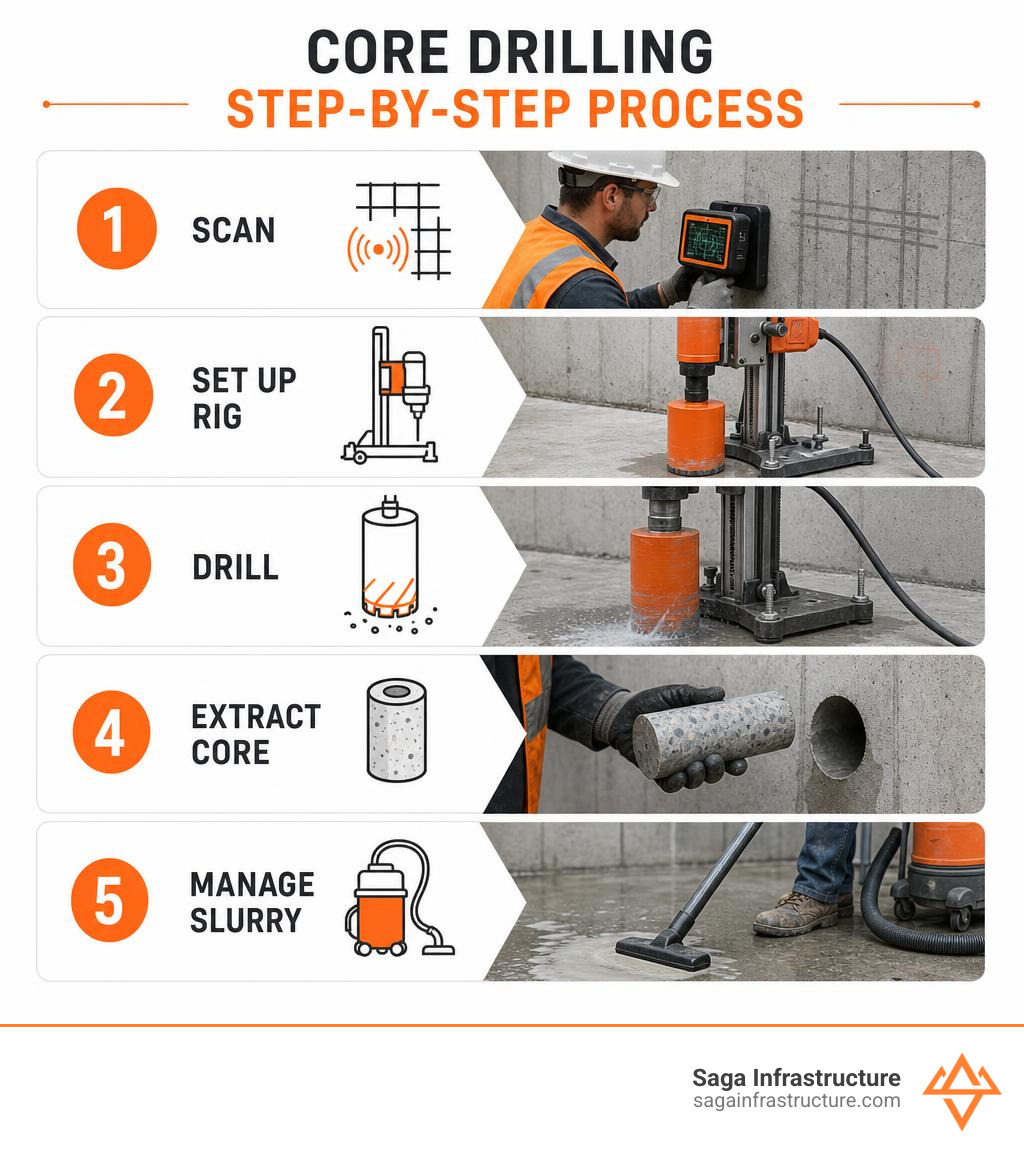
Basic Core drilling services words to know:
What is Concrete Core Drilling?
Concrete core drilling is a way to make clean, round holes in concrete, stone, asphalt, or brick. A normal drill crushes everything in its path into dust. A core drill is different. It uses a hollow tube to cut only the outer edge of the circle. This leaves a solid cylinder of concrete, called a “core,” inside the tube. When you pull the drill out, the core comes with it. This leaves a perfectly smooth, round hole.
This method is the best way to cut concrete when you need to be exact. It lets workers make holes without shaking or damaging the rest of the wall or floor.
When you start a building project, you must make sure the ground is ready. That is why core drilling is a big part of The Groundwork Essentials for Your New Construction Project. Whether you are building in Clermont, Florida, or Phoenix, Arizona, making clean holes in concrete is a key step.
Core Drilling vs. Hammer Drilling
Why not just use a big hammer drill to make holes? The answer is about safety and keeping the building strong.
Hammer drilling uses brute force. It pounds the concrete over and over to break it. This heavy pounding sends strong vibrations through the wall or floor. These shakes can cause tiny, invisible cracks. Over time, these cracks make the concrete weak. If you use a hammer drill near important supports, the whole building could become unsafe.
Core drilling does not pound the concrete. Instead, it spins a diamond-tipped bit to shave the concrete away smoothly. It does not shake the building. This keeps the surrounding concrete strong and safe.
Here is how the two methods compare:
| Feature | Diamond Core Drilling | Hammer Drilling |
|---|---|---|
| How it works | Smooth spinning and cutting | Heavy pounding and hitting |
| Shaking | Very low (keeps concrete strong) | High (causes tiny cracks) |
| Hole shape | Perfectly round and smooth | Rough, jagged, and uneven |
| Noise | Steady and not too loud | Extremely loud and annoying |
| Cutting steel | Cuts through steel bars easily | Gets stuck on steel bars |
| Dust | Water traps the dust | Makes a lot of messy dust |
Using diamond-tipped bits lets workers cut through steel bars inside the concrete without stopping. It is clean, quiet, and safe.
Why Your Project Needs Professional Core Drilling Services
You might think you can drill concrete yourself. But professional core drilling services are needed for big projects. Concrete is very hard and heavy. Working with it requires big machines, steady hands, and special training.
Professional teams do three main jobs:
- Putting in utilities: Making paths for water pipes, wires, and air vents.
- Changing buildings: Making space for new stairs, elevators, or supports.
- Taking samples: Cutting out small concrete cylinders so engineers can test how strong the concrete is.
Hiring experts means the job gets done right. It also keeps you from making bad mistakes, like cutting a live power line or weakening a wall.
Who Uses Core Drilling Services?
Many different businesses need core drilling. Builders use it to run pipes and wires through thick concrete floors and walls.
Road crews use it to install highway guardrails, traffic sensors, and streetlights. City workers also use it to connect new pipes to main sewer and water lines.
These jobs are a big part of building roads and cities. To learn more about how this works, read Everything You Need to Know About Heavy Earthmoving and Site Development. Every step of building needs to be done carefully.
How Core Drilling is Used Every Day
In construction, core drilling is used for these common tasks:
- Pipes and wires: Plumbers and electricians need clean holes for water pipes and power lines.
- Air vents: Large holes are cut in walls so fresh air can flow through the building.
- Big bolts: Workers drill holes to bolt down heavy steel beams or factory machines.
- Safety posts: Metal posts are set deep into concrete parking lots to protect buildings from cars.
These holes help keep water and utilities flowing. This is related to how we shape the land, which you can read about in The Essential Guide to Grading and Drainage Systems. Good drainage keeps your property dry and safe.
Technical Capabilities: Materials, Sizes, and Depths
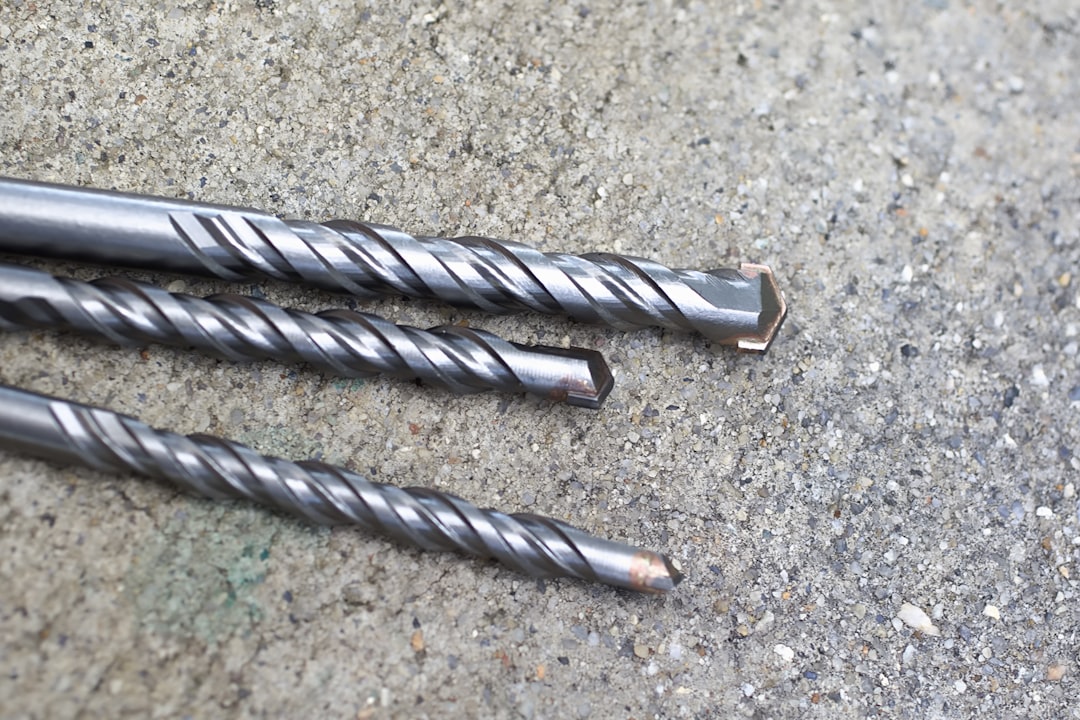
Modern core drills can cut through almost anything. Workers use them to drill through:
- Concrete with steel bars inside
- Asphalt roads and runways
- Brick and cinder block walls
- Hard stones like granite
To do this, they use special drill bits. These bits have tiny pieces of real diamonds on the edge. Since diamonds are the hardest thing on Earth, they can grind through concrete and steel easily.
For very deep holes, workers can connect extra metal tubes to the drill. This lets them reach deep into the ground or thick walls. This is very helpful for taking samples from deep inside dams, bridges, or foundations.
How Big and Deep Can They Go?
Drills come in many sizes. The tools must match the job.
- Hole Width: Normal holes are 1 to 14 inches wide. But big industrial drills can make holes up to 72 inches wide!
- Hole Depth: A normal hole through a wall might be 12 inches deep. But deep drills can go down 80 feet or more.
- Power: Drills can run on electricity or fluid power (called hydraulics). Hydraulic drills are great for huge holes or wet areas where electricity is dangerous.
For jobs that need these big setups, you can learn more from experts like Concrete Core Drilling Services | 1′′–72′′ Holes | Americut. They can bring big drills to your site quickly.
Keeping Things Safe, Accurate, and Clean
Safety is the most important part of any drilling job. Before drilling, workers must see what is hidden inside the concrete.
They use special radar (called GPR) and X-rays to look inside the concrete. This lets them find steel bars, strong cables, and live power lines without breaking anything.
Cutting a tight steel cable can make the concrete explode. Hitting a live wire can hurt workers or cause power outages. Scanning first keeps everyone safe and keeps the project moving. This careful safety step is just as important when leveling the ground, as you can read in The Straight Dirt on Land Grading and Leveling.
Using radar helps avoid bad mistakes. For example, The Concrete Sawing, Grinding, Coring and Scanning Experts – API Concrete Core Drilling specializes in scanning and dry drilling. They protect sensitive places like computer data centers, where a small mistake could shut down the internet.
Controlling Dust and Messy Mud
Drilling dry concrete makes a huge cloud of dust. Breathing this dust is very bad for your lungs. To stop this, workers use water while they drill.
Water runs through the drill bit. This does two things:
- It cools the diamond bit so it does not get too hot.
- It traps the dust and turns it into a wet mud called slurry.
This wet mud is very messy. You cannot wash it down the drain. Workers use special vacuums to suck up the mud as they drill.
This is very important when working inside schools, hospitals, or offices. In these places, workers use quiet electric drills and plastic walls to keep the air clean and the noise low. For indoor jobs, companies like Concrete Core Drilling Services use special cleanup tools to keep the area spotless.
How to Choose the Best Core Drilling Service
Choosing the right team is very important. You want a partner who works safely and has the right experience.
Here are a few questions to ask before you hire a contractor:
- Do your workers have up-to-date safety training?
- Do you scan the concrete with radar before you drill?
- How do you clean up the messy mud, especially indoors?
- Can you use quiet, electric tools inside?
- Have you worked in our area before?
It is best to work with teams who know your local area. In Texas, companies like Core Drilling Services | Marek Sawing & Drilling do great work on highways and buildings. In Arizona, builders use Phoenix Area Core Drilling Services to get jobs done fast. In Florida, teams like Florida State Concrete Cutting & Core Drilling: Tampa Concrete … offer great services across the state.
Working with a team that has local roots and big-company resources is the best choice. This is how we build great things, as explained in From the Ground Up: Everything You Need to Know About Earthwork Construction Companies.
Frequently Asked Questions About Concrete Drilling
Can you drill inside buildings where people are working?
Yes, we do this all the time. When working in busy offices, stores, or hospitals, we use electric drills instead of gas ones. This means there are no bad fumes. We also put up plastic walls and use wet vacuums to catch all the water and mud. If the noise is too loud during the day, we can work at night or on weekends.
Can you drill at an angle or straight up?
Yes. Drilling straight down into a floor is most common. But we can also drill sideways through walls, at an angle for drains, or straight up into ceilings. For ceiling work, we use special stands and water rings to catch the messy water before it falls.
What changes the cost and time of a project?
A few things can change the price and timeline:
- How hard the concrete is: Hard concrete with lots of steel takes longer to drill.
- Hole size: Bigger and deeper holes need larger machines and more time.
- Where the hole is: Working in tight spaces or high up takes extra setup time.
- Water and power: If we have to bring our own water or generators, it can cost more.
Conclusion
At Saga Infrastructure, we believe the best work is built on trust, safety, and local skill. We support great local contractors. We give them the money and tools of a big national company, but we keep the local teams you already know and trust.
Whether you are putting in pipes in Clermont, Florida, or building a big project in Texas or Arizona, we have the tools and safety steps to do it right.
Ready to plan your next project? Let’s start the conversation. Let us work together to build the roads, pipes, and buildings that keep our towns moving forward.