
Why Your Property Needs an Environmental Clean Bill of Health
Why Checking Your Property for Problems is Very Important
Environmental due diligence is a way to check a property for problems before you buy it. Here is what it covers:
- What it is: A deep look at the history and health of a piece of land.
- Why it matters: It stops buyers from having to pay for old messes they didn’t make.
- When it’s needed: Before buying land, getting a loan, or starting a big project.
- Key steps: A first look at the surface (Phase I) and a deeper look at soil and water if needed (Phase II).
- Who it protects: People buying land, banks, and builders.
Every piece of land has a story. Sometimes that story includes old chemicals or leaky tanks. A simple search won’t find these things. If you don’t check, you might have to pay a lot of money to clean it up. This can cost more than the land is worth!
In the U.S., the law says you can be responsible for a mess even if you didn’t cause it. This is a big risk for any deal.
The good news is that the right check can protect you.
I’m Don Larsen, CEO of Saga Infrastructure. I have worked in building and development for a long time. I have seen how environmental due diligence can save a deal. I will show you how this process works and how it keeps your money safe.
Learn these terms:
What is Environmental Due Diligence and Why Does It Matter?
Environmental due diligence is like a research mission. It is how we look “under the hood” of a property. We want to see if there are any hidden problems. Whether you are in Florida or Arizona, you need to know if the land is healthy.
What is Environmental Due Diligence? – Cobb Cole says this process looks for risks. It is very important for people who build things or lend money. It helps us make sure the land is safe before any money is spent.
Why Real Estate Needs It
In business, this isn’t just a good idea—it is usually required. Banks will not give you a loan without a clean report. The government also wants to see these reports before they help pay for land projects.
Think of it like a survey. You wouldn’t build a fence without navigating commercial real estate through a comprehensive guide to surveys. You shouldn’t buy land without knowing its history. Your bank will want to see these reports to keep their money safe.
Three Kinds of Risk
We look at three types of risk:
- Direct Risks: This is the cost to fix a problem, like cleaning up lead in the soil.
- Indirect Risks: Even if you fix it, the land might be worth less money later.
- Reputational Risks: People might not trust your business if you are linked to a dirty site.
How the Check Works

How do we do this? We start by building a team. This team includes lawyers and experts.
Steps in the Process
This is more than just walking around. It includes:
- Looking at Old Records: We look back many years. Was the land a gas station or a farm?
- Government Records: We look for old spills or rules that were broken.
- Interviews: We talk to people who used to live or work there.
- Visual Inspections: An expert walks the land. They look for stained dirt or dead plants.
Before you start building, you should look at a complete checklist for commercial site preparation.
Simple Tools
Not every property needs a big check. Sometimes we use simple tools:
- Questionnaires: A list of questions about the land.
- Desktop Reports: Checking computer records without visiting the site.
- Transaction Screens: A quick look for low-risk land.
- ALTA Surveys: These show the borders of the land. Demystifying the ALTA survey for real estate professionals shows how these help find problems.
Learning About Phase I and Phase II Checks
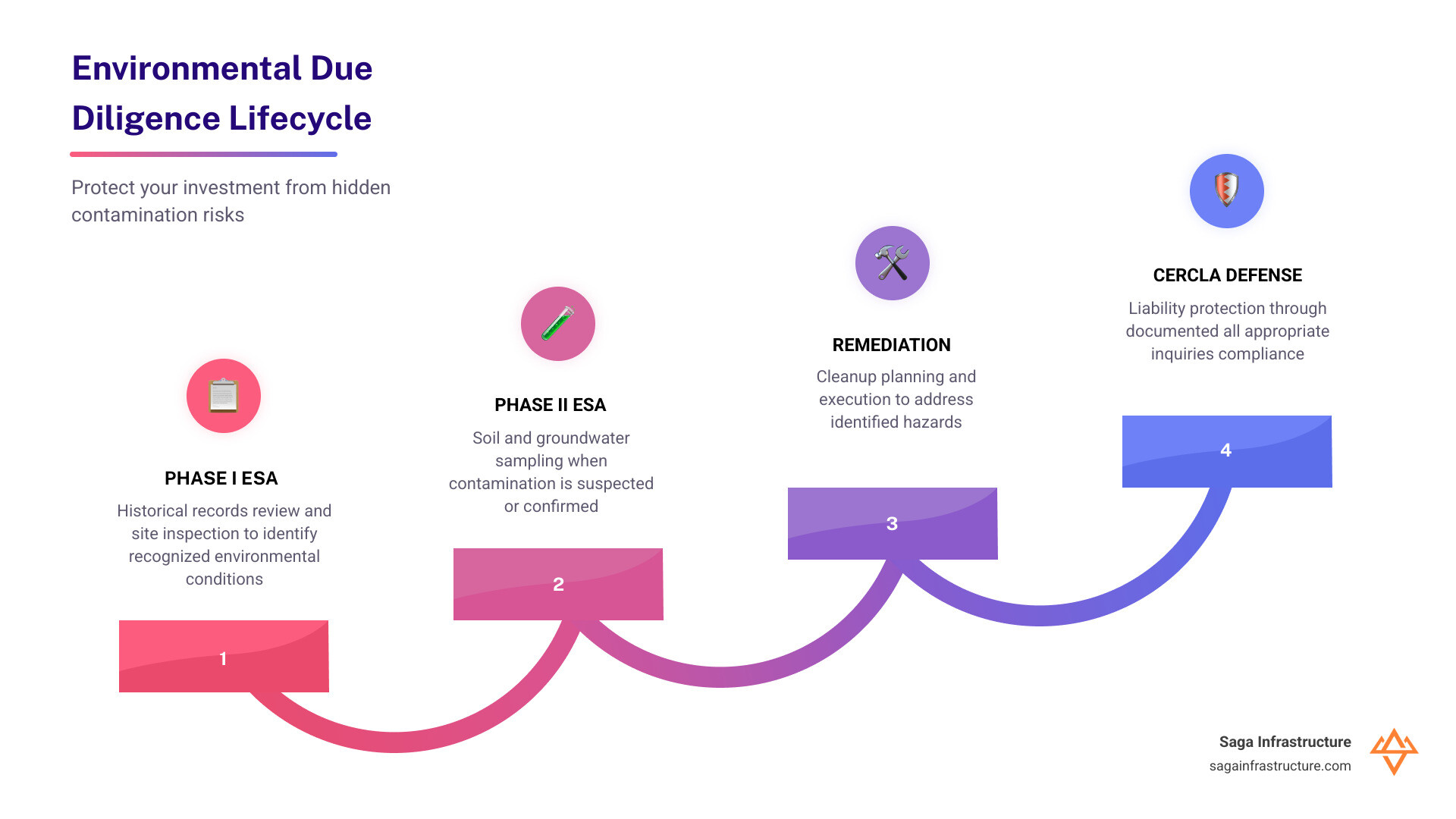
The best way to check land is a Phase I Environmental Site Assessment (ESA). We follow the newest rules from E1527 Standard Practice for Environmental Site Assessments: Phase I Environmental Site Assessment Process.
A Phase I check looks at the surface. It looks for “RECs.” These are signs that chemicals or oil might be on the property. This check does not involve digging.
When is a Phase II Needed?
If the Phase I report finds a red flag, you need a Phase II check. This is when we dig into the ground.

A Phase II check takes samples of:
- Soil
- Water under the ground
- Air in the soil
- Building materials
The goal is to see if there is a real mess and how big it is.
What the Results Mean
We send the samples to a lab. We check if the chemicals are above safe limits. If they are, we make a plan to clean it up. This might mean moving dirt or cleaning the water.
How These Checks Protect You from the Law
We do this work because of a law called CERCLA. This law is very tough. It says you can be blamed for a mess even if you didn’t make it.
To stay safe, you must do “All Appropriate Inquiries.” This means doing a proper Phase I check. This gives you “Landowner Liability Protections.”
The Innocent Landowner Defense
This is for people who bought land and didn’t know it was dirty, even though they checked. To use this, you must do a Phase I check before you buy the land. You must also be careful not to make the problem worse.
Bona Fide Prospective Purchasers
Even if you know land is dirty, you can still buy it safely. You can be protected if you:
- Do a check before buying.
- Did not cause the mess.
- Follow all the rules for the land.
- Stop any new leaks.
A law from 2018 even helps people who rent dirty land stay safe.
More Than Just Chemicals
Most people think about chemicals. But there is more to the environment. We look at two main things:
| Feature | Traditional (TEDD) | Natural Resources (NREDD) |
|---|---|---|
| Focus | Chemicals and oil | Wetlands and animals |
| Goal | Legal protection | Getting permits |
| Tools | Phase I & II checks | Wetland and animal surveys |
| Risks | Cleanup costs | Project delays |
Rules for the Land
Sometimes the best way to handle a mess is to leave it and cover it up. This uses special controls:
- Engineering Controls: Things like a concrete floor or a fence to keep people away from dirt.
- Institutional Controls: Legal rules that say you cannot build houses or drink the water there.
Taking Care of the Land
If you buy land with these rules, you must follow them forever. You have to keep the covers in good shape. We make sure these rules are clear before you sign any papers.
Timing and Tips for a Good Deal
Timing is very important. If your report is too old, it will not work for the law.
- The One-Year Rule: Your Phase I check must be done within one year of buying the land.
- The 180-Day Update: Some parts of the report must be updated if they are older than 180 days.
Legal Tips
We suggest that a lawyer should hire the expert. This helps keep the information private. Your lawyer should also check the contract to make sure you are protected if the expert misses something.
Common Questions
How long is a Phase I report good for?
It lasts for one year. But some parts must be updated after 180 days.
How much does it cost?
A Phase I check can cost between $1,000 and $10,000. A Phase II check costs much more because of the digging and lab tests.
Can a quick screen replace a Phase I?
A quick screen is cheaper, but it does not give you the same legal protection. It is okay for very safe land, but it won’t shield you from big costs like a Phase I does.
Conclusion
At Saga Infrastructure, we believe the best way to build is to respect the land. Whether we are in Texas or Florida, we want to know the land is healthy. This is the start of every good project.
We don’t just buy companies. We partner with people to keep their hard work growing. We use our resources to make sure every project is on safe ground.
If you want to buy or sell land and stay safe, let’s start the conversation about your infrastructure project. We help protect what you have built so it can grow for a long time.