
The Ultimate Guide to Modern GPS Land Surveying Techniques
How GPS Land Surveying Works — And Why It Matters for Modern Infrastructure
GPS land surveying has changed how we measure the world. It used to take weeks to measure land. Now, it only takes a few hours. It is also more accurate and needs fewer people.
Here is what you need to know:
| Method | How Accurate | Best Use |
|---|---|---|
| Static GPS | Very exact (5 mm) | Making main map points |
| RTK | Centimeter level | Building and property lines |
| CORS Network | A few centimeters | Big areas |
| Handheld tool | Under 1 meter | Simple maps |
| Phone app | 3–5 meters | Just for fun at home |
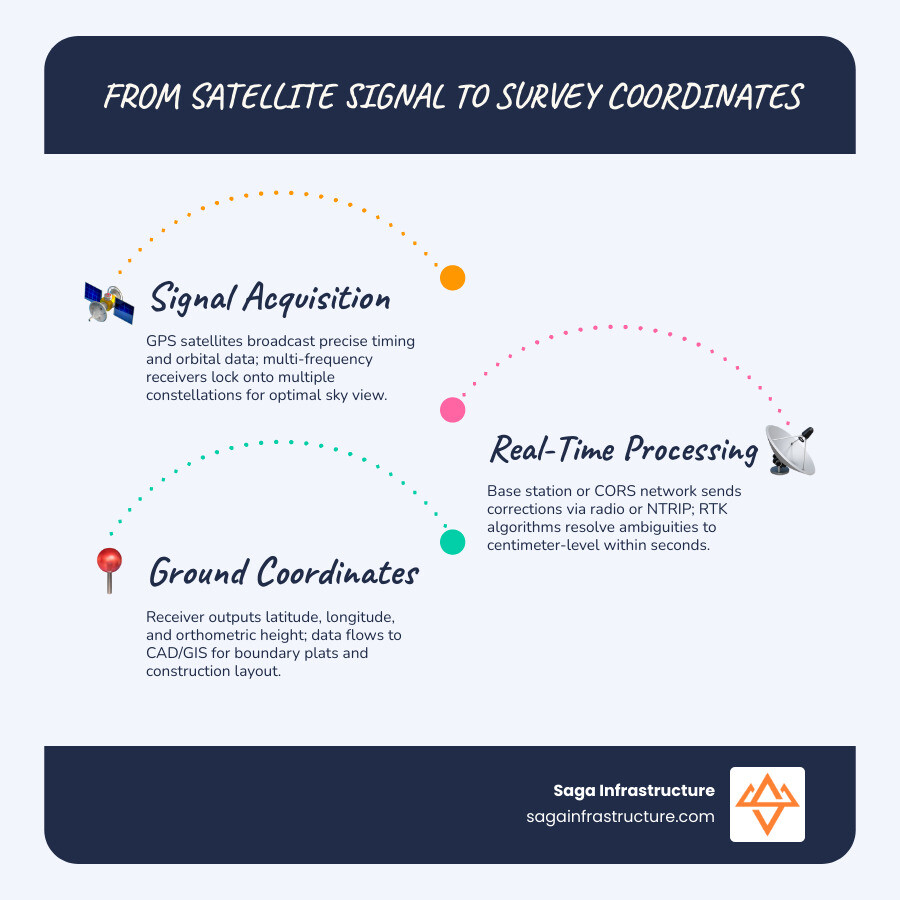
The technology is simple. GPS tools on the ground talk to satellites in space. They find the exact spot on Earth. It works in any weather. You do not even need to see from one point to the next. This helps on big sites or in the woods.
Today, builders and city planners use GPS to make fast choices about land and pipes.
But not all GPS tools are the same. The way you use them matters. It decides if your map is good enough for the law.
I am Don Larsen, the head of Saga Infrastructure. I work with builders every day. I know how important it is to have a good gps land survey. This guide will help you pick the right tools for your project.
Terms related to gps land survey:
What a GPS Land Survey Is and How It Compares to Traditional Surveying
A GPS land survey uses satellites and special tools to find spots on the ground. Most pros use a system called GNSS. This system uses many groups of satellites from different countries. More satellites make the work faster and better.
Old-style surveying uses tools that look through a lens. Those tools measure angles and distances between points you can see.
How a gps land survey works in simple terms
Satellites send out signals. A tool on the ground listens to many satellites at once. It uses those signals to find its spot. For professional work, we use a second signal to fix small errors:
- A base station that stays in one spot
- A rover that moves around
- Or a network of stations that sends fixes
This makes the map much more exact than a phone GPS.
GPS surveying vs traditional optical methods
GPS and old tools work together. They are like a team.
GPS is good because:
- You do not need to see between points
- It is fast on big, open land
- You need fewer people to do the work
Old tools are good because:
- They work under trees and near tall buildings
- They are great for small details
- They work when satellites are blocked
Old tools need a clear view. GPS needs a clear sky. Surveyors pick the best tool for the job.

When surveyors use GPS alone and when they combine methods
In open fields, GPS might do all the work. In the woods or in a city, surveyors use both. They use both when trees block the sky or when they need to be extra careful. To learn more about common mistakes, read these land surveying myths.
The Main GPS Surveying Methods: Static, RTK, and CORS
There are three main ways to use GPS for surveying. Each one has a different speed and accuracy.
Static GPS for the best accuracy
Static GPS is the slow way. You put two or more tools on points for 20 minutes or more. Then you use a computer to find the exact spot. This is best for making the main points that the whole map will use.
RTK for fast work
RTK stands for Real-Time Kinematic. It is very fast. A base station sends fixes to a moving tool. This gives you a spot within a few centimeters in just seconds. It is great for building and mapping pipes.
CORS networks
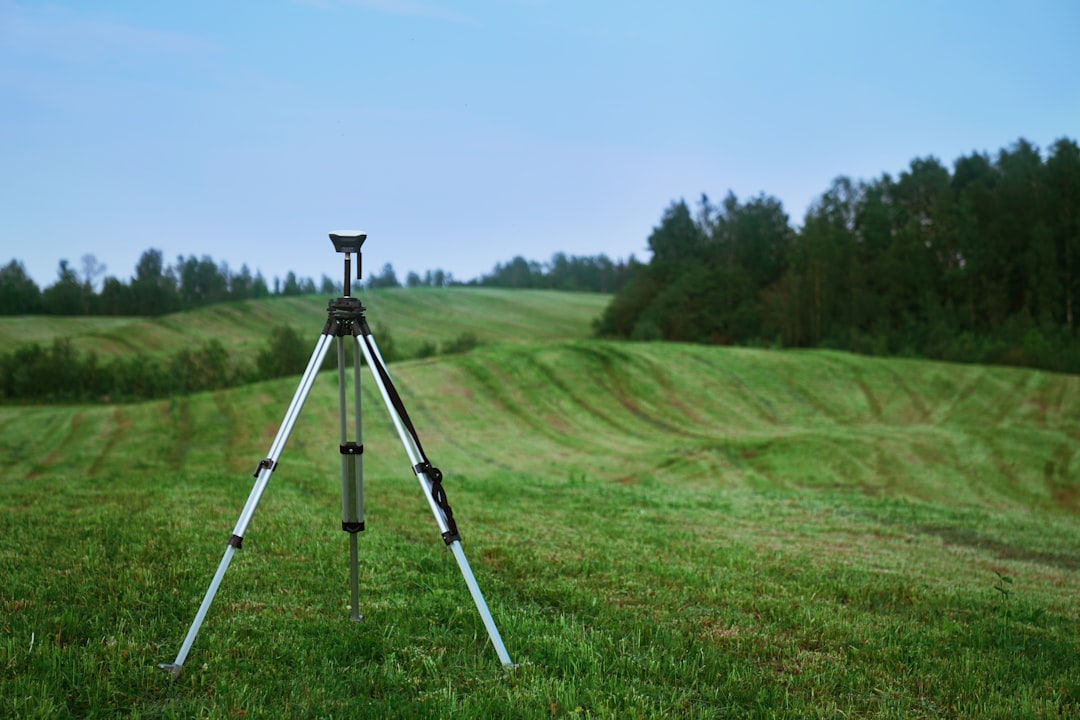
CORS is a group of permanent stations. Instead of setting up your own base, you use the network. This is good for big areas and saves time. For more rules on this, see the RICS GNSS guidance note.
Which method to choose
| Method | Best for | Limits |
|---|---|---|
| Static | Main points | Takes a long time |
| RTK | Fast site work | Needs a clear sky |
| CORS | Big regions | Needs a phone signal |
Equipment, Software, and Cost for Professional GPS Land Surveying
Professional GPS is more than just a stick. It is a whole system.
What a crew needs
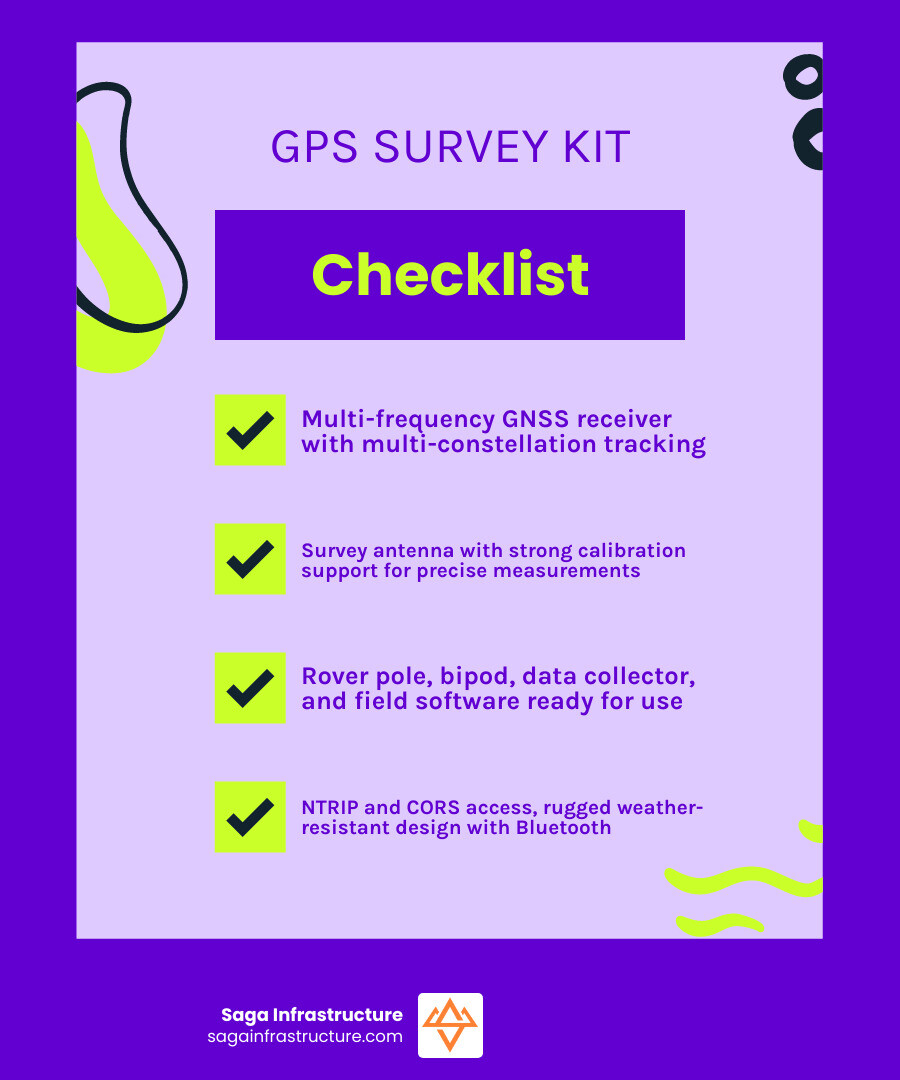
A pro setup includes:
- A high-quality GPS receiver
- A special antenna
- A pole to hold the tool
- A computer to save data
- Software for the office
How much it costs in 2026
Professional gear is expensive. One receiver can cost $4,000 to $10,000. A full kit can cost over $20,000. You also have to pay for software and training.
Can phone apps do the job?
No. Phone apps are okay for a homeowner to guess where a line is. But they are not exact. A phone might be off by 15 feet. That is too much for a real survey. Apps like Land Map – GPS Land Survey & M can help, but they do not replace real tools.
If you are planning to build, this site preparation checklist can help you use your survey data.
Accuracy, Limits, and Error Sources in GPS Surveying
How accurate is it?
A gps land survey can be very exact. Some methods can find a spot within a few millimeters. RTK is usually within a few centimeters. Phone GPS is much worse.
What makes it less accurate?
Many things can cause errors:
- Trees and leaves
- Tall buildings
- Signals bouncing off walls
- Bad weather
- Not enough satellites in the sky
GPS vs GIS
GPS finds the spots. GIS is the map that holds all the info. It shows where pipes, land lines, and trees are. This helps people make good plans. For more on building, see our groundwork guide for new construction.
Legal Standards and Property Lines
Rules for surveys
For property lines, being exact is a legal rule. There are special standards for these surveys. GPS can be used, but the surveyor must follow the law. You can see the rules here: 2026 ALTA/NSPS Land Title Survey standards.
How a survey is done
A surveyor does these steps:
- Look at old records
- Find old markers in the ground
- Use GPS to find points
- Check the work twice
- Make a final map
For more help, see this GPS cadastral survey procedure.
Why a person is better than a machine
A GPS tool only gives numbers. It does not know who owns the land. A licensed surveyor has to look at old deeds and markers to decide where the line really is. For more on this, see our ALTA survey overview.
Frequently Asked Questions About GPS Land Surveying
Can GPS find my property lines by itself?
No. GPS finds spots, but it does not know the law. A surveyor must look at old papers and markers to find the real line.
Is RTK good enough for a property survey?
Yes, if the sky is clear and the surveyor checks the work. Sometimes they use other tools too just to be sure.
How much does the gear cost?
A full professional setup usually costs more than $10,000. This includes the tools, the computer, and the software.
Conclusion
GPS land survey tools help teams get data fast. They work well for big areas. Using GPS with other tools helps build better roads and buildings.
At Saga Infrastructure, we know that good building starts with good facts. Exact surveys help keep projects safe and on track.
To learn more about surveys for big projects, read our guide to commercial real estate surveys. To see more of what we do, start here.