Laying the Groundwork: What is Commercial Site Preparation?
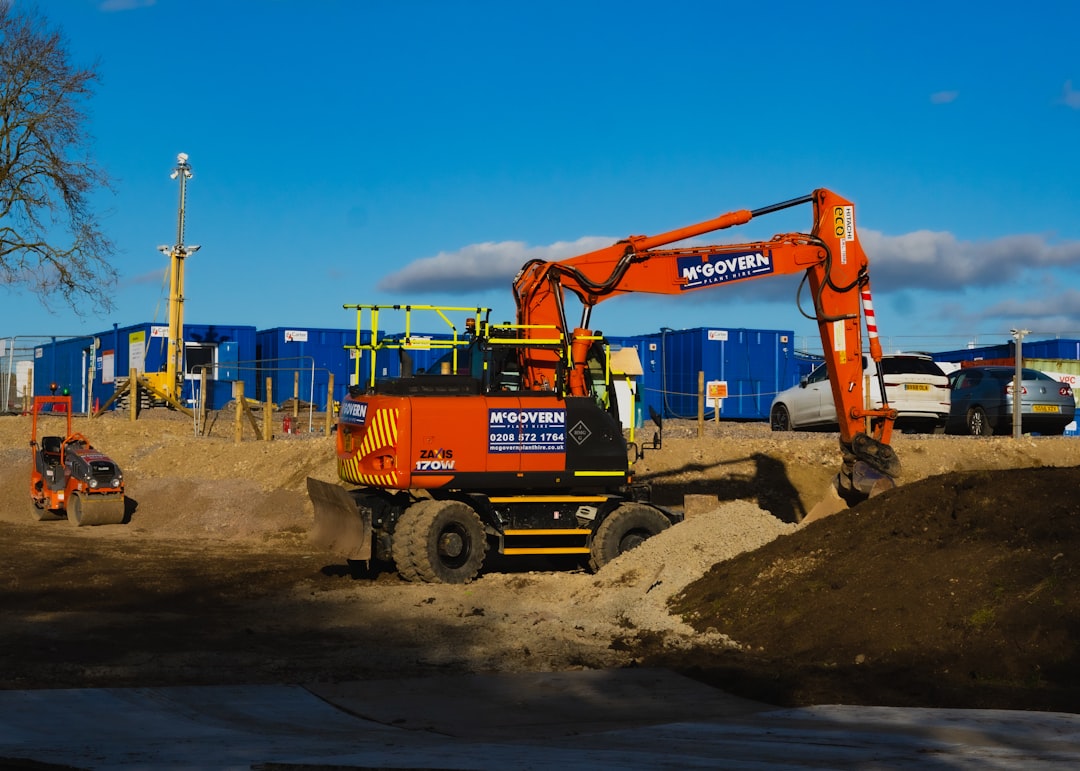
Before any building can rise, the ground beneath it needs careful attention. Commercial site preparation is the vital first step in any construction project. It transforms raw land into a construction-ready canvas. Think of it like preparing a garden. You cannot just throw seeds on hard, rocky ground and expect flowers to grow. You have to clear the weeds, turn the soil, and make sure the water flows the right way. Construction is the same, but on a much bigger scale with heavy machines and complex plans.
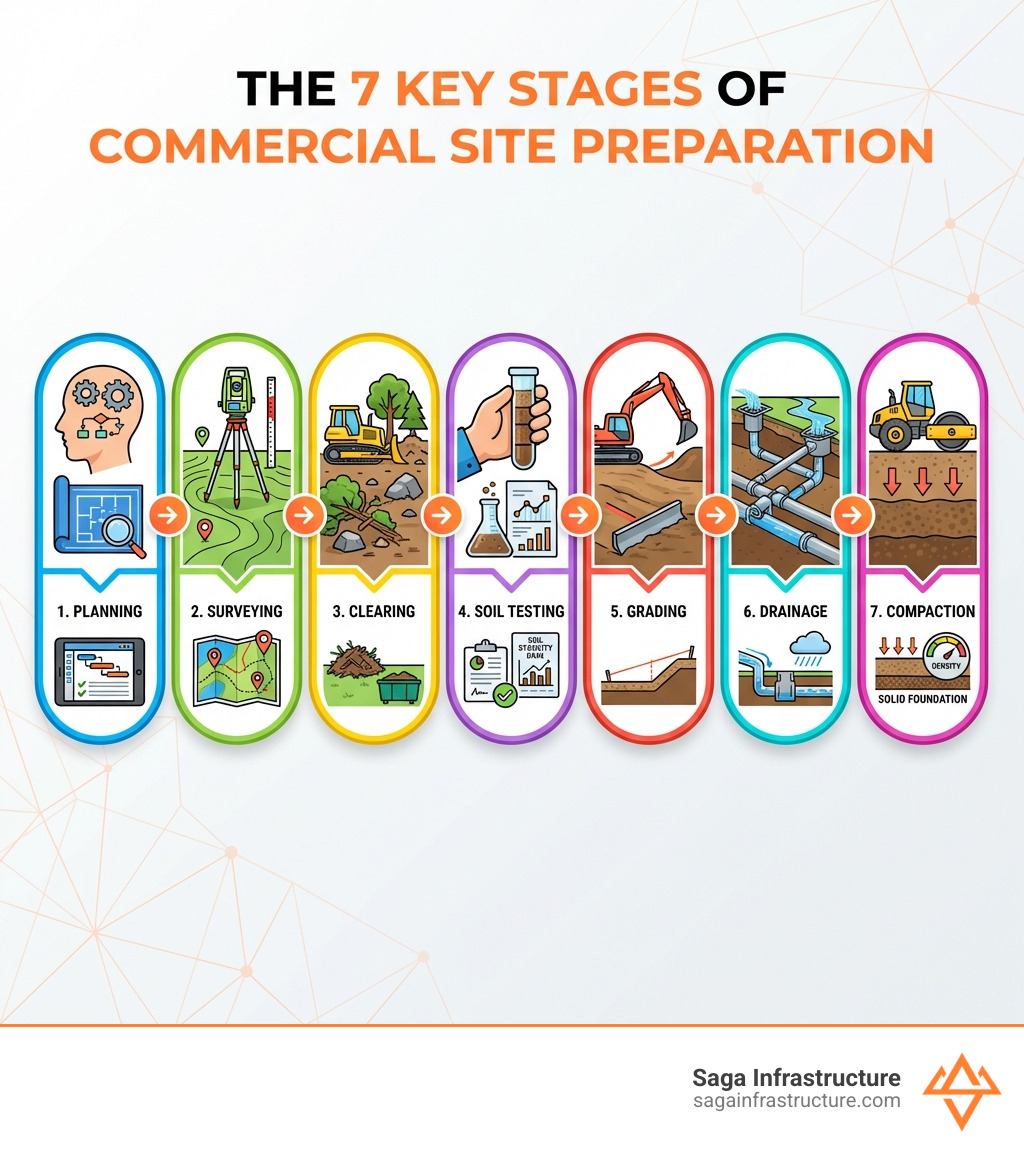
Here are the essential steps involved in commercial site preparation:
- Site Assessment and Surveys: This is the planning stage. Experts look at the land’s features, find the exact boundaries, and study the soil. This helps us know exactly where the building will sit.
- Permitting and Approvals: You cannot dig without permission. We work with local cities to get all the right papers and follow the rules.
- Land Clearing: This is where the big machines come in. We remove trees, brush, large rocks, and any old buildings that are in the way.
- Soil Testing and Stabilization: We check the soil to see if it is strong. If the soil is too soft, we have to make it stronger so the building does not sink.
- Grading and Excavation: This means shaping the land. We move dirt from high spots to low spots to make the ground level. We also dig holes for the foundation and pipes.
- Drainage System Installation: Water can be a big problem. We set up systems to make sure rain flows away from the building and does not cause floods.
- Utility Installation: Every building needs water, power, and sewer lines. We bring these pipes and wires to the site before the building starts.
This careful preparation sets the stage for a successful build. Without it, even the strongest structures can face major problems later. As one expert put it, “What happens before construction begins is just as important as what happens after.” Rushing this phase can lead to costly delays and structural issues. At Saga Infrastructure, we take the time to do it right because we want your project to last for a long time.
I’m Don Larsen, CEO of Saga Infrastructure. My background in operations and construction across complex, multi-site organizations gives me a practical understanding of successful commercial site preparation. I’ve helped build, scale, and operate businesses, ensuring that foundational steps like site prep lead to long-term success. We focus on helping local builders grow while keeping their history alive.
Why Proper Commercial Site Preparation is the Foundation of Success
At Saga Infrastructure, we believe that a building is only as good as the dirt it sits on. Proper commercial site preparation ensures structural stability and long-term durability. If you skip the basics, you might end up with “The Leaning Tower of Retail.” This happens when the ground is not level or the soil is too soft. For instance, the Salesforce Tower in San Francisco required a $100-million retrofit due to sinking issues—a cautionary tale for any developer. When the ground moves, the building moves, and that leads to cracks and broken pipes.
By following professional standards for site prep, we can see that this phase manages risks that business owners must consider before investing millions. It is much cheaper to fix a soil problem before you build than it is to fix a foundation after the building is finished. We look at every detail to make sure the site is safe and ready for the next hundred years.
| Risk Factor |
Unprepared Site |
Properly Prepared Site |
| Foundation |
Cracking or sinking |
Stable and level |
| Drainage |
Flooding and mold |
Controlled water runoff |
| Safety |
Trench collapses |
Regulated and secure |
| Legal |
Fines for non-compliance |
All permits and codes met |
| Utilities |
Broken lines or no service |
Reliable water and power |
| Cost |
Expensive repairs later |
Budget-friendly and predictable |
When we prepare a site, we are not just moving dirt. We are protecting your investment. A well-prepared site means the construction crew can work faster and safer. It also means the local government will be happy because we followed all the rules for safety and the environment.
Essential Steps in the Commercial Site Preparation Process
The physical work begins with a flurry of activity. First, we have land clearing and demolition. This isn’t just about knocking things down; it’s about doing it safely and sustainably. We often have to remove old structures, trees, and deep roots (called grubbing) to ensure nothing rots under your future foundation. If you leave a tree root in the ground, it will eventually rot and leave a hole. That hole can cause the ground above it to sink, which is bad for a concrete floor.
Safety is our number one priority during this stage. We strictly follow Excavation and trenching safety guidelines because a single cubic yard of dirt can weigh as much as a Volkswagen—about 3,000 pounds! If a trench isn’t shored up correctly, it can be deadly. Our team at Saga Infrastructure ensures that every local partner we work with, from Florida to Texas, maintains these high safety standards. We use trench boxes and other tools to keep our workers safe while they dig deep into the earth.
Key Components of Commercial Site Preparation
- Vegetation Removal and Grubbing: Clearing the “green” stuff so it doesn’t interfere with the soil. We make sure all organic material is gone.
- Utility Mapping: Identifying gas, water, and electric lines before we dig. We do not want to hit a power line and cause a blackout!
- Erosion Control: Keeping the dirt on the site and out of the local storm drains. We use fences and hay to keep the dirt from washing away when it rains.
- Waste Management: Did you know that construction and demolition generate 600 million tons of waste annually? About 90% of that comes from demolition. We aim to recycle as much as possible to keep it out of landfills. We sort through the debris to find metal and concrete that can be used again.
The Role of Surveys and Soil Testing in Commercial Site Preparation
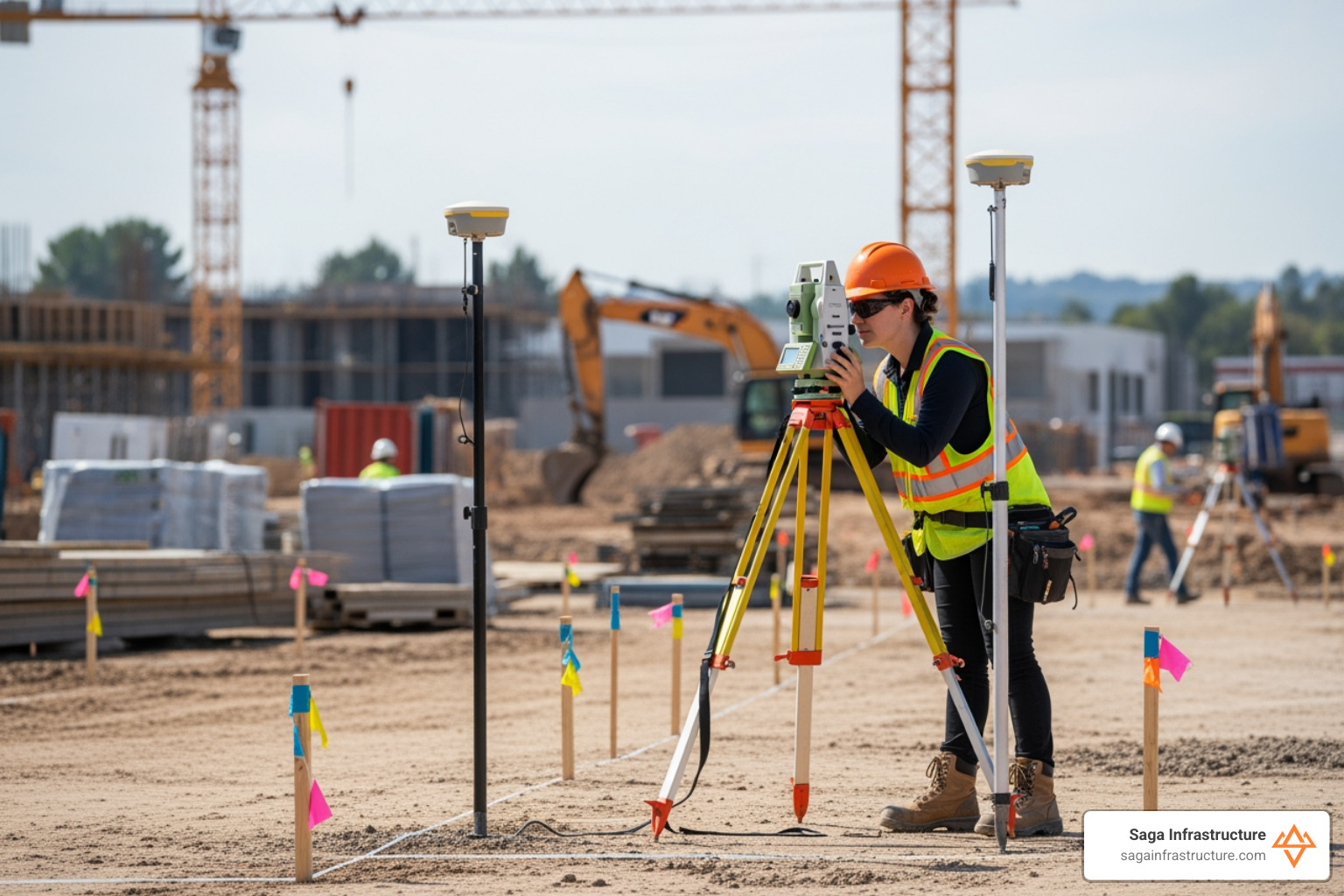
Before the first bulldozer moves, we need a map. A topography survey shows us the “highs and lows” of the land. This tells us where the water will go and how much dirt we need to move. Then comes the most important part: testing the soil to see how much weight it can hold.
A geotechnical report tells us if the soil can actually hold a building. In places like Arizona or Texas, we might deal with expansive clays that grow when wet and shrink when dry. If we don’t test for this, your floor might feel like a roller coaster in a few years. We test for load-bearing capacity and moisture levels to ensure the ground is solid. We want to make sure the dirt is packed down tight so it does not move later. This is called compaction, and it is the secret to a building that stays straight and strong for decades.
Navigating Permits, Regulations, and Environmental Impact
You can’t just start digging because you own the land. In places like Clermont or Minneola, Florida, you need specific permits. Every city has its own rules about how loud the machines can be and what time of day we can work. We handle the “alphabet soup” of regulations, including the SWPPP (Stormwater Pollution Prevention Plan). This plan is a promise to the government that we will not let dirty water leave our construction site.
EPA compliance is huge. We use Best Management Practices (BMPs) like silt fences and sediment traps to manage stormwater. This protects local wetlands and keeps us in the good graces of the local government. In Florida, we have to be very careful about protecting our water and the animals that live near the site. You can see how we apply these standards in our local work, such as the Hills of Minneola Crooked Can Infrastructure project. We make sure that while we build for the future, we are also taking care of the land. This is part of our commitment to stewardship. We want the communities where we work to stay beautiful and healthy for the people who live there.
Managing Costs and Timelines for Site Work
Time is money in construction. Typically, the physical commercial site preparation lasts between 1 and 2 months. However, getting permits can take much longer—sometimes several months or even a year depending on the complexity of the project. If the land has a lot of trees or old buildings, it takes more time to clear. If the soil is bad, it takes more time to fix it. We work hard to stay on schedule so the rest of the building project can start on time.
To save money, we often use a “cut and fill” method. This means we take dirt from the high spots (the cut) and move it to the low spots (the fill). This reduces the cost of hauling dirt in or out of the site. Moving dirt with trucks is very expensive, so we try to use what is already there. For business investors, a feasibility study is essential to catch these costs early. This study is like a check-up for the land. It tells you if the project will cost too much before you even start. If you have to bring in $30,000 worth of utility lines because the site is remote, you want to know that before you buy the land! We help our partners understand these costs so there are no surprises later. By planning carefully, we can save thousands of dollars and keep the project moving forward.
Frequently Asked Questions about Commercial Site Preparation
How long does the site preparation process typically take?
The actual dirt work usually takes 4 to 8 weeks. This includes clearing the land, grading the soil, and digging for pipes. However, the “pre-construction” phase—which includes surveying, soil testing, and waiting for the city to approve permits—can take 3 to 6 months. It is important to start early so you do not get stuck waiting for paperwork.
What are the typical costs associated with commercial site work?
Costs vary wildly based on the size of the lot and the soil quality. A rough estimate for a 10,000 sq ft site might include $2,000 for surveying, $1,800 for soil testing, and anywhere from $4,000 to $20,000 for grading. Utility connections can add another $10,000 to $30,000 if the site is “raw” and far away from existing pipes. We always recommend a feasibility study to get a better idea of the price.
Why is soil compaction so important for commercial buildings?
If the soil isn’t compacted correctly, the building will settle unevenly. This leads to cracked foundations, windows that won’t open, and plumbing lines that snap. We use heavy rollers to squeeze the air out of the dirt, creating a rock-hard pad for your foundation. We test the dirt many times to make sure it is as solid as a rock before the concrete is poured.
What happens if you find something unexpected underground?
Sometimes we find old pipes, large boulders, or even buried trash that was not on the map. When this happens, we have to stop and figure out the best way to remove it safely. This is why having an experienced team is so important. We know how to handle surprises without letting them ruin the whole project. We keep the site safe and find a solution that keeps the building strong.
Conclusion
At Saga Infrastructure, we know that commercial site preparation is about more than just moving dirt. It’s about stewardship. We are taking care of the land and the community. We partner with local firms like Foshee Construction in Florida to ensure that local expertise meets national strength. We protect the legacies of the builders who came before us while using our capital and resources to build for the next generation. We believe that by working together, we can build a stronger America.
Whether you are in Florida, Texas, or Arizona, our goal is the same: to provide a stable, safe, and compliant foundation for your business to grow. We don’t just build for the next quarter; we build for the next century. We want your building to stand tall and proud for a very long time. Our team is ready to help you through every step of the process, from the first survey to the final utility connection.
Ready to lay the groundwork for your next project? Start the conversation with Saga Infrastructure today. Let’s build the backbone of America together. We are here to make sure your project starts on solid ground.