
How Much Does Land Grading Cost?
How Much Does Land Grading Cost in 2026? (Quick Answer)
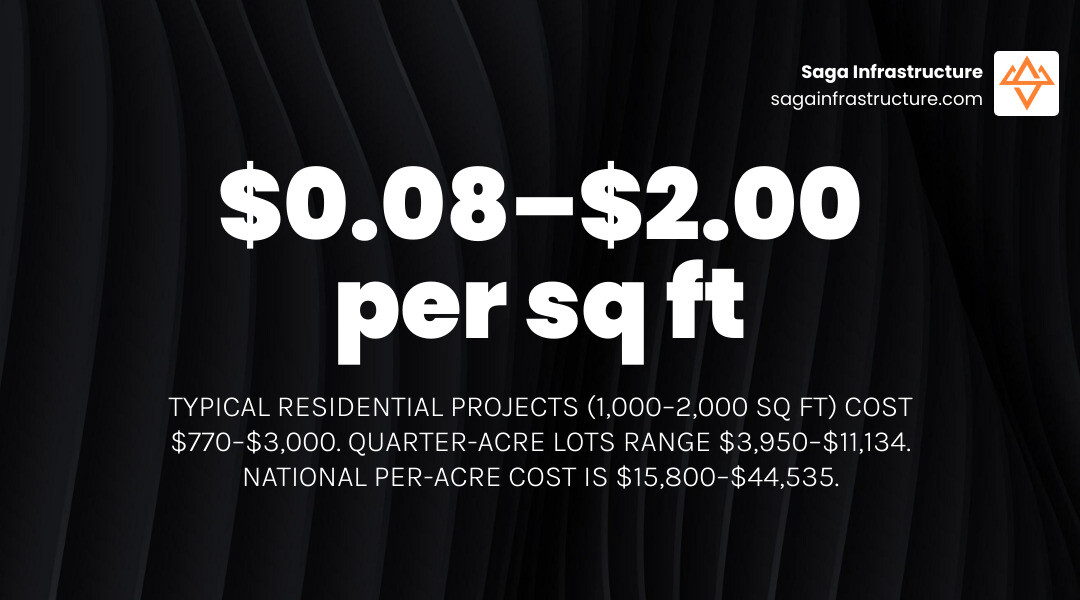
Land grading cost typically falls between $0.08 and $2.00 per square foot. Most homeowners pay $770 to $3,000 for a standard residential project covering 1,000 to 2,000 square feet.
Here’s a fast reference to help you estimate your project:
- Per square foot (national average): $0.08 – $2.00
- Typical residential project (1,000-2,000 sq ft): $770 – $3,000
- Quarter-acre lot: $3,950 – $11,134
- Per acre: $15,800 – $44,535
- Hourly rate (labor + equipment): $40 – $180/hr
- Grading permit: $150 – $485
These numbers shift based on your soil, slope, location, and what work is actually needed. The sections below break it all down clearly.
Standing water in your yard after rain. A foundation that slopes the wrong way. A new patio that won’t drain. These are the moments when homeowners start asking what it actually costs to fix the ground beneath their feet.
Land grading is one of those projects that seems straightforward until you start getting quotes. Prices vary widely — and without knowing what drives those numbers, it’s easy to overpay or underprepare.
This guide walks you through everything: average costs, what pushes prices up or down, regional differences, and how to get a quote you can actually trust.
I’m Don Larsen, CEO of Saga Infrastructure, a national platform that acquires and supports high-performing regional civil and site work contractors. My background spans construction, operations, and business development across complex multi-site organizations — and land grading cost is a topic I’ve seen play out on job sites and in budgets across the country. Whether you’re a homeowner planning a drainage fix or a builder prepping a new site, the numbers in this guide reflect real-world pricing from the ground up.
Important land grading cost terms:
What Land Grading Is and Why Homeowners Pay for It
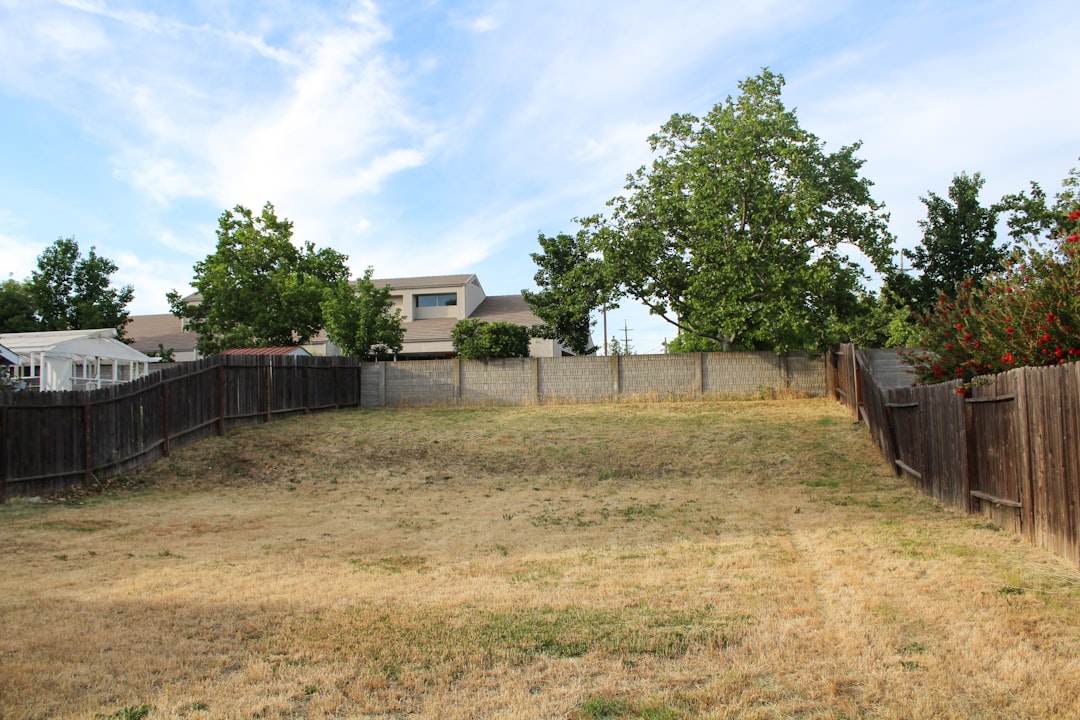
Land grading means reshaping the ground so water drains the right way and the site works the way it should. Sometimes that means cutting high spots down. Sometimes it means filling low spots in. Sometimes it means both, which is the dirt version of moving furniture around until the room finally makes sense.
For homeowners, grading is usually about one or more of these goals:
- Moving water away from the house
- Protecting the foundation
- Fixing soggy or muddy areas
- Preparing for a patio, driveway, or addition
- Creating a smoother, safer yard
- Reducing erosion
What land grading means for a home site
On a residential property, grading often includes:
- Correcting negative slope toward the home
- Creating a gentle fall away from the foundation
- Building up or leveling a pad for a shed, driveway, or structure
- Balancing cut and fill so less dirt has to be hauled in or out
- Smoothing the site for final landscaping
If you have standing water that sticks around more than a day after rain, ruts that keep getting worse, or soil washing away, grading may be the fix. It is also common before new construction, because builders need a stable building pad and a site that drains well from day one.
Why grading is necessary around homes
Bad grading can lead to expensive problems fast. Water that runs toward the house can cause basement leaks, crawlspace moisture, slab issues, and foundation movement. Even if your home is fine structurally, poor grading can make the yard hard to mow, impossible to landscape, and messy every time it rains.
We often tell homeowners to think of grading as prevention, not just repair. Spending money now on shaping the land can help avoid much bigger costs later.
For a deeper overview, see The Straight Dirt on Land Grading and Leveling.
Rough grading vs final grading vs grading with drainage
These terms matter because they affect the final price.
- Rough grading: Big reshaping work. This is the heavy earthmoving stage that establishes major slopes and elevations.
- Final grading: Fine-tuning the surface. This usually includes smoothing, preparing for seed or sod, and getting the finished elevation right.
- Grading with drainage: Adds water-management features like swales, catch basins, trenching, or French drains.
Rough grading is often more machine-heavy. Final grading needs more precision. Grading with drainage takes more planning and more materials.
If drainage is the real problem, grading alone may not solve it. In many cases, the smart fix is a grading-and-drainage package. You can learn more in The Essential Guide to Grading and Drainage Systems.
Average Land Grading Cost in 2026
The average land grading cost depends on whether you are pricing by square foot, acre, or project type.
- Per square foot: $0.08 – $2.00. Broad national range.
- National average unit cost: $1.13 – $1.52. Common estimate for landscaping grading.
- Typical residential project: $770 – $3,000. Usually 1,000-2,000 sq ft.
- Per acre: $15,800 – $44,535. Large range based on site conditions.
- National average per acre: About $30,000. Large-scale average.
- Hourly labor + equipment: $40 – $180/hr. Depends on crew and machine type.
Land grading cost per square foot
Per-square-foot pricing is most useful for smaller residential jobs.
Research shows a broad range of $0.08 to $2.00 per square foot. That low end usually applies to light finish work on easy ground. The high end usually reflects heavier grading, difficult access, or added drainage work.
A separate 2026 unit-cost estimate puts landscaping grading at about $1.13 to $1.52 per square foot on average. That is a helpful middle range for planning, but not every project fits neatly inside it.
In plain English:
- Fine grading usually costs less
- Rough grading usually costs more
- Tiny jobs can look expensive per square foot because mobilization still costs money
Land grading cost per acre
Per-acre pricing matters more for larger lots and rural properties. Nationally, grading an acre runs about $15,800 to $44,535, with an average around $30,000.
That does not mean every acre costs the same. A flat acre with easy access and good soil is very different from an acre with steep slopes, thick vegetation, drainage problems, or imported fill.
As projects get larger, the cost per square foot may drop because fixed costs like mobilization get spread out over more area. But if the site is complex, that savings can disappear quickly.
Typical residential project costs by yard size
Most homeowners are not grading a whole acre. They are fixing a section of yard, a drainage path, or the area around a home.
Here are useful ballpark ranges:
- 500 sq ft: about $400 to $1,000
- 1,000 to 2,000 sq ft: about $770 to $3,000
- 5,000 sq ft: about $3,500 to $9,000
- 10,000 sq ft: about $5,000 to $15,000
- Quarter-acre lot: about $3,950 to $11,134
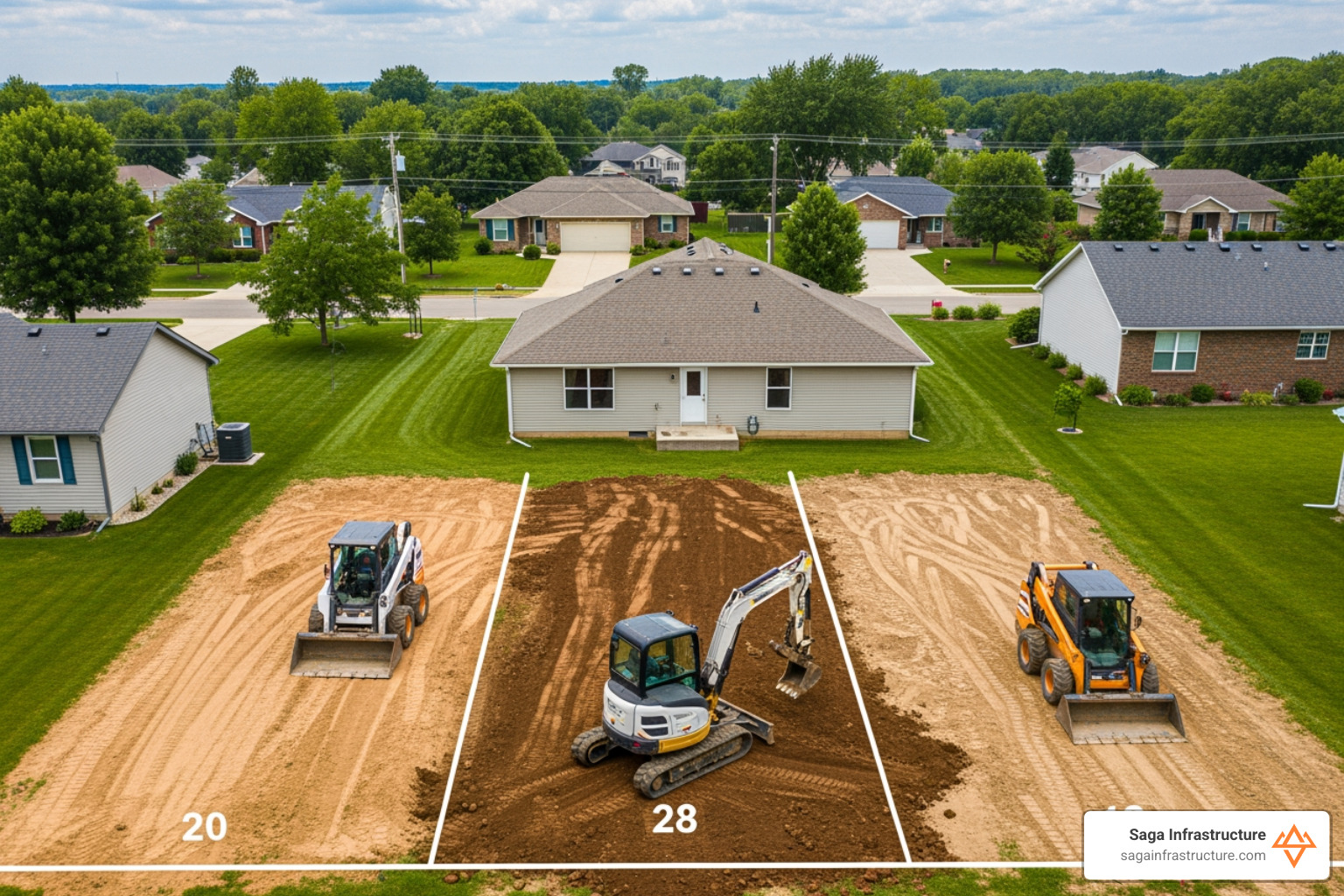
The quarter-acre range surprises a lot of people. That is because quarter-acre jobs often involve more than simple smoothing. Drainage correction, hauling, topsoil replacement, and tight access around an existing house all add cost.
Hourly equipment and labor costs that shape the bill
Some contractors price grading as a project lump sum, but the math behind the quote still comes back to labor and equipment hours.
Typical hourly rates range from $40 to $180 per hour, depending on:
- Operator skill
- Machine type
- Number of crew members
- Project complexity
- Local labor market
Common equipment includes:
- Skid steers
- Mini excavators
- Bulldozers
- Backhoes
- Compactors
Equipment can account for 30% to 40% of the total project cost. If your yard needs a compact machine because access is tight, the job may take longer. If it needs a larger dozer or excavator, hourly cost may jump.
What Makes Land Grading Cost Go Up or Down
Size, slope, and terrain complexity
The biggest price driver is how much earth has to move and how hard it is to move it.
A flat lot with a small drainage issue is usually straightforward. A steep lot, hillside, or heavily uneven site is not. More slope means:
- More cuts and fills
- More machine time
- More chance of erosion control
- Possible need for terracing or walls
The ideal project balances cut and fill so soil can be reused on site. If a job needs lots of imported fill or lots of hauled-off spoil, cost climbs.
Soil conditions and material movement
Soil type matters more than most homeowners expect.
- Sandy soil is often easier to shape
- Clay soil can be sticky, dense, and slow to work with
- Rocky soil raises labor and wear on equipment
- Organic or unstable soils may need removal and replacement
- Hard rock conditions can require specialized equipment
For Florida properties, soil and drainage conditions can swing costs sharply. Basic rough grading there often runs about $1,500 to $5,000 per acre. Final grading is commonly $3,000 to $8,000 per acre. Grading with drainage can reach $4,000 to $10,000+ per acre.
Fill dirt is another major line item. Research shows fill material often costs $15 to $50 per cubic yard. If topsoil gets stripped during grading, it may need to be replaced later before seeding or sod.
Access, equipment, and jobsite obstacles
A simple site can become a difficult one if machines cannot reach it easily.
Common cost boosters include:
- Narrow gates
- Fences
- Existing patios or driveways
- Trees and stumps
- Utility lines
- Septic systems
- Wet ground conditions
Tight access may require smaller equipment and more manual work. Wooded sites may need clearing before grading can start. If debris, roots, or old concrete must be hauled away, disposal charges get added too.
Before any digging starts, call 811 so underground utilities can be marked. That step is free. Hitting a utility line is very much not free.
Permits, surveys, engineering, and compaction testing
Not every yard grading job needs permits or engineering, but some do.
Common planning costs include:
- Grading permit: about $150 to $485
- Land survey: about $500 to $1,200
- Engineering or drainage plans: varies widely
- Compaction testing: about $200 to $500 per test
A commonly cited threshold is that permits may be required when disturbing more than 5,000 square feet of land, though local rules vary. In Florida, permits and engineering costs can be much higher on projects involving stormwater, flood zones, or larger site work.
If your project includes a building pad, driveway base, or structural support area, compaction matters. Loose soil under a finished surface is a future problem in disguise.
For more background, see Everything You Need to Know About Heavy Earthmoving and Site Development.
Extra Costs Homeowners Often Miss
Drainage fixes that should be priced with grading
A grading quote may not include drainage unless you ask.
That matters because many grading projects exist for one reason: water. If the water issue is not addressed, you may pay for a smooth yard that still acts like a swamp after every storm.
Common drainage add-ons include:
- French drains: about $10 to $75 per linear foot
- Swales
- Catch basins
- Trench drains
- Downspout tie-ins
In our view, drainage should be discussed early, not treated like a surprise side quest halfway through the job.
Fill dirt, topsoil, and finish materials
Quotes often separate earthmoving from finish materials.
Watch for line items like:
- Fill dirt: $15 to $50 per cubic yard
- Topsoil replacement
- Seed
- Mulch
- Sod: about $1 to $2 per square foot
Topsoil is especially important around homes. Rough grading may establish the shape, but the final growing surface still needs the right material if you want grass to come back instead of mud.
Erosion control, retaining walls, and cleanup
If your site has slope or loose soil, erosion control may be necessary after grading.
Possible extra costs include:
- Silt fence
- Erosion blankets
- Straw or mulch cover
- Washout prevention
- Reseeding
- Final cleanup
Retaining walls can also enter the picture when a slope is too steep to grade safely on its own. Those are separate structures and can add thousands to the total project budget.
New construction and driveway prep add-ons
Grading for new construction is different from simple yard leveling. Add-ons may include:
- Building pad prep
- Foundation grading
- Driveway base prep
- Clearing and stripping vegetation
- Compaction work
- Gravel installation
If your project is tied to a home build, garage, or driveway, related site work may cost more than the grading itself.
For related reading, see The Groundwork Essentials for Your New Construction Project and From Dirt to Driveway: Mastering Grading and Paving.
Regional Land Grading Cost Differences
Where your property sits has a real effect on land grading cost. Since we serve Florida, Texas, and Arizona markets, those are the locations that matter most for planning.
West Georgia and wider Georgia pricing
Georgia pricing appears in some industry guides, but since our focus here is on the areas we serve, we use it only as broad context rather than as a target estimate for your project. If you are outside our active service areas, local conditions and codes can shift the numbers fast.
Florida pricing by region and drainage demand
Florida is one of the clearest examples of why local conditions matter.
Statewide guide data shows:
- Basic rough grading: about $1,500 to $5,000 per acre
- Final grading: about $3,000 to $8,000 per acre
- Grading with drainage: about $4,000 to $10,000+ per acre
Those ranges reflect several Florida realities:
- High water tables
- Flat sites that still need precise drainage
- Stormwater rules
- Flood-zone requirements in some areas
- Soft or organic soils in certain locations
For homeowners in Minneola, Clermont, and nearby Central Florida areas, drainage often drives the project more than slope does. A yard can look almost flat and still need careful grading to keep water away from the house. See Land Grading | Minneola, FL | South Lake Loader Service and Grading in Clermont, FL – Costs 02 / 2026 – Homeyou for local market examples.
California and Colorado examples
Some national articles compare pricing in places like California and Colorado. Those can be useful for understanding how hillside terrain, access, and regional labor rates affect cost in general, but they are not a strong budgeting tool for Florida, Texas, or Arizona jobs.
If you want to see how local quote guides present those differences, you can review Local grading cost examples in California and Regional grading pricing in Colorado. Just do not treat them as local pricing for our service areas.
How to use local guides without trusting averages too much
Online averages are best for rough planning, not final budgeting.
Use them to build a budget range, then get a site-specific quote based on:
- Zip code
- Square footage or acreage
- Drainage needs
- Soil conditions
- Access limits
- Imported or exported dirt
- Finish grade expectations
That is how you avoid comparing your real project to someone else’s simple flat-lot example.
DIY vs Professional Grading and How to Get Accurate Quotes
When DIY grading makes sense
DIY grading can make sense for very small, simple jobs, such as:
- Leveling a tiny area for a playset
- Touching up around a garden bed
- Smoothing a patio base by hand
- Fixing a minor low spot in the yard
For jobs like that, hand tools or a small rental machine may be enough.
When professional grading is worth the investment
Professional grading is usually worth it when the project affects:
- Foundation drainage
- Large yard slopes
- Retaining walls
- Permit-required earthmoving
- Driveway or building pad prep
- Persistent standing water
- Large amounts of cut and fill
Mistakes in grading are expensive because they do not always show up right away. Sometimes the bill arrives with the next hard rain.
How to get accurate grading quotes
Get 3 to 5 quotes and ask each contractor for the same scope. Request itemized details that cover:
- Total area to be graded
- Rough grading or final grading
- Drainage features included or excluded
- Fill dirt or topsoil quantities
- Haul-off and disposal
- Permit responsibility
- Timeline
- Cleanup and restoration
- Insurance and licensing
Questions to ask a grading contractor:
- Is drainage correction included in this quote?
- Are fill dirt and topsoil separate line items?
- Will you reuse soil on site when possible?
- What happens if unsuitable soil is found?
- Do you handle permits and inspections?
- What equipment will be used?
- How will you protect the home, driveway, and utilities?
- Is erosion control included?
- What finish should we expect when the job is done?
For more cost examples, see Cost to Grade Landscaping – 2026 Cost Calculator (Customizable), How Much Does Land Grading Cost in 2026? – Lawn Love, and Cost for Grading Yard: cost for grading yard pricing and tips in 2026 | TruTec Blog.
Smart ways to save money without creating drainage problems
You can save money on grading without cutting the wrong corners.
Good ways to reduce cost:
- Bundle grading with drainage or driveway work
- Remove debris before the crew arrives
- Reuse on-site soil when possible
- Keep the scope clear and simple
- Schedule during slower periods if available
- Get multiple quotes based on the same plan
Bad ways to save money:
- Skipping drainage when water is the issue
- Choosing the cheapest quote with vague scope
- Ignoring permits
- Assuming topsoil is included
- DIY-ing a foundation drainage fix with optimism and a shovel
Frequently Asked Questions About Land Grading Cost
How much does land grading cost for a quarter-acre lot?
A quarter-acre lot typically costs about $3,950 to $11,134 to grade. The final number depends on slope, access, fill needs, drainage work, and whether material has to be hauled in or out.
Does land grading cost include topsoil and drainage?
Usually not automatically. Many quotes separate grading, fill dirt, topsoil, seed, sod, and drainage features into different line items. Always ask what is included.
How long does a grading project usually take?
A small simple project may take 1 to 2 days. More complex residential work often takes several days. Larger or drainage-heavy projects can take a week or more, especially if weather, inspections, or material delivery affect the schedule.
Conclusion
The best way to estimate land grading cost is to start with the common ranges, then narrow them down with a real site visit. For many homeowners, that means budgeting anywhere from a few hundred dollars for a tiny touch-up to several thousand for a drainage-focused yard project, and much more for large lots or acre-scale work.
The key is understanding what you are paying for: not just moving dirt, but shaping the site so it drains, supports structures, and stays stable over time.
At Saga Infrastructure, we believe good site work is part of protecting what people build. We bring the practical mindset of local contractors together with the resources of a broader platform, especially in the Florida, Texas, and Arizona markets we know best.
If you are planning site work and want to better understand the contractor side of growth and infrastructure, visit More info about business owners.