
The Groundwork Essentials for Your New Construction Project
What Is Site Preparation for Building (And Why It Matters)
Site preparation for building is getting land ready for a new house. You do this before you build walls or a foundation. It includes checking the land, testing the dirt, and clearing trees. You also need to plan for water and power.
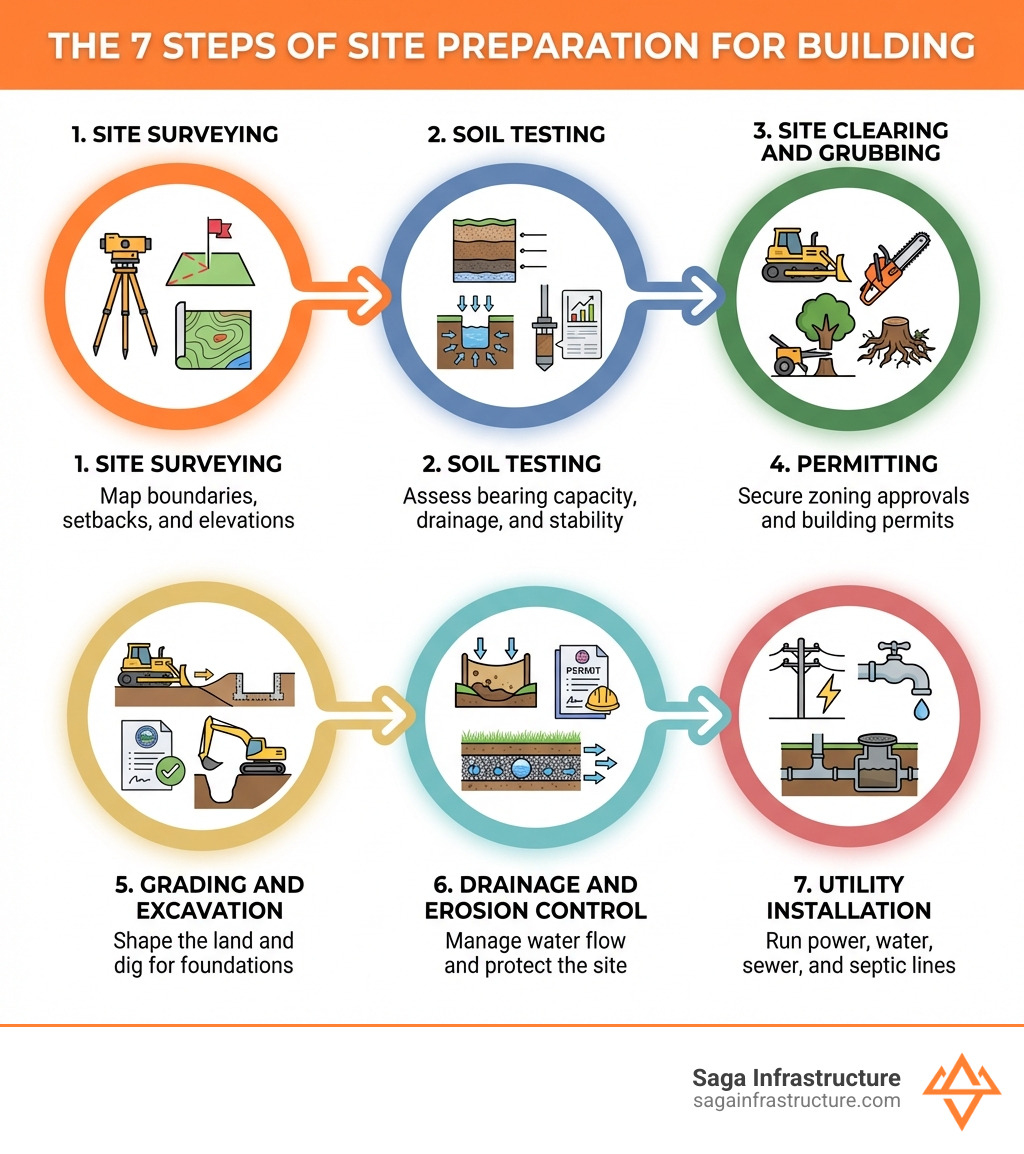
Here are the main steps:
- Site Surveying – Map the edges of the land.
- Soil Testing – See if the dirt is strong and dry.
- Site Clearing – Remove trees, roots, and trash.
- Permits – Get permission from the city.
- Grading – Make the land flat and dig for the base.
- Drainage – Make sure water flows away from the house.
- Utilities – Put in power, water, and sewer lines.
If you rush these steps, you will have big problems. Bad water flow can flood a basement. This can cost $15,000 to fix. If the dirt is not packed down, driveways can sink. These problems happen when people skip the hard work at the start.
Site prep is not fancy, but it is very important. It stops expensive problems before they start.
I am Don Larsen, the head of Saga Infrastructure. I have worked in building for a long time. I know that good site prep keeps a building safe for years. I will show you how it works so you can plan your project.
Why Site Preparation is the Most Critical Phase
We say you win or lose a project in the dirt. You might want to look at floor plans or kitchens first. But the house needs a strong base. Site prep is important because it stops the house from cracking or flooding.
In places like Florida, Texas, and Arizona, the land is different. Some places have lots of water. Other places have dirt that grows when it gets wet. At Saga Infrastructure, we make sure the ground is ready. We did this for The Vue Clermont to make sure it was built right.
Avoiding Common Mistakes and Risks
Problems that show up years later usually start with bad site prep. Here are common mistakes:
- Loose Dirt: If the dirt is not packed down, the house will sink and crack.
- Leaving Roots: If you leave tree roots in the ground, they rot. This leaves holes that make the ground sink.
- Bad Water Planning: If the land does not slope away from the house, water will flood the basement.
- Wrong Lines: If you build too close to the edge of your land, you might have to tear it down.
The Essential Steps of Site Preparation for Building
Good site preparation for building is more than moving dirt. It is a plan to turn wild land into a flat spot for a house. We look at the soil, the hills, and any old buildings that need to go.
Site Surveying and Soil Testing
Before a machine starts, you need a survey. This shows where your land ends. It also shows where you are allowed to build.
Testing the soil is also key. A pro tests the dirt to see how it holds water. In Texas or Arizona, some dirt swells up when it rains. If you do not plan for this, your house foundation will crack.
Clearing, Grubbing, and Permits
Next, we clear the land. We take away trees and bushes. “Grubbing” means pulling up the roots and stumps. You cannot build over old roots.
We also get the right papers. You need permits from the city. Most places will not let you start until you have these. We know the rules in Florida and Texas, so we can help with this.
Managing Water: Grading, Drainage, and Erosion Control
Water is the enemy of a house. Good site preparation for building keeps water away from the base of the house.
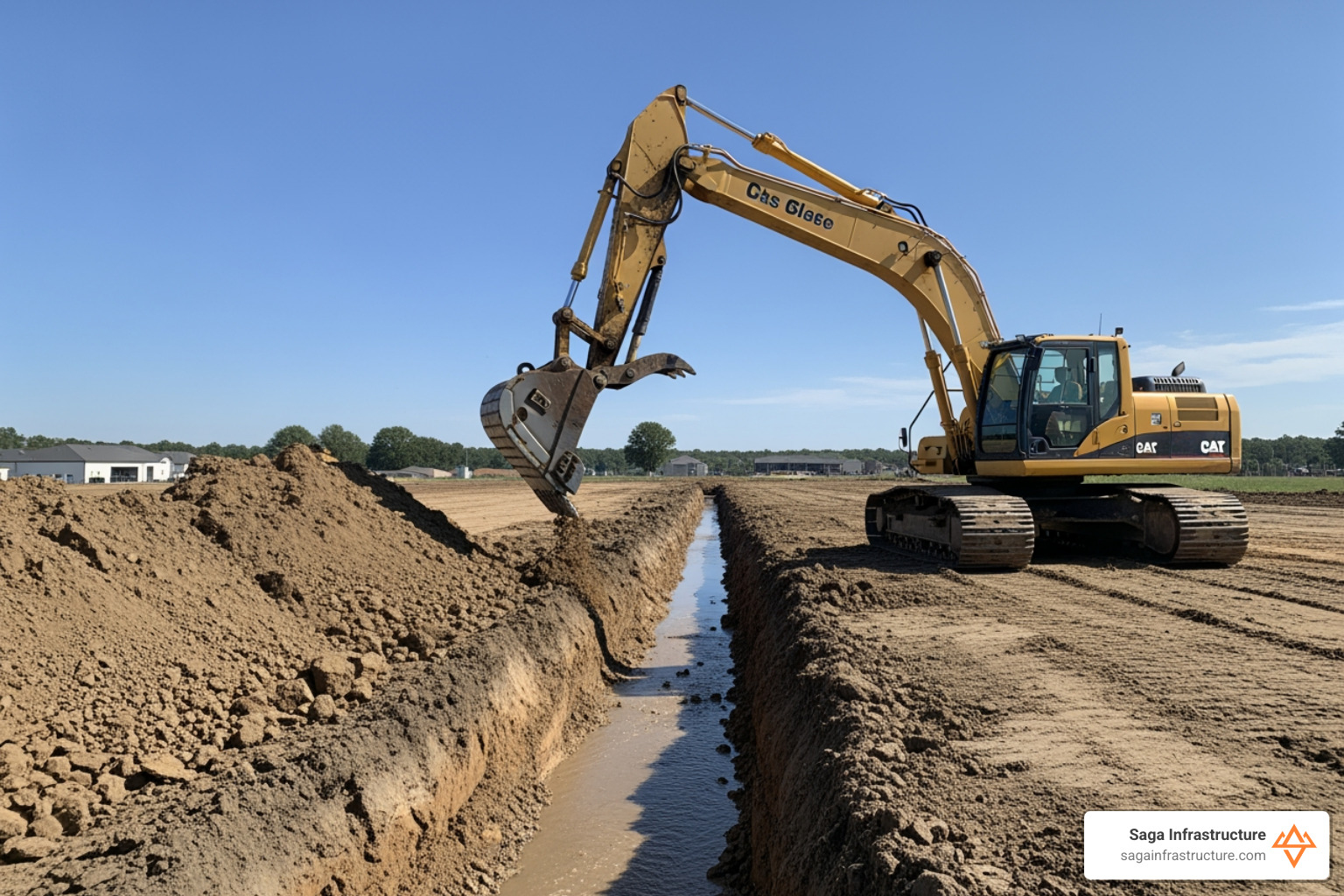
Grading means making the land slope. We move dirt to make a flat spot for the house. We make sure rain flows into drains. We also stop the dirt from washing away during a storm.
Preventing Erosion and Flooding
To keep the site safe, we use these tools:
- Silt Fences: These stop mud from washing into the street.
- French Drains: These are pipes under the ground that carry water away.
- Sediment Basins: These are small ponds that catch muddy water so the dirt can sink to the bottom.
Our work at Mirror Lake shows how we protect the land and the building.
Utility Installation and Infrastructure Planning
You do not want to dig up a new driveway to fix a pipe. That is why we plan for power and water early.
We put in water and power lines at the start. We also set up power for the workers. We make sure septic systems are in the right spot where the dirt is good.
Access Roads and Staging Areas
A building site is busy. We make gravel paths for big trucks. This keeps them from getting stuck in the mud. It also keeps the road clean. We also pick a spot to keep tools and materials safe.
Timelines, Costs, and Project Variations
How long does site preparation for building take? On flat land, it might take 2 or 3 weeks. If there are many trees and no power, it can take 2 months or more.
Costs change based on the size of the job. Here is a simple guide:
| Service | Small Building | Large Building |
|---|---|---|
| Clearing | $250 – $600 | $1,200 – $2,800 |
| Surveying | $200 – $2,000 | $200 – $2,000 |
| Soil Testing | $700 – $1,800 | $700 – $1,800 |
| Site Plan | $750 – $2,500 | $750 – $2,500 |
| Grading | $800 – $4,000 | $4,000 – $20,000 |
Factors Influencing Your Budget
Some things make the price go up. If you need to bring in power from far away, it can cost a lot. We suggest saving extra money for surprises like big rocks under the dirt. At Saga Infrastructure, we tell you the costs upfront. You can read more about us here.
Choosing the Right Team for Your Groundwork
The team that moves the dirt is very important. You want a team that knows your area. A team from far away might not know about the dirt in Florida or Arizona.
When you pick a team, look for:
- License and Insurance: This keeps you safe if something goes wrong.
- Good Tools: Using lasers and GPS helps them be very exact.
- Good Reviews: Ask to see other jobs they have done.
- Local Knowledge: They should know the local rules and the land.
Frequently Asked Questions about Site Preparation for Building
How long does site preparation typically take?
The physical work takes 2 to 4 weeks. But getting permits and testing the soil can take 1 or 2 months. Rain can also slow things down.
What are the biggest risks of poor site prep?
The biggest risks are cracks in the house and water damage. If the dirt is not ready, the house will sink. These problems are very hard to fix later.
How does site prep differ for barns or shops?
Barns and shops hold heavy things. They need a very strong base. Some farm buildings use poles in the ground instead of a flat concrete floor. This changes how we dig.
Conclusion
At Saga Infrastructure, we know every great building starts in the dirt. We are a big company with local experts. Whether you are in Florida or Arizona, we make sure your project starts on strong ground.
We care about the land and your building. If you are ready to start, visit us at Saga Infrastructure. Let’s get to work!
