
The 5 Best Site Preparation Contractors Compared
Why Picking the Right Site Prep Team Matters
Site preparation contractors are experts. They clear, level, and dig the land before building starts. Here is what to look for when you pick a team:
| What to Check | Why It Matters |
|---|---|
| Years of work | They have done this many times |
| Good machines | New tools work faster and better |
| Services offered | One team can do all the jobs |
| Safety record | No one gets hurt on the job |
| Local knowledge | They know the local dirt and land |
Every building starts with the ground. Before you build walls, the land must be ready. This means clearing plants, testing the dirt, and making the ground flat. If this part is wrong, the whole project will have problems. If it is right, everything moves faster and stays on budget.
Not all teams are the same. Some work on small yards. Others work on big roads. Some do dirt work and pipes together. You need to know the difference.
“Good site prep changes how we build land.” – Foshee Construction, a Saga Infrastructure partner.
I am Don Larsen. I lead Saga Infrastructure. We partner with great local teams to help them grow. In this guide, I will show you how to pick the best team for your project.
What is Site Prep and Why Do We Need It?
Think of site prep like a clean piece of paper. You would not draw a picture on a dirty, ripped paper. In building, site prep turns wild land into a safe place to build.
This step is very important. First, it keeps people safe. If the ground is not strong, the building could crack or sink. We have seen this happen, and it costs a lot of money to fix. Second, it makes the ground steady. We test the dirt and press it down so it can hold a heavy building.
At Saga Infrastructure, we care about local communities. You can learn more on our About Us 2 page. We help local builders who know their own dirt best.
Important parts of this work:
- Testing Dirt: Checking if the soil is sand, clay, or mud.
- Water Planning: Making sure rain flows away so it does not flood.
- Following Rules: Keeping the land clean and following the law.
What Site Prep Teams Do
When you hire site preparation contractors, they do more than just dig. They use big machines for hard jobs. Most projects need a few different steps to get the land ready.
Moving Lots of Dirt
This is the big work. We move lots of earth to make the land level. We often take dirt from high spots and put it in low spots. This is a great way to use the dirt that is already there. It saves you money.
Clearing Land
Before we move dirt, we clear the land. We take away trees, bushes, and rocks. If there is an old building there, we knock it down and take away the mess.
Making the Ground Strong
Not all dirt is the same. Depending on the soil type, the ground might be too soft or wet. Teams use special ways to make it hard. They might add lime or cement to make a strong base for the building.
A good example is the Mirror Lake project. It shows how doing things right at the start leads to a great finish.
Putting in Pipes
It is smart to put in pipes while the dirt is being moved. This saves time and money.
This work includes:
- Digging Trenches: Making long holes for pipes.
- Water Pipes: Putting in lines for water and sewers.
- Power Lines: Setting up for electricity and internet.
- Finding Old Wires: Using tools to find wires so we do not break them.
Our work on the Hills of Minneola Crooked Can Infrastructure project shows how pipes and dirt work go together.
Checking for Experience
Experience means knowing what is under the dirt. When you look for a team, check for:
- Safety: Do they work safely? A safe site is a good site.
- Good Machines: Do they own their tools? This helps them stay on time.
- Local Knowledge: A team in Florida knows sand. A team in Arizona knows dry ground.
- The Team: Meet the people. You can see our experts on the Saga Team page.
5 Things the Best Teams Have
How do you pick the best company? Look for these five things:
- Good Machines: You do not want a broken tractor to stop the work. The best teams use new, clean machines.
- Smart Workers: Driving big machines is hard. You want workers who know what they are doing. Our partners have teams with many years of work.
- Knowing the Rules: Every city has different rules. Your team needs to know how to get the right papers.
- Clear Prices: No one likes a surprise bill. A good team tells you exactly what things will cost.
- Good Talking: You should always know what is happening. Look for a team that answers your questions clearly.
The Steps to Get a Site Ready
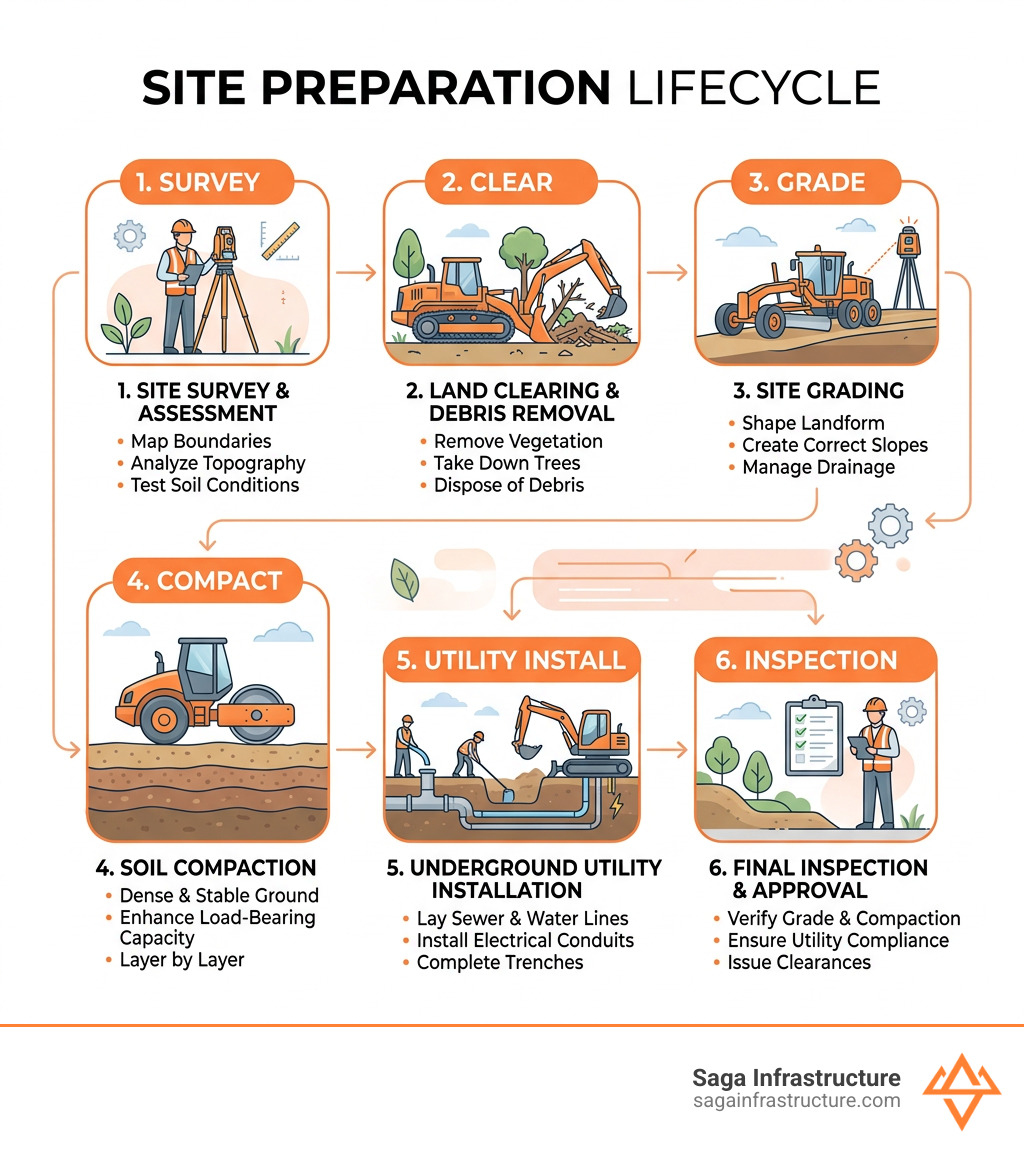
Every site is different, but the steps are usually the same. Here is how we do it:
Step 1: Making a Map
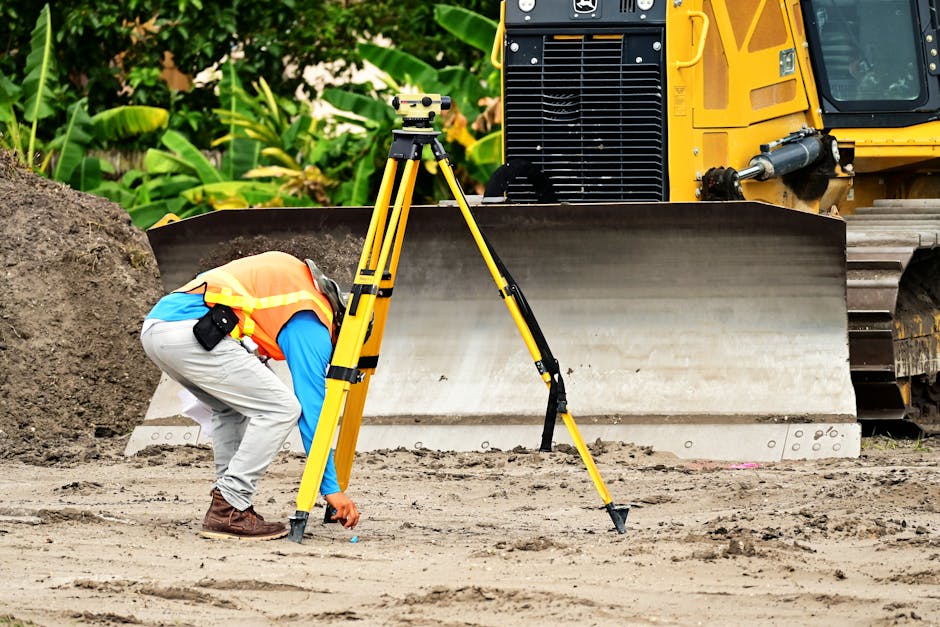
We start by mapping the land. We use drones or GPS to see the high and low spots. We also look for old wires. You can see this in our Skyline at Westfall project.
Step 2: Clearing the Land
Next, we clear the land. We take out trees and old buildings. We follow rules about where to take the trash.
Step 3: Making it Flat
We move dirt to make the ground flat. We also make sure water will flow away from the new building.
Step 4: Pressing the Dirt
Once the land is flat, we use heavy rollers to press the dirt down. This makes the ground strong enough to hold a building.
Step 5: Final Check
Before we finish, we check everything. We make sure it looks like the plan and is safe and clean.
Problems and Costs
Site prep is not always easy. There are often small problems. Knowing about them helps you plan your budget.
Weather
In Florida, rain can turn dirt into mud very fast. In Texas, it can be very hot. We plan for these days to keep the work moving.
Hidden Trash
Sometimes we find things buried in the dirt. It could be old trash or big rocks. Taking these out can cost more money.
Old Pipes
Sometimes we find an old pipe that was not on the map. We have to fix it fast. Our work on The Vue Clermont shows how we handle these things.
Why Prices Change
- Size: Big sites cost more to clear.
- Dirt Type: Hard rock is harder to move than sand.
- Where it is: If the site is hard to get to, it costs more to move machines there.
- The Job: Are we just moving dirt, or are we also putting in pipes?
Common Questions
What is a site prep checklist?
A checklist is a list of jobs to do. It helps the boss make sure nothing is missed. It asks things like: Are the permits ready? Is the dirt tested? Is there a fence? Are the water rules being followed?
How much does it cost?
The cost is different for every job. A small yard is cheap. A big store is expensive. Usually, site prep is about 5% to 10% of the total cost. It is worth it to make the ground right.
Why test the dirt?
Testing tells us what is in the ground. Some dirt moves when it gets wet. This can break a building. Testing helps us know if we need to fix the dirt first. It is like insurance for your building.
Conclusion
Picking the right site preparation contractors is the most important first step. At Saga Infrastructure, we know you want a partner you can trust.
We help local companies grow by giving them more tools. This means you get a team that knows your town but has the power of a big company.
If you are building something new or if you own a construction company, we want to talk. If you want to see your company grow, visit our Business Owners page.
Building America is a big job. It starts with a simple talk. We want to help you get your land ready with confidence.
Let’s start the conversation today.