
Solar Farm Erosion Control: Protecting Your Green Investment
Understanding the Risks of Solar Farm Erosion Control
Solar farm erosion control is very important. It is a big problem that people often forget when building solar farms.
Here is a simple list of ways to stop erosion:
| Method | When to Use | Why it Helps |
|---|---|---|
| Silt fences & filter socks | While building | Slows down water, catches mud |
| Cleaning small areas | While building | Keeps most of the dirt covered |
| Special blankets | On hills | Protects the ground right away |
| Planting grass | After building | Keeps soil in place for a long time |
| Water paths & ponds | On hard land | Moves rain water safely |
| Soft mats | Under panel edges | Cheap and helps grass grow |
| Drones | Every day | Finds problems early |
Solar panels are like big umbrellas. Rain hits the panels and slides off the edges. This water moves fast and hits the ground hard. This can wash away the dirt and hurt the metal legs that hold the panels. It can also turn nearby lakes into mud.
This is a big deal. In one study, 7 out of 10 solar farms did not follow the rules for mud and water. One company had to pay $135.5 million because mud from their site ruined a neighbor’s lake.
But there is good news: you can stop erosion. Experts from big schools say that if you plant grass and use the right tools, solar farms can keep the land healthy—even on hills.
The difference between a good solar farm and a bad one is how you take care of the land while you build.
I am Don Larsen. I lead Saga Infrastructure. We work with local builders to make sure solar farms are built the right way. We want to protect the land and your money. In this guide, we will show you how to keep your solar site safe.
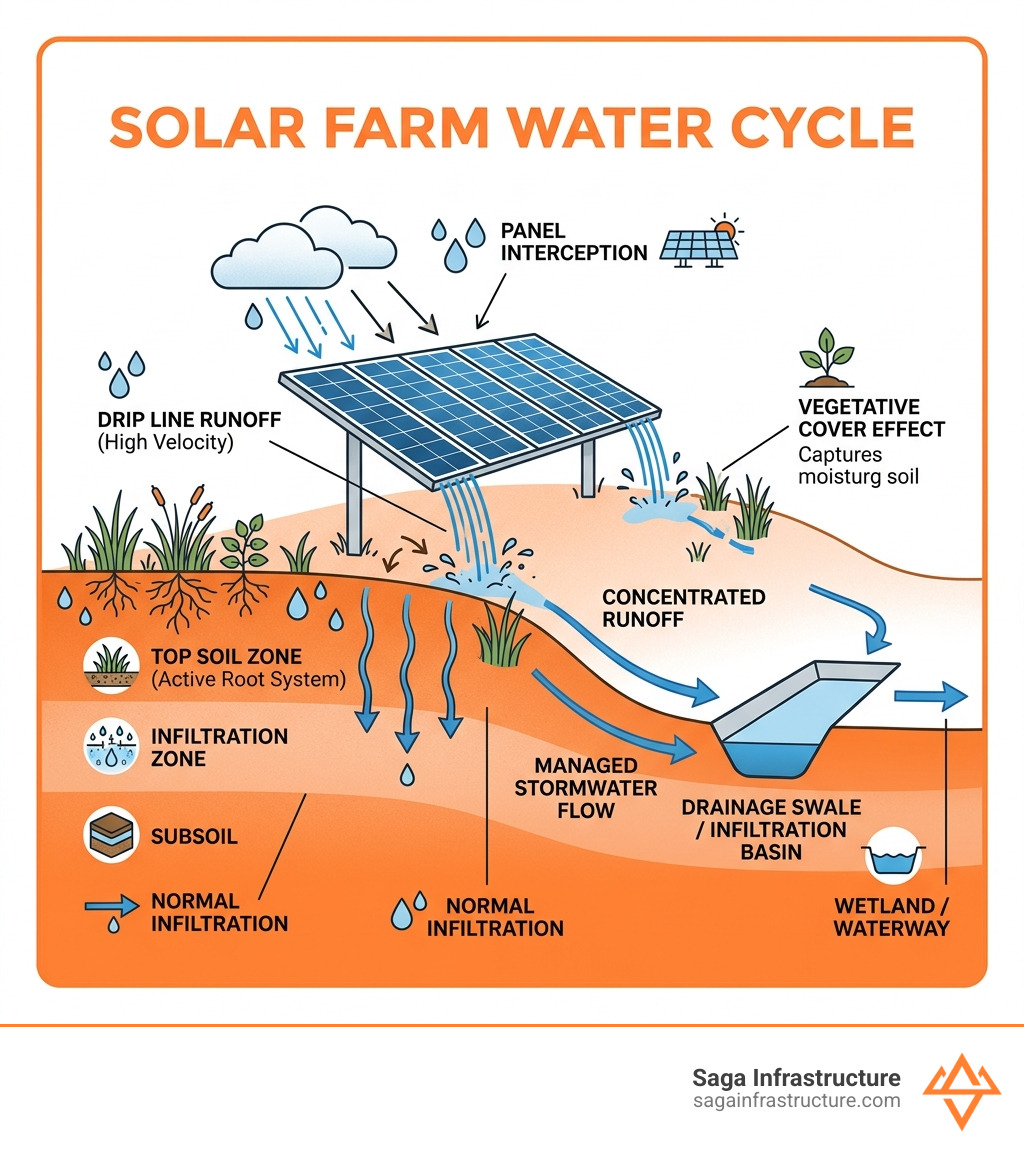
Solar farms look clean and quiet. But under the panels, water can be a problem. If you do not have a plan for solar farm erosion control, the ground can wash away.
Different Kinds of Erosion
- Water Erosion: Rain slides off panels and gathers speed. It starts to carve deep holes in the dirt.
- Drip Line Holes: Water dumps off the edge of the panel in a line. This makes the ground very wet in one spot and dry in another. This makes the soil weak.
- Wind Erosion: In dry places, wind can blow away the top layer of dirt.
- Hill Problems: Water moves faster on hills. Without grass or mats, the soil slides down.
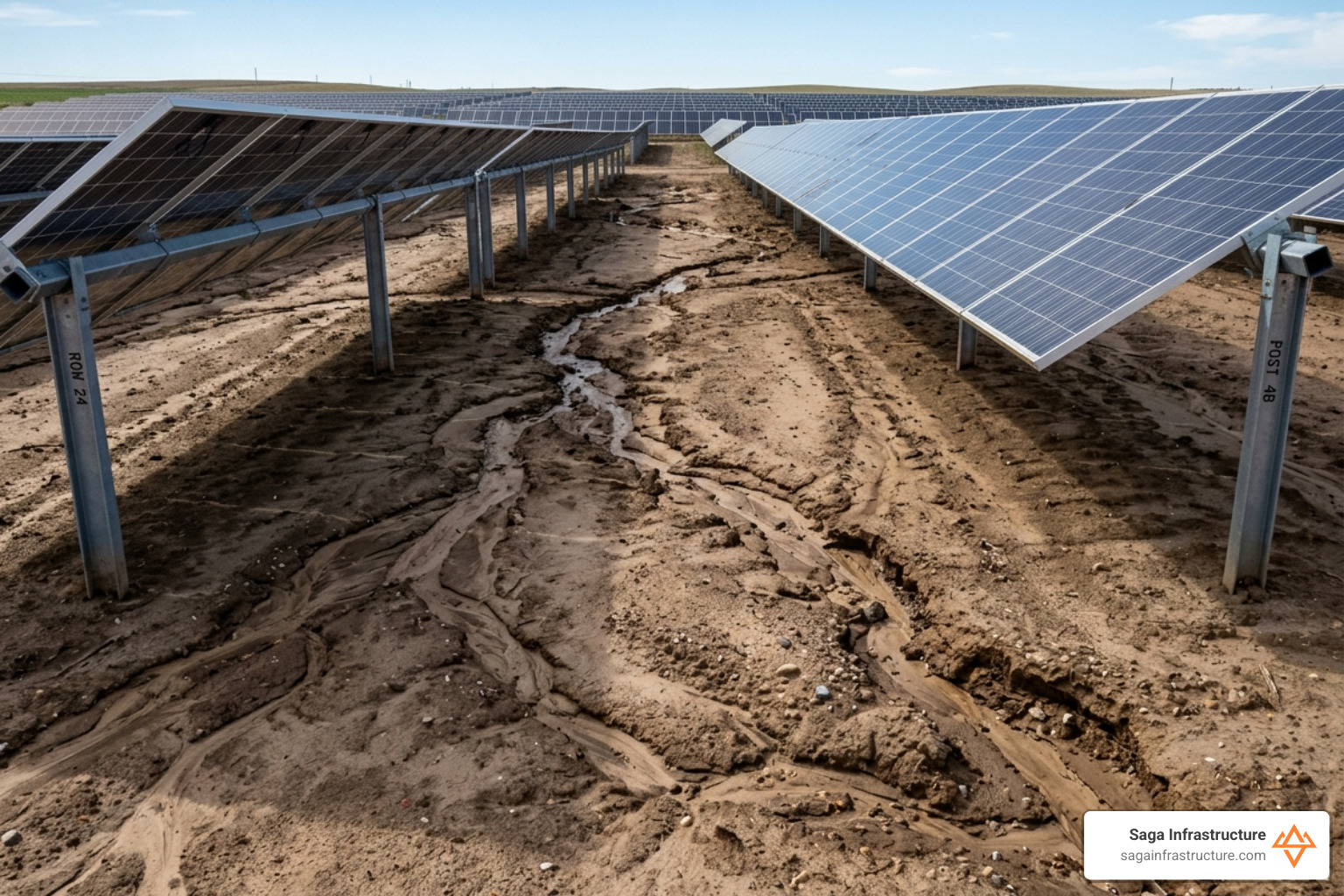
Why it Matters
If the dirt washes away, the solar panels can fall over. It costs a lot of money to fix these problems. Also, you can get in trouble with the law. One company had to pay $135.5 million because mud from their site ruined a neighbor’s lake. Erosion Control in Solar Farms: Do Solar Farms Damage the Soil is a big question. The answer is: only if you don’t take care of the land. You can learn more in our Step-by-Step Guide to Erosion Control Solutions.
Getting the Land Ready
The most dangerous time for a solar farm is when it is being built. This is because the grass is gone and the dirt is open. At Saga Infrastructure, we know that digging too much can hurt the soil. It can pack the dirt too tight or take away the good dirt that plants need.
The 10-Acre Rule
A good rule is to only dig up 10 acres at a time. By working in small parts, you keep the rest of the land safe from rain.
Tools for Building
We use these tools to stop water and mud:
- Silt Fences & Filter Socks: These act like filters to catch dirt before it leaves the site.
- Compost Filter Socks: These are heavy tubes that stop mud. They work well on rocky ground.
- Planting Grass Fast: You should plant grass as soon as you finish a small area. Don’t wait until the end. Planting grass like clover helps keep the dirt in place and saves money.
Whether you are in Arizona or Florida, being ready is key. Use our Complete Checklist for Commercial Site Preparation to help. Learning about The Groundwork Essentials for Your New Construction Project can save your project.
Ways to Stop Erosion
After the panels are up, you need to keep the land healthy. New studies show that if you have good grass and water paths, solar farms can be great for the land.
Before and During Building
We look at the soil and the hills before we start.
- Grass Strips: We keep natural grass around the edges of the site.
- Special Blankets: We use blankets made of fiber to protect the dirt while new grass grows.
- Clean Driveways: We use stone pads so trucks don’t get mud on the roads.
Long-Term Care
After the builders leave, the work continues.
- Managing Grass: We pick special grass that helps bees and butterflies. This also keeps the soil strong.
- Farming with Solar: Some people let sheep eat the grass under the panels. This keeps the land healthy.
- Water Paths: We check the paths and ponds often. If they get filled with mud, they won’t work.
We use drones to take pictures of the site. These pictures help us find small holes before they become big problems. For more help, the NRCS Conservation Considerations for Solar Farms is a great resource.
Picking the Best Tools
You can use rocks or soft mats to protect the ground. For a long time, people used big rocks. But at Saga Infrastructure, we think rocks are not always the best for solar farms. Rocks are heavy and expensive. Also, if a mower hits a rock, it can fly up and break a solar panel.
Why Soft Mats are Better
Soft mats work very well. They protect the ground better than just grass. They also cost about half as much as rocks.
| Feature | Big Rocks | Soft Mats |
|---|---|---|
| Speed | Slow to put down | Fast to roll out |
| Care | Hard to mow | Easy to mow |
| Safety | Can break panels | Very safe |
| Cost | High | Low |
| Look | Like a construction site | Like a green field |
Following the Rules
The government has strict rules about mud and water. Many sites have failed these rules. You do not want to pay big fines. Using good tools from the start is the best way to save money. To learn why rocks aren’t always the best, read The Ultimate Riprap Erosion Defense.
Common Questions
Do solar farms hurt the soil?
Not if they are built right! Solar farms can actually help the land. By planting grass and not using chemicals, the soil can get healthier over 25 years. The key is to not dig up the land too much.
What is drip line erosion?
This happens when rain runs off the panels and hits the ground in a hard line. It is like a giant umbrella dumping water in one spot. This can dig deep holes near the metal legs of the panels. If the holes get too deep, the panels might fall over.
How do drones help?
Drones are great for finding erosion. A drone can fly over the whole farm in an hour. It takes pictures that show us where grass is dying or where holes are starting. This lets us fix the problem fast.
Conclusion
At Saga Infrastructure, we believe in clean energy and healthy land. We work with local builders who know their soil best. We help them build solar farms that last a long time.
Solar farm erosion control is about more than just dirt. It is about protecting the land and the community. Whether you are in Florida, Texas, or Arizona, we are here to help.
Want to make sure your project is built right? Download our Ready-Set-Build Checklist and let’s talk about your land.