
What Is Succession Planning and Why Does It Matter?
How to succession plan is a big question for any boss. It means making a plan for who will lead the business next. Many people forget to do this. Here is how to start:
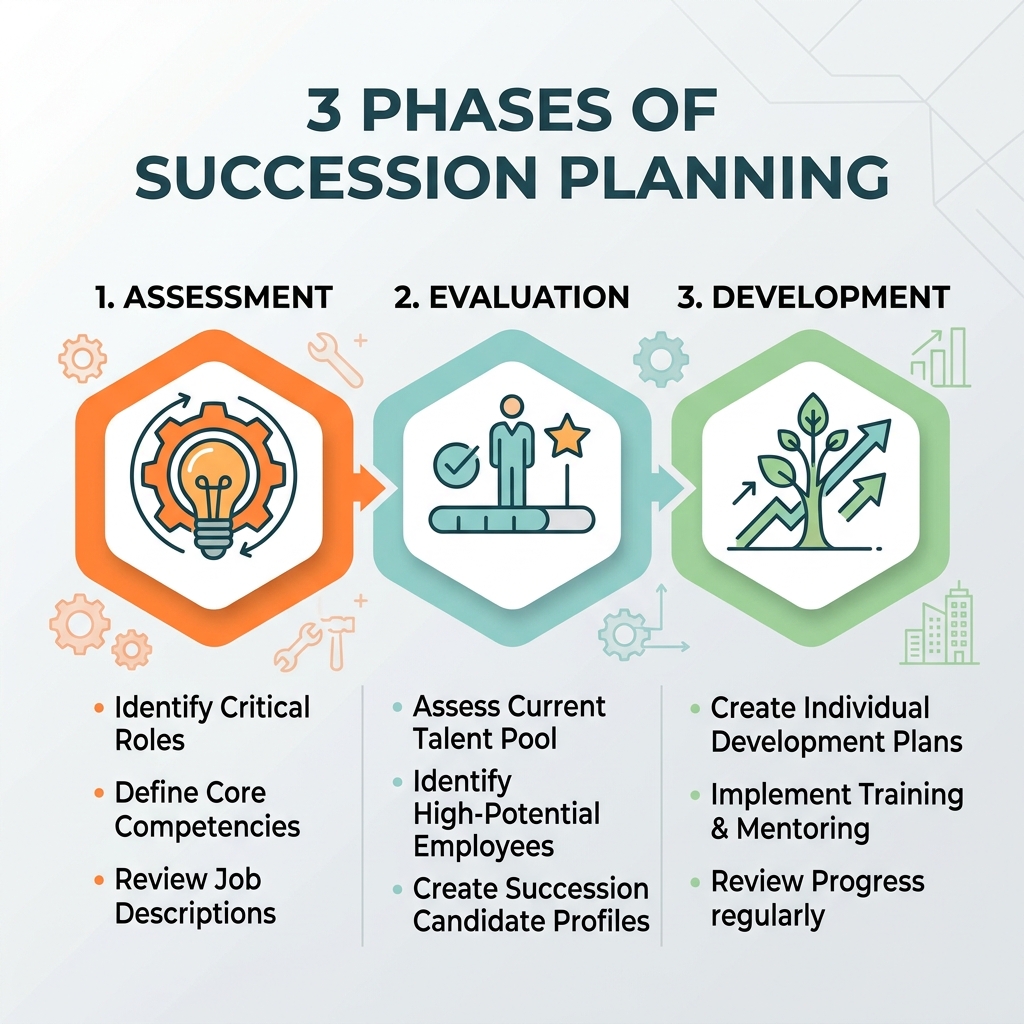
- Find the most important jobs — Which jobs would be the hardest to fill if someone left?
- Look at your team — Who is ready to move up to a bigger job?
- See what is missing — What do these people still need to learn?
- Help them grow — Use teaching and practice to help them get ready.
- Share what you know — Write down how things work before you leave.
- Check the plan — Look at your plan once a year to make sure it still works.
This is very important for building companies. Sometimes a boss has to leave suddenly. If there is no plan, the business can have big problems. Only a few companies have a real plan. This is a risk for the business you worked hard to build.
I am Don Larsen. I help run building businesses. I know that knowing how to succession plan keeps a business strong for a long time. I will show you how to do it step by step.
More help with your plan:
How to Succession Plan: A Step-by-Step Process
Succession planning is a long-term goal. It helps your business keep running when key people leave. It usually takes one to three years to get ready. It is about finding the right people for the future.
In the building world, this is very important. If a manager leaves, the work might stop. Succession planning plays a critical role in keeping things moving.
You can master construction firm succession planning by following three steps: Look, Check, and Grow. You can use this Succession Planning Toolkit (PDF) to help you stay organized.

Finding the Most Important Jobs
Not every job needs a plan, but the most important ones do. These are jobs that are hard to fill. Ask yourself: Who would we miss the most? Who might retire soon? Doing a gap analysis helps you see what skills you might lose.
Looking at Your Team
Once you know which jobs are important, look at your workers. Some are stars who can lead soon. Others are great at their current jobs but don’t want to be the boss. You can use a Candidate Succession Profile Template to keep track of who is ready to move up.
Hiring from Inside or Outside
Should you pick someone who already works for you? Usually, yes. They already know your team and your clients. It helps you not just walk away from your construction firm but leave it in good hands. But sometimes, you might need to hire someone new from the outside if no one is ready.
Helping Your Future Leaders Grow
You cannot just pick a new boss and hope they do well. You have to help them learn new skills. This is very important when navigating the family business exit, where feelings and work can get mixed up.
How to Share What You Know
The hardest things to teach are the secrets you know from years of work. This includes how to talk to a tough client or which local workers are the best.
To teach these things, let the new person watch you work. Then, let them try the work while you watch them. Books like Who Comes Next? Leadership Succession Planning Made Easy have good tips on how to do this.
Making Sure Everyone Has a Chance
A good plan looks at everyone. It does not matter who they are. Using a Succession Nomination Survey Template helps you be fair. It makes sure you pick people based on their skills and hard work.
Fixing Problems and Checking Your Progress
Making a plan is not always easy. You might be too busy. Or the boss might not want to think about leaving. You have to show them that a plan helps the company stay strong for a long time.
Common Problems and How to Solve Them
One big problem is that some bosses feel like they are being pushed out. You should explain that a plan is an investment in the company.
If you have a small team, teach people to do more than one job. This is called cross-training. If one person leaves, another person can help. You can read The Business Transition Handbook to learn more about these problems.
How to Know if Your Plan Is Working
You should track a few things to see if your plan is good:
- Do you have a backup for every big job?
- Are your future leaders staying with the company?
- Are you promoting people from inside the company?
Using a computer can make this easier. It can help you keep track of everyone and tell you if a job has no backup.
| Feature | Using Paper or Spreadsheets | Using Computer Software |
|---|---|---|
| Easy to Use | Easy at first | Takes time to learn |
| Correct Info | Can have mistakes | Very correct |
| Reports | Takes a long time | Very fast |
| Warnings | None | Tells you when there is a problem |
Common Questions about Succession Planning
How often should we check our plan?
Check it at least once a year. You should also check it if your company grows fast or if a big leader leaves.
Should we tell workers they are next in line?
Yes. It makes them happy to know they have a future. But tell them they still have to work hard. It is not a promise of a new job yet.
Does this really work?
Yes! We helped a company called Foshee Construction. We helped them keep their name and their team. If you are ready to hang up your hard hat, we can help you too.
Conclusion
At Saga Infrastructure, we care about people. We want to help local builders stay strong. We don’t just buy companies. We help them grow and keep their history alive.
Our Three-Step Plan:
- Talk: We talk about what you want for your business.
- Design: We make a plan that fits your team.
- Grow: You keep your name and your team, and we help you get bigger.
Are you ready to plan for the future? Learn more about our services for business owners and let’s work together.