
Why Riprap Helps Protect the Ground
Riprap erosion protection is a way to stop soil from washing away. It uses big, pointy rocks to protect the ground near water. Here is what you need to know:
Main Parts:
- Material: Big rocks with sharp edges (about 6 to 20 inches wide)
- Job: Slows down water and stops waves from hitting hard
- Where to use it: Near rivers, lakes, and steep hills
- How to build it: Put a strong cloth under the rocks and make the hill gentle
- How long it lasts: It lasts a very long time if built right
How It Works:
- Pointy rocks lock together like puzzle pieces
- The bumpy surface slows down fast water
- The heavy rocks stay in place
- A special cloth stops the dirt underneath from washing away
If you build roads or bridges, you know that water can ruin your work. One big storm can wash away everything. The wrong fix will fail. But riprap can protect your work for many years.
Riprap is used all over North America because it works. It is a layer of stone that keeps the soil safe from moving water. It is better than a wall because it can bend and move without breaking.
It is important to know when to use it and how to build it right. Many projects fail because people forget the small details.
I am Don Larsen. I lead the team at Saga Infrastructure. I have seen how good riprap erosion protection keeps things safe. At Saga, we work with local builders. We know that doing the job right the first time is what matters most.
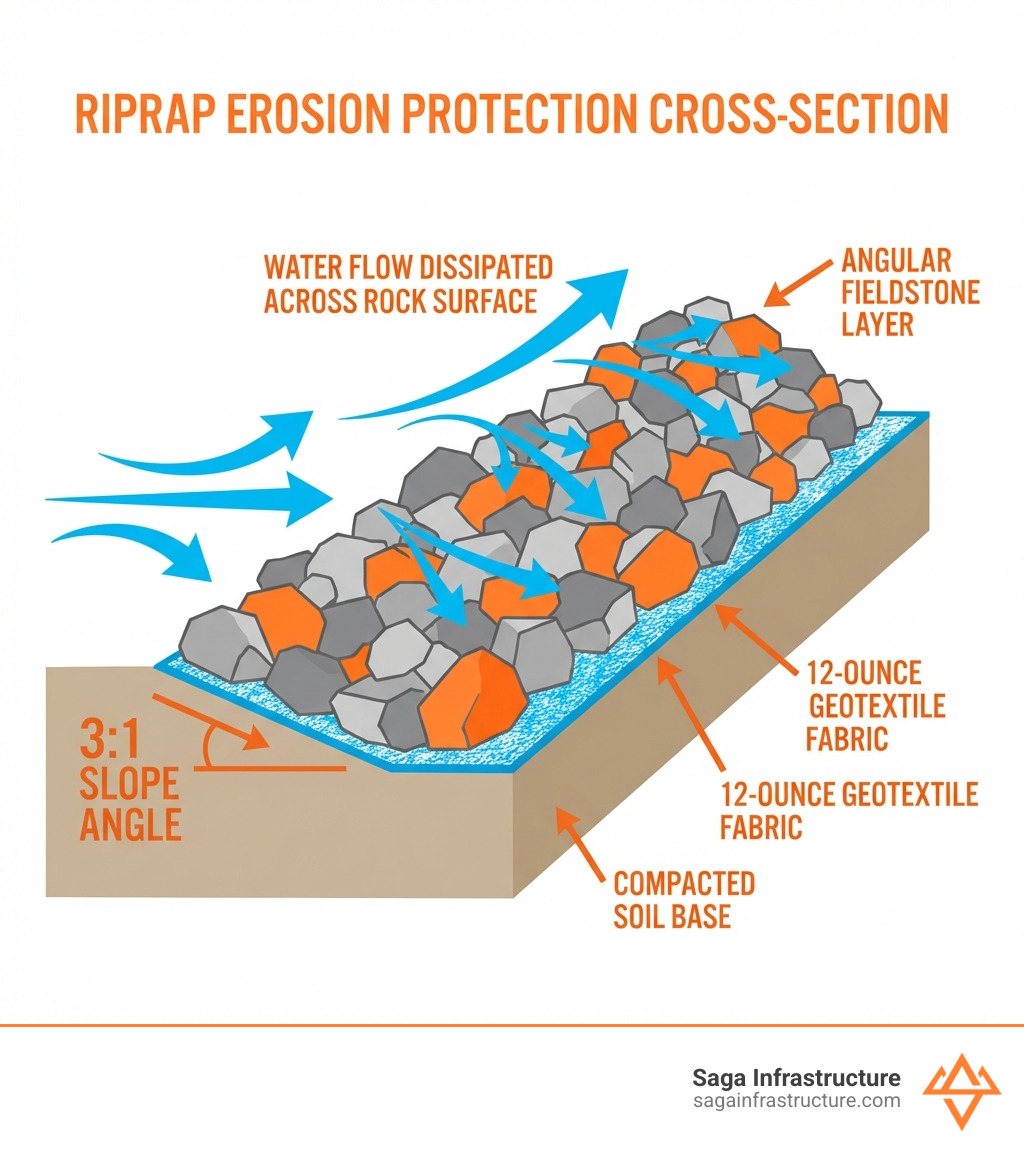
What is Riprap?
Riprap is just a pile of rocks put there by people. These rocks protect the land from strong water. Whether it is a beach in Florida or a desert in Arizona, water tries to carry soil away. Riprap stops it.
People in the business call it “rock armor.” It is not just a random pile of stones. It is a smart system. We use strong rocks like granite or limestone. These rocks are heavy so they stay put. They also have gaps to let water move through without taking the dirt with it.
We use riprap erosion protection to keep bridges and drains safe. This helps the work of local builders last for a long time.
How Rock Armor Works
Riprap works in two ways. First, it takes the power out of the water. Second, it has a bumpy surface. When water hits a flat wall, it bounces off and digs a hole at the bottom. This can make the wall fall over.
Riprap is different. The gaps between the rocks make the surface bumpy. As water flows over the rocks, it slows down. The water loses its speed. Instead of hitting the soil, the water just bounces around the stones.
Our Saga Team knows that every place is different. A quiet pond needs different rocks than a fast river. We pick the right rock size to match how fast the water moves.
Why Shape Matters
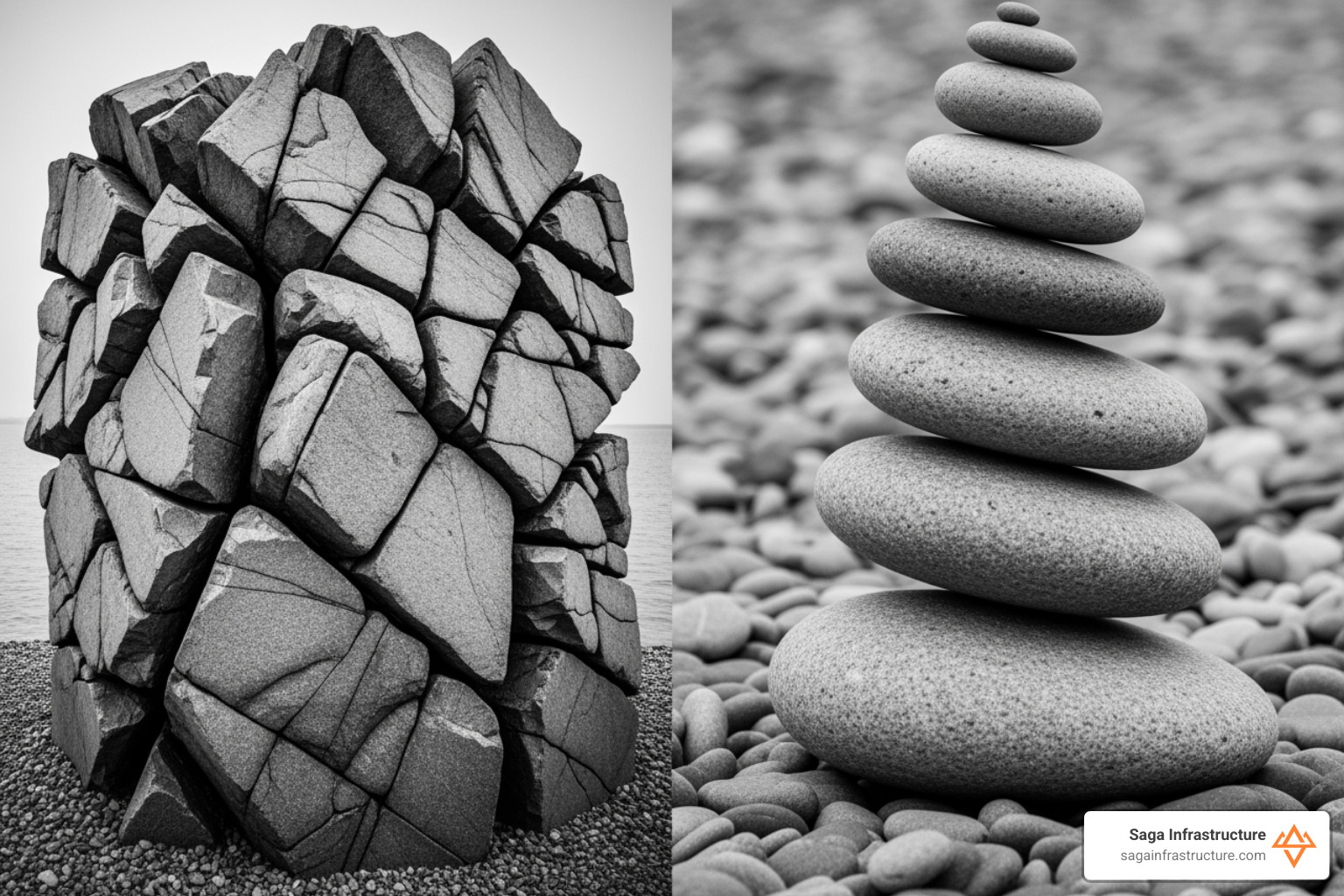
Think about trying to stack marbles. They roll away! That is why we do not use round river stones for riprap erosion protection. Round rocks roll when water hits them. If the rocks wash away, the soil is not safe.
Pointy rocks are the best. These rocks have sharp sides that lock together. It is like a giant, heavy puzzle. When one rock tries to move, the others hold it.
This is very important in places with ice or heavy trash in the water. Pointy rocks stay in place. At Saga Infrastructure, we use the right rocks. A cheap fix with the wrong rocks will just cost more money later.
Why Use Riprap?
Why use rocks instead of a concrete wall? Rocks are better because they can move. If the ground shifts, the rocks just settle into a new spot. A concrete wall would crack and break.
Science shows that rock armor is a great way to stop water. It is easy to find rocks in most places. This makes it a good choice for big projects.
Protecting the Shore
Land near the water is very valuable. But waves from boats and storms can wash it away.
We have seen places where the ground was full of holes and weeds. After we put down rocks, the erosion stopped. The land also looked much better. It turns a messy problem into something nice to look at.
Look at our News to see how we help towns protect their land.
Many Uses
Riprap erosion protection is used for many things. We use it for:
- Bridges: Keeping the dirt around bridge legs safe.
- Drain Pipes: Slowing down water that shoots out of pipes.
- Hills: Keeping dirt on steep hills from sliding down when it rains.
- Storm Drains: Protecting the spots where rain water goes into the ground.
How to Build It Right
Putting down riprap is more than just dumping rocks. You have to do it the right way so it stays. Our partners, like Foshee Construction, have been doing this for a long time.
1. Look at the Site
First, we look at the hill and the soil. We also check how fast the water moves. You have to know what the water is like before you build.
2. Make a Gentle Hill
This is the most important rule. For every one foot the hill goes up, it should go three feet sideways. This gentle slope helps stop waves. It also keeps the rocks from sliding down.
3. Pack the Dirt
We press the dirt down hard. It is like the base of a house. If the dirt is loose, the heavy rocks will push it out of place. Then the whole thing will fail.
4. Pick the Right Rock Size
Fast water needs bigger rocks. If the water is slow, small rocks are okay. If the water is very fast, you need huge boulders.
| Water Speed | Rock Size |
|---|---|
| Slow | 6 inches |
| Medium | 12 to 18 inches |
| Fast | 24 inches |
| Very Fast | 36 inches |
The Secret Layer
The most important part of riprap is what is under the rocks.
First, we clear away weeds and trash. Then, we lay down a very strong cloth. At Saga, we use the best cloth we can find. It is thick and tough.
This cloth is the most important part. It lets water go through but keeps the tiny bits of dirt from washing away. Without it, the water would dig holes under the rocks. Then the rocks would fall in.
We also overlap the cloth so there are no gaps. You can read more on our Blog.
Picking the Best Rocks
In Florida and Texas, we have a few choices for stone.
- Fieldstone: This is great for shorelines. It is heavy and looks good. It stays in place well.
- Limestone: This is good for ditches and hills. The rocks are pointy and lock together.
- Granite: This is very strong and heavy. It is perfect for very fast water.
We usually use rocks that are 6 to 20 inches wide. We always bring extra rocks to make sure the ground is fully covered. Learn more on our About Us page.
Taking Care of Riprap
Riprap is easy to take care of, but you still need to check on it. We suggest looking at the rocks after a big storm.
Look for:
- Moved Rocks: If a rock moved, you might need a bigger one.
- Sliding: If the rocks are sliding down, the hill might be too steep.
- Plants: Some plants are okay, but big bushes can push the rocks out of place.
Science shows that these rocks can actually help fish. The gaps between the rocks give small fish a place to hide.
Helping the Environment
We care about the land. Riprap acts like a filter. It catches leaves and wood so they do not clog up the water.
Old ways of stopping water, like big walls, are often not allowed anymore. They can hurt the fish. Riprap is a better way because it is more like a natural rocky shore.
Easy Tips
- Clean Up: Keep trash and fallen trees off the rocks.
- Check the Bottom: The bottom of the rocks under the water is very important. If the bottom washes away, the whole thing will slide. We use extra small stones at the bottom to keep it safe.
- Stop Weeds: Do not let too many weeds grow on the rocks. It makes it hard to see if the rocks are moving.
Common Questions
What is the best hill for riprap?
A 3:1 slope is best. This means for every 1 foot of height, the hill goes out 3 feet. This keeps the rocks steady and slows down waves.
Can I use round rocks?
No. Round rocks do not lock together. They will wash away during a storm. Always use pointy rocks.
How long does it last?
If you use the right cloth and the right rocks, it can last for many, many years. It is a permanent fix.
Conclusion
At Saga Infrastructure, we want to help local builders protect their towns. We combine local skill with big resources. This makes sure every riprap erosion protection project lasts for a long time.
Water is always trying to wash away the land. But it does not have to be your problem. Whether you are in Arizona or Texas, we can help you.
Do not let your hard work wash away. Talk to us today. Let’s work together to keep your land safe.
