
Heavy Civil Construction: Trends, Markets, and the Contractors Who Build It
Why Heavy Civil Construction Matters to Our Towns
Heavy civil construction is very important. It builds the big things that help us every day. This includes roads, bridges, and water systems. These projects help people move around and keep our cities running.
What is Heavy Civil Construction?
- What it is: Building big things like highways, dams, and bridges for everyone to use.
- Size: These are very large projects. They can take many years to finish.
- Goal: To build things that last for a long time.
- The Difference: It builds things for the public, like roads. General construction builds private things, like houses.
- Examples: Roads, bridges, sewers, tunnels, and airports.
Heavy civil construction is different from building a house. First, it is for everyone, not just one person. Second, it is usually flat and long (like a road) instead of tall (like a building). Third, it is built to last a very long time.
About 1.2 million people work in this field. Workers earn good money. They use big machines like excavators and bulldozers. They also use strong materials like special concrete to make sure things do not break.
Why This Work Matters
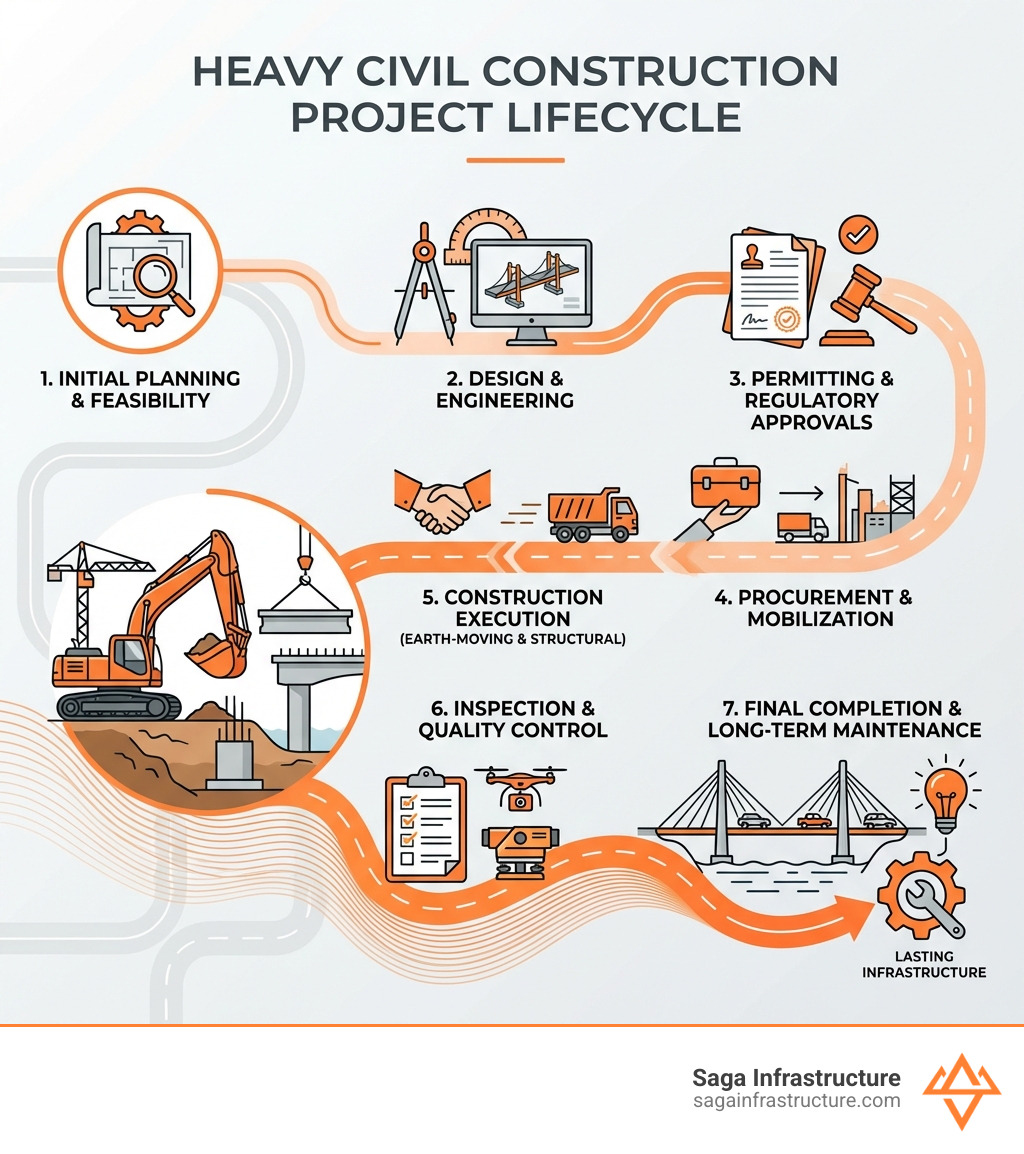
These projects are hard to do. They need a lot of planning before they start. Many government groups must say it is okay to build. It can be noisy and dusty for people living nearby. But we need this work. Without it, we would not have clean water or good roads.
I am Don Larsen. I lead a company called Saga Infrastructure. We help build these big projects in the Southeast and Southwest. I have spent my career learning how to do this work well. In this guide, I will explain why this work is special and what the future looks like.
Heavy Civil vs. General Construction
Most people think of houses or stores when they hear the word construction. That is called general construction. But heavy civil construction is different. It is about the big things that keep our towns running.
The main difference is who the project is for. General construction is for private owners, like a person building a store. Heavy civil construction is for the public. It builds the roads you drive on and the pipes that bring water to your house.
Another difference is how the work looks. General construction goes “up” to make a building. Heavy civil goes “across” the ground. We move a lot of dirt and lay miles of pipe. We want these things to last for 100 years.
You can learn more here: Heavy Civil Construction: A Comprehensive Guide to Its Differences with General Construction.
| Feature | Heavy Civil Construction | General Construction |
|---|---|---|
| Main Goal | Things for everyone | Things for one person |
| Project Type | Flat (Roads, Bridges) | Tall (Buildings, Malls) |
| Size | Very large | One building |
| Tools | Big Diggers, Dozers | Cranes, Forklifts |
| Money | Government | Private owners |
Building Water and Power Systems
A big part of our work is underground. You cannot see it, but it is very important. We put in water and sewer lines. In fast-growing places like Florida and Texas, we are always busy.
For example, we worked on the Hills of Minneola – Crooked Can Infrastructure project. We put in big pipes to handle heavy rain. This keeps the neighborhood safe and dry. We also help build power lines and internet lines.
Common Types of Heavy Civil Projects
There are many kinds of heavy civil construction. If it is big and helps the public, it is likely in this group.
Highways and Bridges
These are the projects you see most often. Building a highway is more than just paving. We have to make the soil strong and plan for cars to move safely. Bridges are even harder to build. They need very deep foundations. We are proud of projects like Skyline at Westfall that help people travel safely.
Tunnels
Tunnels are very hard to make. We use giant machines to dig through the earth. We look at big projects like the world’s longest railway tunnel in Switzerland to learn how to do it better.
Dams and Water Control
Dams hold back water. They help make power and stop floods. A huge example is the Grand Ethiopian Renaissance Dam. At home, we build walls and systems to keep water out of neighborhoods.
Marine Ports
Ports are where big ships bring goods. We have to dig deep into the water and build strong docks. Projects like the Contrecœur Terminal help the economy by moving goods in and out.
Strong Materials
We use very strong materials so things last a long time.
- Strong Concrete: This concrete does not break easily in bad weather.
- Steel: We use big steel bars to make bridges strong.
- Special Fabrics: These help keep the dirt in place under roads.
- Asphalt: We make our own road surface to fit the local weather.
We used these materials at Mirror Lake to make it look good and stay strong.
Challenges and How We Work
Working in heavy civil construction is exciting. Every job site has new things to learn.
Getting the Site Ready
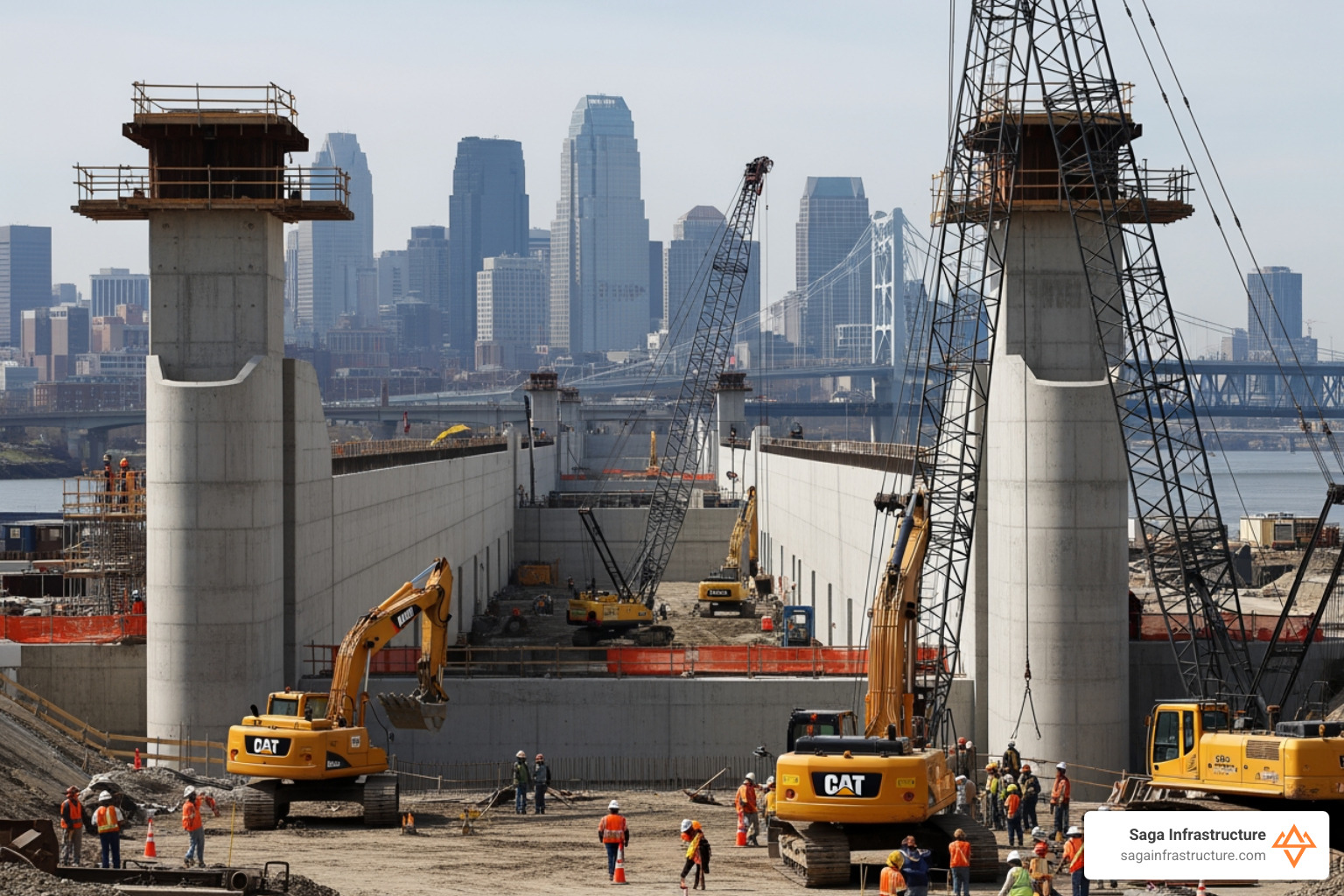
Before we build, we must prepare the land. This can take a long time. We move tons of dirt and make sure the ground is solid. Since these are public projects, many people watch our work. This includes the government and the people who live nearby.
The Downtown Flood Barrier is a good example. It is a long wall that protects a city. It has to be perfect to keep people safe.
Protecting the Environment
We must take care of the land. We make sure dirt does not wash into the water. We also try to keep dust down so it does not bother neighbors. We have to get many permits from the government. We follow all the rules to stay safe and clean.
Managing Big Projects
Many big projects are done with the government. This can be complex because plans can change. We also care about the community. Construction is loud and can slow down traffic. We use signs and meetings to help people know what is happening. Projects like The Vue Clermont show how we can build without causing too much trouble.
We use computers to track our work. This helps us see problems early and stay on budget.
Workers and Safety
The people who build our roads and bridges are very important. The Heavy and Civil Engineering Construction field is growing.
Over 1.1 million people work in this job. It is a great career with good pay.
- Laborers: They earn about $22.74 per hour.
- Machine Operators: They earn about $62,370 per year.
- Average Pay: Many workers earn even more.
If you want a good job, you can join our Career team.
Safety is Number One
This job can be dangerous. There are big machines and deep holes. We follow strict safety rules. We want every worker to go home safe every night. We work hard to make sure no one gets hurt on the job.
New Tools and Technology
Construction is changing. We use new tools to make our work better.
- GPS: We use satellites to find the exact spot to build. It is very precise.
- Smart Machines: Our bulldozers have computers. They tell the driver exactly where to move the dirt. This saves time.
- Drones: We fly small drones to see the whole project from the sky. This helps us find problems fast.
- Recycling: We reuse old concrete and asphalt. This helps the earth and reduces waste.
You can see what is new in our News section.
Common Questions
What is the difference between civil and heavy civil?
Civil construction builds things like libraries or city halls. Heavy civil construction builds much bigger things. It builds the roads, dams, and bridges that everyone needs to use those buildings.
Who pays for these projects?
Most of the time, the government pays for them. Sometimes, private companies help pay for a project, like a road where you pay a toll to drive.
What are the most common jobs?
Most jobs are in building roads and water lines. Many people work as laborers or drive big machines. These roles are the most common in our industry.
Conclusion: Building for the Future
At Saga Infrastructure, we want to build things that last. We help local builders grow by giving them the tools they need. We want to make sure our roads and water systems stay strong for a long time.
When we work with a local company, we want them to keep being great. We provide the money and help they need to do more. Whether it is in Florida, Texas, or Arizona, we work together. We want to keep the hard work of local founders going for many years.
We build for the future, not just for today. To learn more, visit our About Us page or meet the SAGA Team. If you own a business and want to work with us, visit our Business Owners page.
Let’s build the backbone of America together.