
Why Grading and Paving Matter
Understanding grading and paving is crucial for any project that needs a stable, durable surface. These are the two fundamental steps that turn raw land into functional roads, parking lots, or driveways.
Here’s a quick look at what they involve:
- Grading: This is the process of shaping and leveling the ground to a specific slope and elevation. It’s the foundational work that ensures proper water drainage and a stable base.
- Paving: This involves applying the final, durable surface material, such as asphalt or concrete, over the carefully prepared and compacted base. It creates the smooth, long-lasting layer you drive or walk on.
Just like building a house needs a solid foundation, any paved surface relies on proper grading. Without it, even the best paving won’t last. Poor grading leads to water issues, cracks, and early failure. It’s truly the secret to a long-lasting paved surface.
As CEO of Saga Infrastructure, Don Larsen brings a strong background in operations and construction leadership, with hands-on experience in preparing sites and laying foundations for durable infrastructure. His expertise in grading and paving ensures quality and longevity in every project.
What is Grading and Paving?
When we talk about grading and paving, we are talking about the “cake” and the “icing” of infrastructure. Grading is the preparation of the cake pan and the batter, and paving is that final, beautiful layer of icing that everyone sees. In our work across Florida, Texas, and Arizona, we’ve seen that you can’t have one without the other.
Defining the Basics
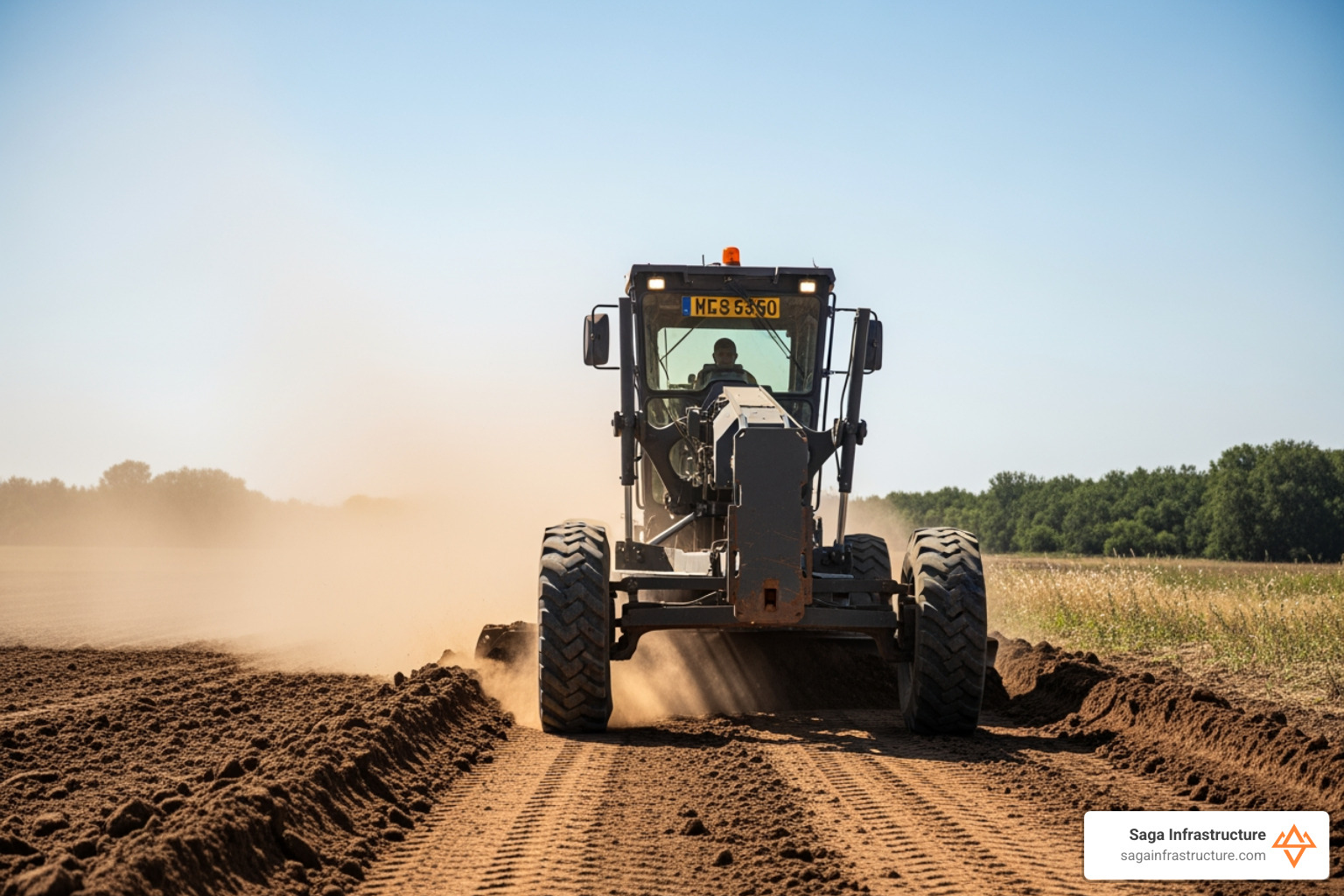
At its heart, grading is the process of moving dirt to create a specific shape. We aren’t just making the ground “flat.” In fact, a perfectly flat piece of land is often a nightmare for builders because water has nowhere to go. Grading involves establishing a “contour”—a fancy word for the shape of the land—to make sure water flows away from buildings and toward drains or ditches.
Paving is the application of the wear surface. Whether it is hot mix asphalt or concrete, this layer protects the ground underneath from the elements and provides a smooth ride for cars and a safe walk for pedestrians.
The Importance of a Solid Base
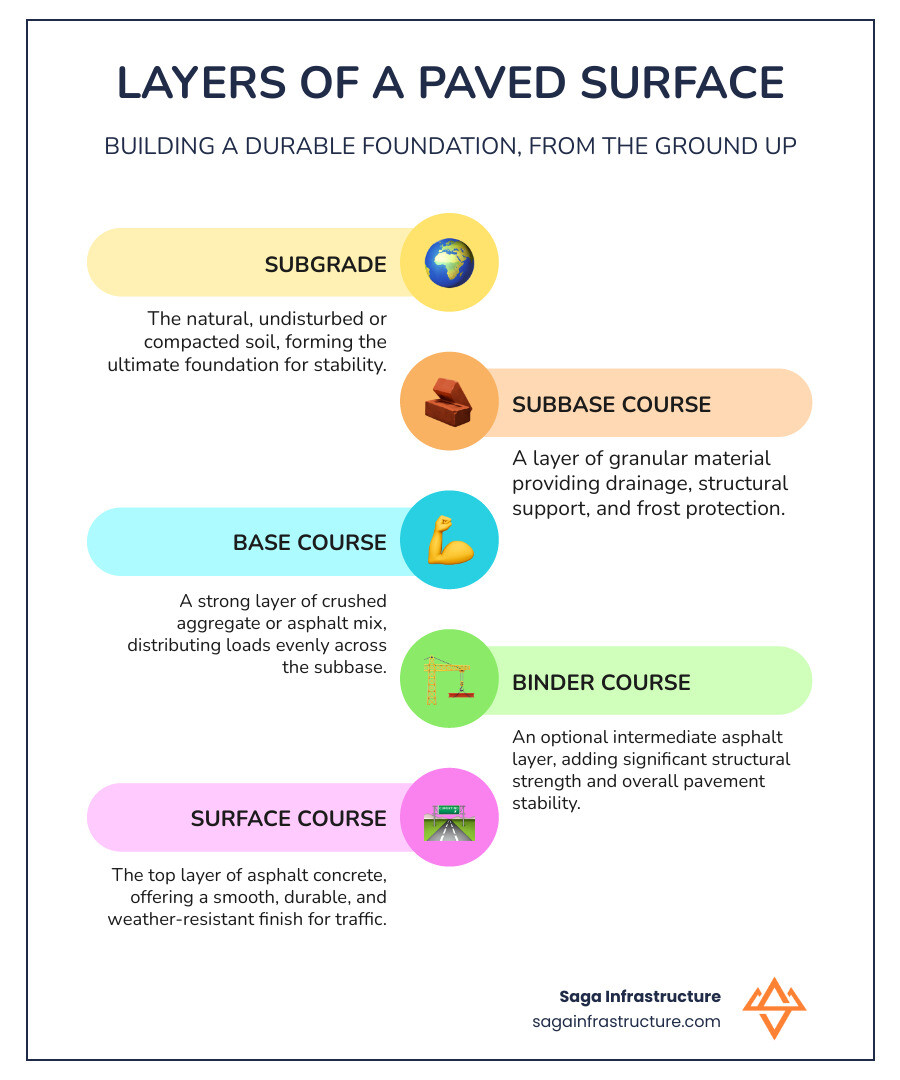
A paved surface is only as good as the dirt it sits on. If the soil underneath moves, the pavement on top will crack. This is why we focus so heavily on the subgrade and subbase. Proper grading ensures that the ground can handle the “load-bearing capacity”—which is just a way of saying it can hold the weight of heavy trucks without sinking.
The industry is growing fast because people realize how important this foundation is. For example, the global demand for paving asphalt grew from about $30.44 billion in 2021 to an estimated $35.79 billion by 2025. This shows that whether we are working on a project like Mirror Lake or a local driveway, the world is investing more in quality surfaces.
The Step-by-Step Grading and Paving Process
We like to say that a good project starts long before the first shovel hits the dirt. It starts with a plan.
Preparing the Subgrade for Grading and Paving
The first step is site inspection. We look at the soil, the existing slope, and any obstacles in the way. In places like Texas, we might deal with heavy clay that expands, while in Arizona, we might hit rock.
Before we can grade, we have to clear the site. This means removing trees, brush, and old concrete. One tool we love to use is hydro excavation. This is a non-destructive way to dig using high-pressure water. It allows us to expose underground utilities—like water lines or power cables—safely and efficiently. By using hydro excavation, we ensure minimal disruption and keep our teams safe.
Once the site is clear, we move to “subgrade preparation.” We remove the soft topsoil and get down to the “good dirt” that can be compacted. You can learn more about these technical steps in this guide on surface preparation.
Rough Grading vs. Fine Grading
Grading happens in two main stages. Think of it like drawing a picture: first, you do a rough sketch, then you add the fine details.
| Feature | Rough Grading | Fine Grading |
|---|---|---|
| Purpose | Moving large amounts of dirt to reach approximate elevations. | Precise leveling to within a fraction of an inch. |
| Equipment | Bulldozers, large excavators, scrapers. | Motor graders with GPS, skid steers. |
| Goal | Establish the general shape and drainage. | Create the perfect smooth surface for the asphalt or concrete. |
We used these exact precision steps during our work on The Vue Clermont, ensuring the site was perfectly prepped for the final build.
Mastering Water Drainage and Surface Stability
If you remember one thing from this guide, let it be this: Water is the enemy of pavement. When water sits on a parking lot, it seeps into small cracks, weakens the base, and eventually creates potholes.
The Role of Compaction in Grading and Paving
To keep the ground stable, we use compaction. This is like pressing a giant sponge together until it can’t be squeezed anymore. We use heavy rollers to pack the soil and gravel.
- Soil Compaction: Our goal is usually at least 95% Proctor density. This ensures there are no air voids where water can hide or where the ground can settle.
- Asphalt Compaction: For the final asphalt layer, we aim for 92% to 96% density.
Proper compaction is what allows a project like Skyline at Westfall to stay smooth and strong even with heavy traffic.
Managing Transition Zones
A “transition zone” is where the new pavement meets something else—like an existing road, a concrete curb, or a sidewalk. If the grading isn’t perfect here, you’ll end up with a “lip” that people trip over or that catches water. We take extra care to ensure these joints are seamless and safe.
Understanding Project Costs and Site Conditions
Every project is different, which means every price tag is different. We wish we could give a one-size-fits-all price, but the land usually has its own ideas!
Factors That Change the Price
- Site Condition: If the land is full of old buried concrete or thick brush, it costs more to clear.
- Soil Quality: Sandy soil is easy to move but might need extra help to stay stable. Rocky soil or heavy clay requires more work.
- Drainage Needs: If the land is very flat, we might need to install more complex pipe systems or “retention ponds” to hold water.
- Milling: If we are repairing an old road, we use a process called “asphalt milling” to grind off the top layer before putting new asphalt down.
We managed these types of complex site conditions at the Hills of Minneola, where infrastructure had to be built to support a growing community.
Choosing the Right Materials
We help our clients choose between hot mix asphalt and concrete. Asphalt is generally cheaper and faster to install, while concrete can be more durable for heavy-duty industrial areas. Both require a strong aggregate base (crushed rock) to succeed.
Choosing a Grading and Paving Contractor
Hiring the right team is the difference between a driveway that lasts 20 years and one that falls apart in two. At Saga Infrastructure, we believe in protecting the local legacy of the builders we partner with. When you hire one of our regional firms, you get local experts who know the soil in your town, backed by our national resources.
Red Flags to Watch For
- Paving in the Rain: This is a huge no-no. Asphalt needs to stay hot to compact correctly, and rain cools it down too fast.
- Vague Quotes: If a contractor won’t give you a detailed breakdown of the grading steps, they might be cutting corners.
- Low Prices: If a price seems too good to be true, they might be skipping the “95% compaction” rule.
Best Practices for Hiring
Always check for licensing and insurance. Ask to see a portfolio of recent work. A good contractor will be happy to show you their projects and provide references from happy customers. We take pride in our safety standards and the quality of our equipment because we know that’s what builds trust.
Frequently Asked Questions about Grading and Paving
How long should a new asphalt surface last?
A well-installed asphalt surface should last for 15 to 20 years. To get the most life out of it, you should perform regular maintenance, like sealcoating every few years and fixing small cracks before they turn into big ones.
What is the best time of year for paving?
Warmer months are best. Asphalt is “hot mix,” meaning it’s heated to over 300°F. If the air temperature is below 50°F and falling, the asphalt cools too quickly to be compacted properly. In our locations like Florida, Texas, and Arizona, we have a pretty wide window for great paving weather!
Why is my new pavement cracking?
Cracking is usually caused by one of three things: poor grading (the base wasn’t stable), bad drainage (water is sitting under the pavement), or a lack of compaction. This is why we say the “dirt work” is the most important part of the job.
Conclusion
At Saga Infrastructure, we are on a mission to protect and modernize the infrastructure that sustains our communities. We aren’t just a big corporation; we are a network of local builders like Foshee Construction in Minneola. We combine local excellence with national strength to ensure your project—from the first bit of grading to the final layer of paving—is built to last for generations.
Whether you are a developer, a municipal leader, or a business owner, we want to help you build something that stands the test of time.
Let’s start the conversation about your next project.