
Why Your Sloped Yard Needs a Retaining Wall Right Now
How to Stop Your Hill from Washing Away
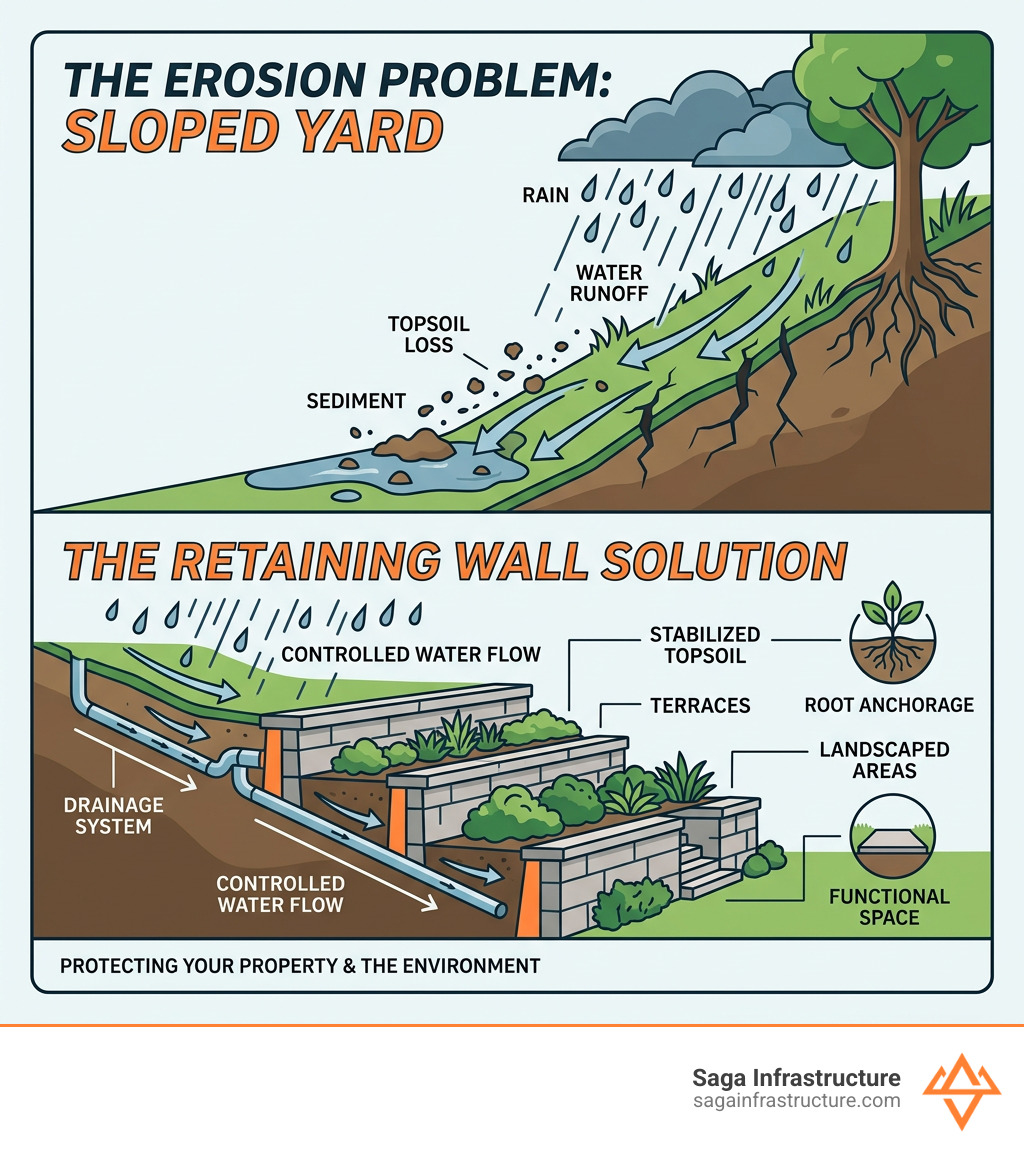
Retaining wall erosion control is a great way to stop dirt from washing away on hills. These walls hold the soil in place and slow down rainwater.
Here is how it helps:
| Problem | How Walls Help |
|---|---|
| Dirt slides down | The wall acts like a fence to hold it |
| Rain washes dirt away | The wall slows down the water |
| House damage | The wall keeps the ground steady |
| Yard is too steep | Walls make flat spots for playing |
| Dirt goes into drains | The wall keeps dirt in your yard |
If your yard has a hill, you might be losing dirt. Even light rain can wash away the good soil that helps plants grow. If you don’t stop it, the moving dirt can crack your driveway or even your house.
A good wall does more than just look nice. It fights gravity and water to keep your land safe and flat.
I’m Don Larsen, the boss of Saga Infrastructure. We work with building companies all over the country. I have seen how a good wall can save a yard. I will help you learn how to do it right.
What is Soil Erosion?
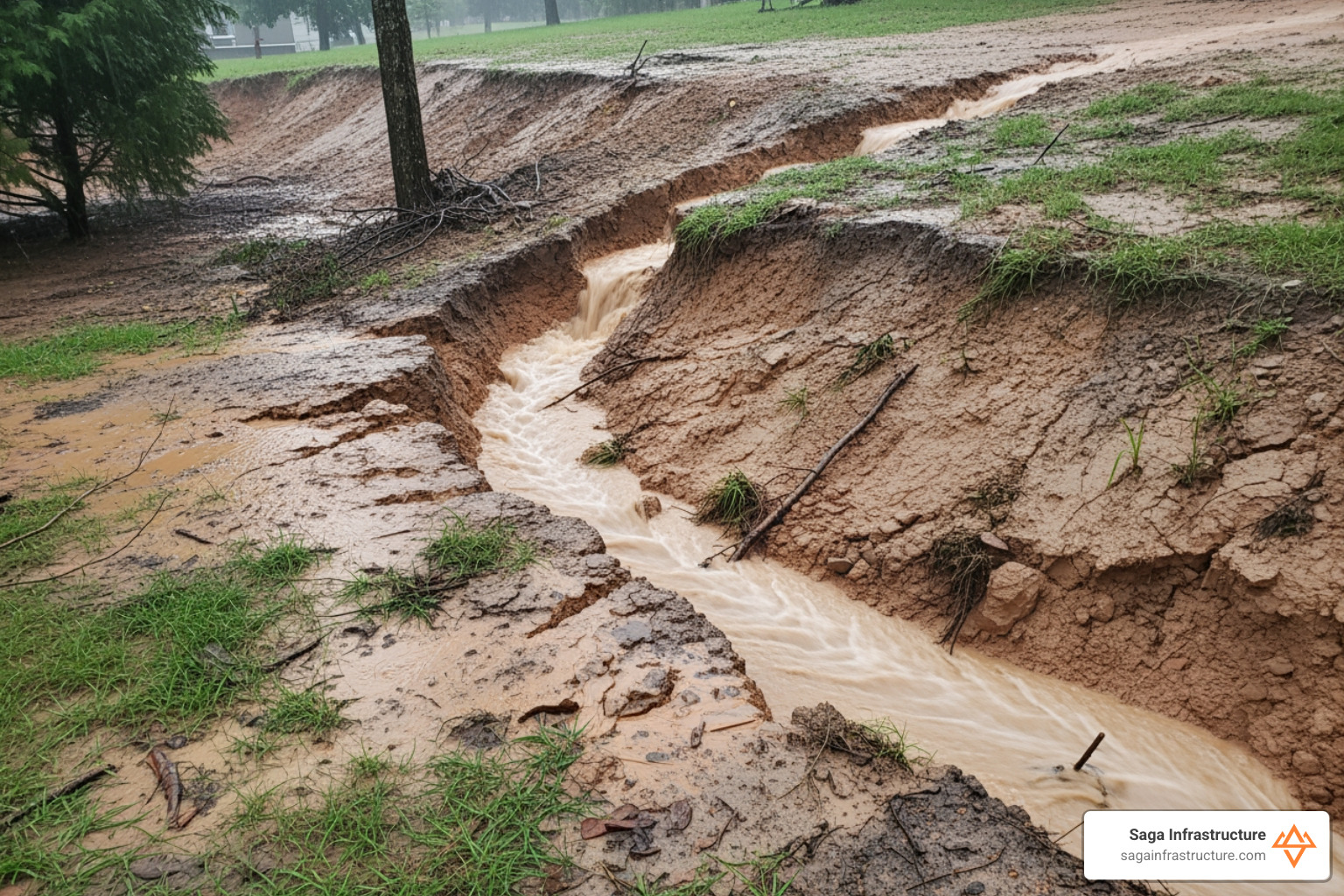
Soil erosion is when the top layer of dirt moves away. This happens because of water, wind, and gravity. In states like Florida, Texas, and Arizona, big rains can wash dirt away fast. This is a big deal in places with site conditions like sandy or clay soil.
When rain hits a hill, it speeds up. It acts like a scraper, taking your good dirt with it. You might see tree roots or bare spots where grass won’t grow. The real danger is that the ground can slowly move. This can crack your house foundation or your sidewalk.
How These Walls Help
A retaining wall is a strong wall built to hold back a hill. It fights gravity to keep the dirt from sliding down.
The wall does three main things:
- Stability: It keeps the hill from falling down.
- Water Control: It stops water from rushing down the hill. It slows the water down and moves it away safely.
- Protection: It keeps the ground around your home flat and dry.
Sometimes, you might need extra help. You can read about Don’t Get Washed Away: The Ultimate Riprap Erosion Defense to see how big rocks help too.
Picking the Right Wall
Not all walls are the same. You have to pick the right one for your yard.
| Wall Type | Best For | Good Things | Bad Things |
|---|---|---|---|
| Gravity Walls | Short hills | Very simple to build | Can’t be very tall |
| Cantilever Walls | Tall hills | Very strong | Hard to build |
| Block Walls | Most yards | Easy to fix and move | Needs mesh if tall |
| Basket Walls | Near water | Good for drainage | Looks like a cage |
Block Walls
Many people use block walls. These blocks fit together like toys. They don’t need glue. This is good because the ground moves. The wall can move a little without breaking. We also use a strong mesh to help hold the dirt behind the wall.
Tied-back Walls
If you have a very heavy hill, we use tied-back walls. These use long rods driven deep into the ground. They act like anchors to keep the wall from moving. This is great for steep hills in Florida.
How to Build a Strong Wall
Most walls fall down because of water. Water is very heavy. When dirt gets wet, it pushes hard against the wall. This is what makes walls lean or break.
Moving the Water
To keep your wall strong, you need three things:
- Pipes: A pipe at the bottom to carry water away.
- Rocks: Clean rocks behind the wall so water can flow down to the pipe.
- Cloth: A special cloth to keep dirt from clogging the rocks.
Using Mesh
If a wall is taller than four feet, we use a strong mesh. This mesh ties the wall and the dirt together. It makes the wall and the dirt act like one big heavy block. This makes it very hard to tip over.
Taking Care of Your Wall
Retaining walls are strong, but you should still check on them.
- Check after storms: After a big rain, look at your wall. Look for new cracks or water leaking out where it shouldn’t.
- Clean the holes: Make sure the small drain holes aren’t blocked by dirt or bugs.
- Watch the plants: Don’t plant big trees too close. Their roots can push the wall over. Small bushes are better.
- Look for gaps: Small cracks are okay at first, but big gaps mean you should call someone to look at it.
When to Call a Pro
Building a small garden wall is a fun project. But if the wall is taller than four feet, you should call a pro. Most cities require a permit for tall walls.
Why? Because a tall wall has to hold back a lot of weight. If it falls, it is a big safety hazard.
Call a pro if:
- The wall is taller than four feet.
- There is a driveway or shed at the top of the hill.
- The hill is very steep.
- The dirt is very sticky or wet.
Pros have big machines to pack the dirt down tight. If the dirt isn’t packed tight, the wall will lean later.
Common Questions
Why is my wall leaning?
It is usually because of water. If water can’t get out, it pushes the wall. It could also be that the bottom of the wall wasn’t buried deep enough.
Do I need a permit?
Usually not for small walls under two feet. But you should always check with your city first!
How long do they last?
A stone or concrete wall can last 50 to 100 years. Wood walls usually rot after 10 or 15 years.
Final Thoughts
At Saga Infrastructure, we want to help you protect your land. We work with local experts who know your area. We use our national resources to make sure every project is done right.
Your yard is important. A good wall is like an insurance policy. It keeps your yard from washing away. Don’t wait for the next big storm to fix your hill.
Download the checklist for your next project and let’s start talking about your yard.
