
Step-by-Step Guide to Erosion Control Solutions
Why Erosion Control Solutions Matter More Than You Think
Erosion control solutions are ways to stop dirt from washing or blowing away. They help protect the land, water, and buildings from damage.
Here is a simple list of the best ways to stop erosion:
| Solution Type | Best For | How Long It Lasts |
|---|---|---|
| Planting plants | Hills and river banks | A very long time |
| Erosion blankets | Building sites and bare hills | Short time to long time |
| Mulch | Protecting seeds and keeping dirt wet | Short time |
| Silt fences | Keeping dirt on building sites | Short time |
| Rock bags and big rocks | Shorelines and fast water | 50 years or more |
| HydroTurf | Very fast water and dams | 50 years or more |
| Special fabrics | Holding up hills | A long time |
Every year, over one billion tons of good dirt is lost around the world. It takes hundreds of years for just a little bit of new dirt to form. Once it washes away, it is gone for a long time.
When dirt moves, it causes big problems. It fills up rivers and hurts fish. It also makes floods worse and breaks roads and bridges. Building projects can lose a lot of dirt if they are not careful.
I am Don Larsen, the leader of Saga Infrastructure. I have seen how much money is lost when erosion is not stopped. I will show you the best ways to keep your land safe and follow the rules.
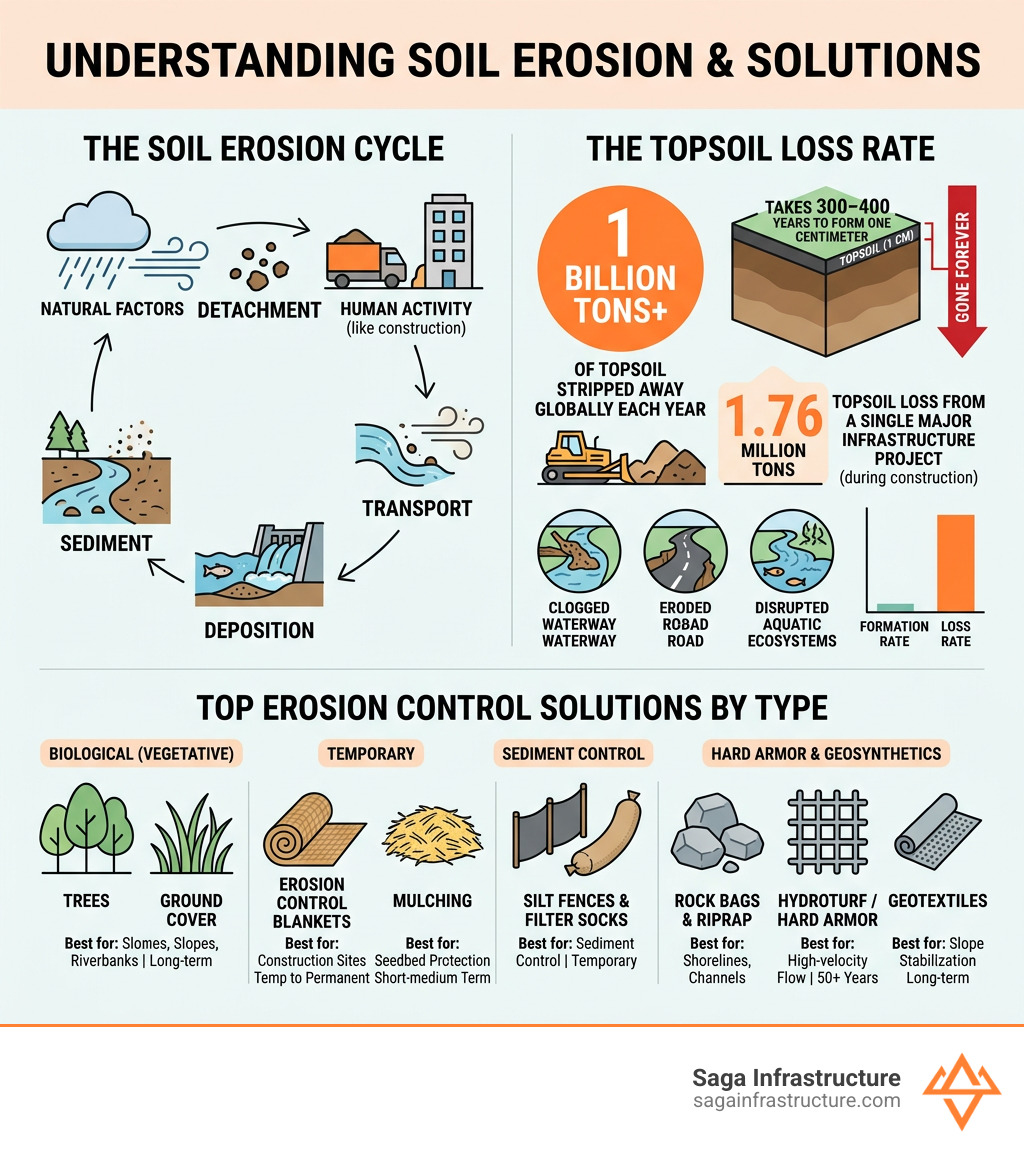
Why Soil Erosion Happens and How to Spot It
To pick the right erosion control solutions, we need to know how erosion works. Erosion is when wind, water, or gravity moves dirt from one place to another.
Nature vs. People
Nature moves dirt very slowly over thousands of years. But when people build new roads or houses, erosion happens much faster. This is because we remove the grass and trees that protect the ground.
Without plants, a big rainstorm can wash away a lot of dirt in one day. Research on soil erosion and global warming shows that bigger storms are making this a bigger problem.
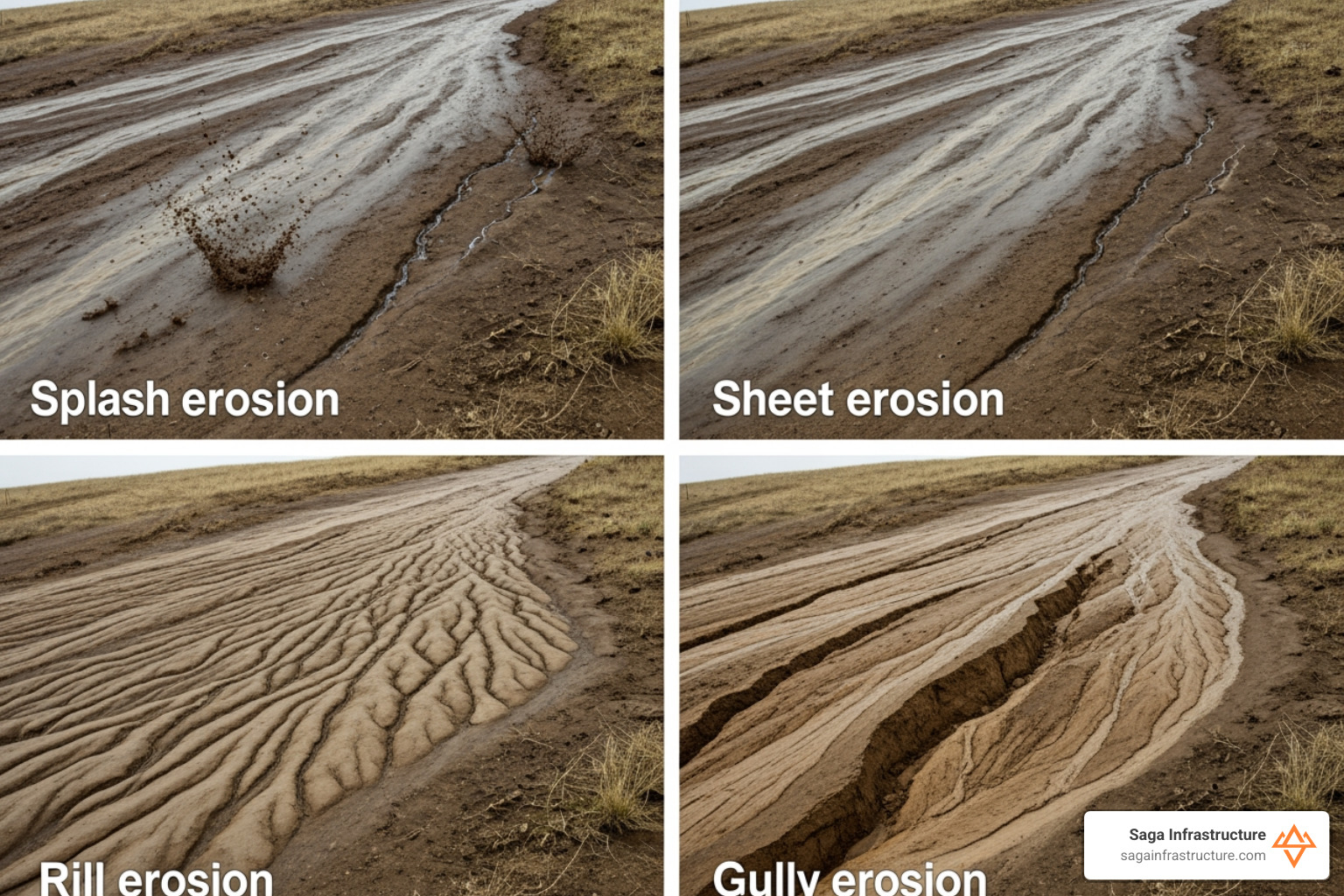
The Four Stages of Water Erosion
Water is the main thing that moves dirt. It happens in four steps:
- Splash: A raindrop hits the dirt like a tiny bomb. It knocks dirt into the air.
- Sheet: Water flows over the ground like a flat sheet. It carries away a thin layer of good dirt.
- Rill: Water starts to make small paths in the dirt. These look like tiny streams.
- Gully: Small paths turn into big ditches. These can break roads and house foundations.
When dirt leaves a site, it goes into lakes and rivers. This makes the water dirty and can kill fish. It also clogs up pipes and causes floods in cities.
Top Plant and Natural Erosion Control Solutions
At Saga Infrastructure, we like to work with nature. Natural ways to stop erosion are often the best and look the nicest.
The Power of Plants
If you want to stop erosion, plant something! It is a simple way to keep dirt in place. How trees help reduce runoff shows how nature works.
- Leaves: They act like an umbrella. They stop raindrops from hitting the dirt too hard.
- Roots: They act like glue. They hold the dirt together so it does not wash away.
- Drinking Water: Plants drink the water so it does not flow away.
- New Forests: Planting trees can stop a lot of erosion.
In dry places like Texas and Arizona, we use plants that do not need much water. These plants have deep roots that hold the dirt on hills.
Using Mulch and Blankets
Before seeds grow, the dirt needs a cover.
- Mulch: Spreading straw or wood chips over the dirt helps right away. It keeps the dirt wet and stops the sun from making it too hard.
- Natural Blankets: These are mats made from coconut hair or straw. They hold seeds in place on hills. Since they are made of natural things, they eventually turn into food for the dirt.
Best Products for Soil Protection and Management
Sometimes nature needs help from tools. On busy building sites, we use special products to keep the dirt still.
New Tools for Building Sites
We try to stop the dirt from moving at the very start.
- Silt Fences: These are black fabric fences. They let water through but trap the dirt.
- Filter Socks: These are long tubes filled with wood chips. They are great for preventing sediment runoff near drains.
- Erosion Blankets: These come in two types:
- Natural: Made of straw or coconut. Good for animals and the earth.
- Plastic: These break down when the sun shines on them.
| Feature | Natural Blankets | Plastic Blankets |
|---|---|---|
| Material | Straw or Coconut | Plastic mesh |
| Safe for Animals | Very safe | Okay |
| Best Use | Near nature | Temporary building |
| What Happens Later | Turns into dirt | Breaks into tiny bits |
Picking the Right Tool
Every place is different. A flat yard needs different tools than a steep hill.
- Hard Covers: For very fast water, we use big rocks. This is called the ultimate riprap defense. The rocks stop the water from washing the dirt away.
- HydroTurf: This looks like grass but is strong like concrete. It is cheaper than concrete and better for the earth.
- Rock Bags: These are bags filled with stones. They protect shorelines and can last for 50 years. They also give small fish a place to hide.
Frequently Asked Questions about Erosion Control
What is the best way to stop erosion?
Planting plants is the best way for the long term. A fence might work for a few months, but a forest can protect the dirt for hundreds of years. Roots hold the dirt tight and get stronger as they grow.
What are 5 easy ways to stop erosion?
Here are five things you can do:
- Plant Grass: Keep the ground covered so dirt is not bare.
- Use Mulch: Put wood chips on garden beds to stop rain from hitting the dirt.
- Build Steps: On hills, making flat steps stops water from moving too fast.
- Fix Drains: Use pipes to lead water away from soft dirt.
- Use Blankets: Use a mat to hold seeds in place until they grow roots.
How long do these products last?
It depends on what they are made of:
- Short-term tools like straw mats or silt fences last about 6 to 24 months.
- Medium-term tools like coconut mats can last 3 to 5 years.
- Permanent tools like Rock Bags or big rocks can last 50 years or more.
Conclusion: Building Things That Last
At Saga Infrastructure, we know that building a better country means protecting the ground. Whether we are fixing a beach in Florida or a road in Texas, the right erosion control solutions are very important.
We work with local experts to get the job done right. We help local companies grow while keeping their teams safe. This is the Saga way.
We want to make sure the things you build today stay strong for a long time. If you need help with a big project, let’s start the conversation. Together, we can build a strong future.
