
How to Prep Your Shed Site Like a Pro
Why Preparing the Ground for Your Shed is Important
Site prep for shed projects is the most important step. If you do it wrong, your shed will rot. The floor will bend, and the doors will not open. If you do it right, your shed will stay strong for a long time.
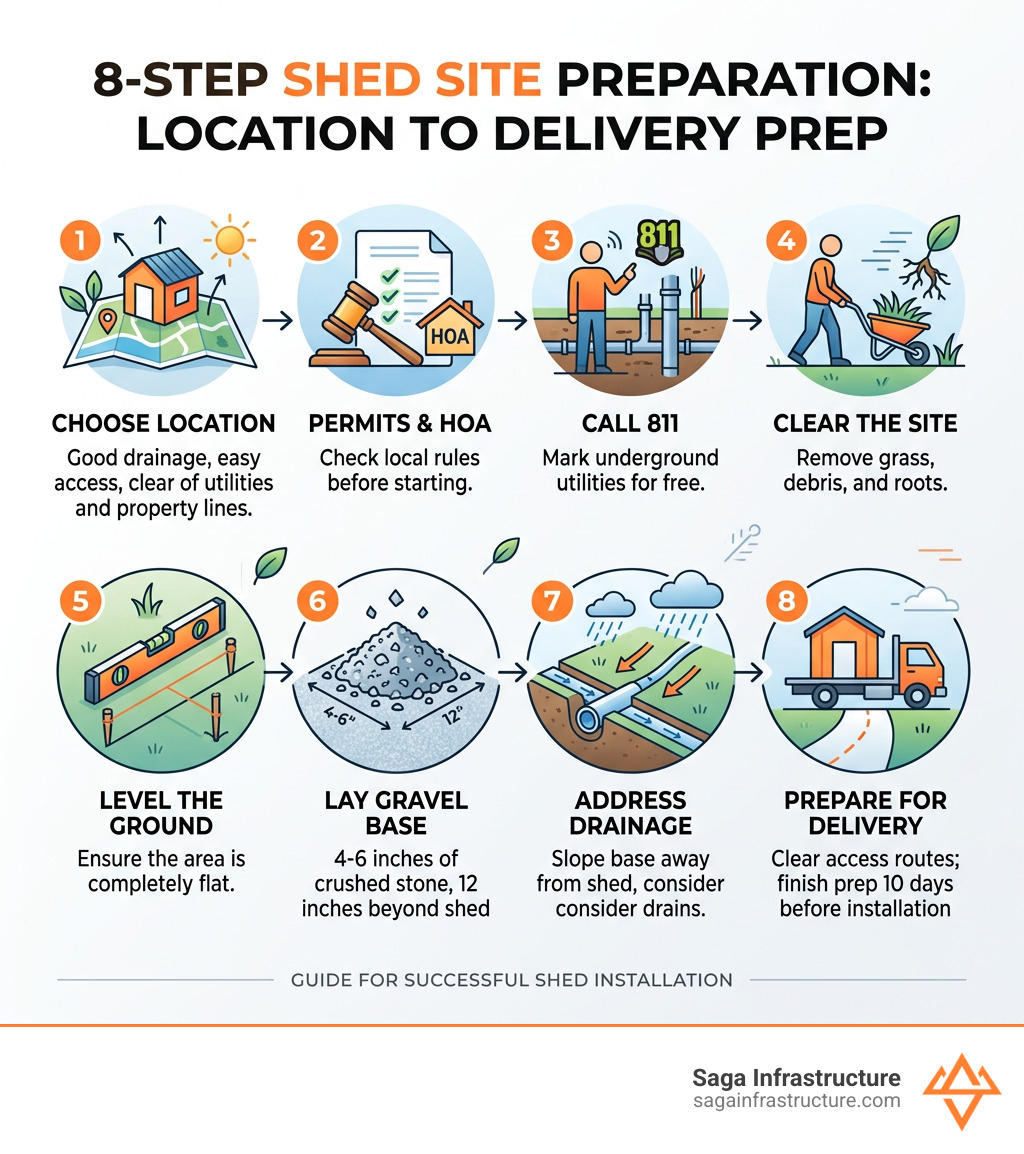
Here are the main steps:
- Pick a good spot – It should be dry and easy to reach.
- Check the rules – Ask your town if you need a permit.
- Call 811 – They mark underground wires for free.
- Clear the ground – Remove grass, weeds, and roots.
- Make it level – Use string to see if the ground is flat.
- Use gravel – Put down 4 to 6 inches of crushed stone.
- Fix water flow – Make sure water flows away from the shed.
- Get ready – Finish the work 10 days before the shed arrives.
If you skip these steps, your shed might break. You might also lose your warranty.
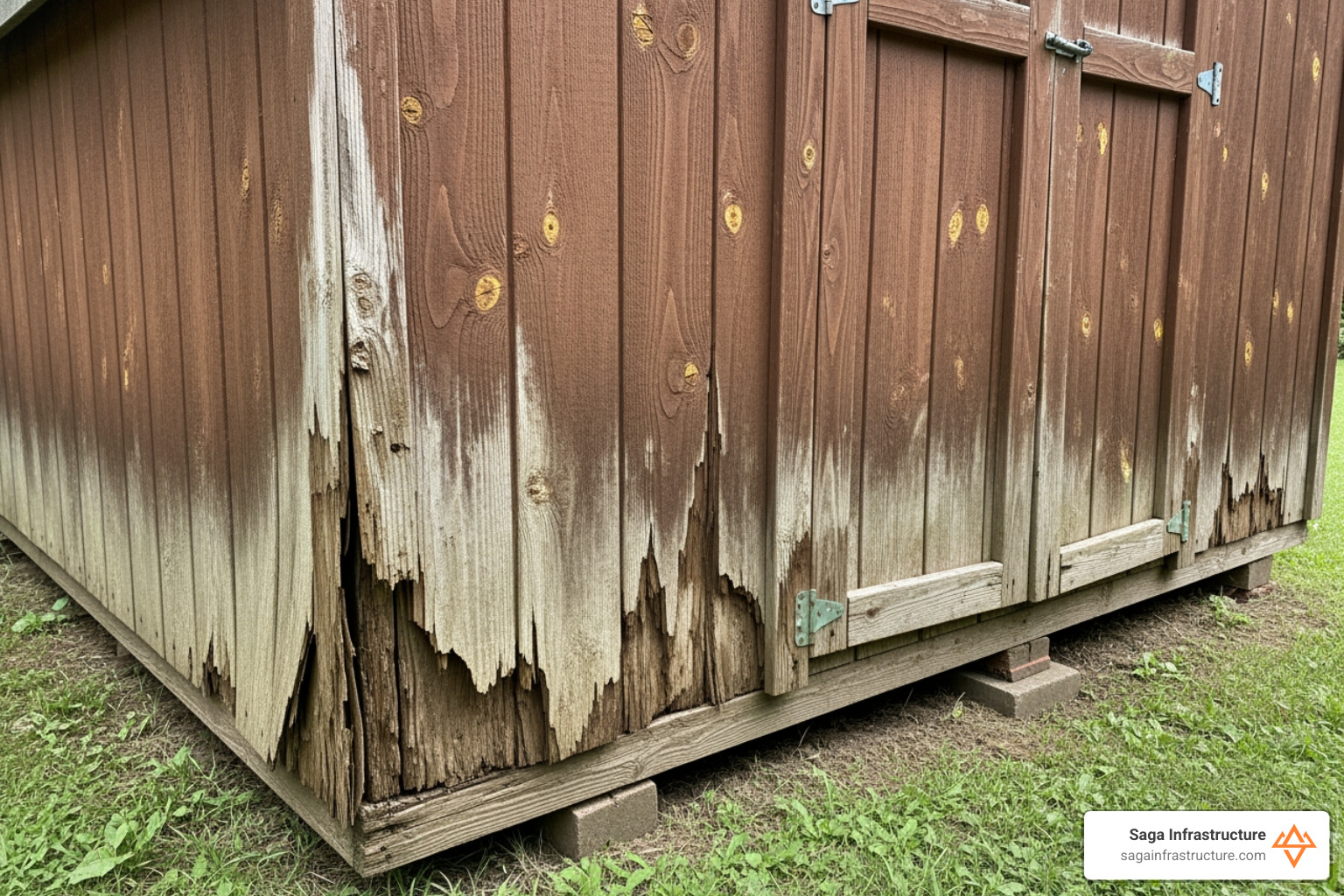
Many people only think about the shed itself. But a shed on bad ground will fail fast. Water is the biggest danger. If a shed sits on grass, the wood drinks up water. This makes the wood rot. You might not see the rot until it is too late.
I am Don Larsen, the head of Saga Infrastructure. I have spent years building big things. I know that a good base makes a building last. I will show you how to do it right.
A Simple Guide to Shed Site Prep
When we talk about site prep for shed work, we mean keeping your shed safe. A shed is a big investment. It needs a flat, strong base. If the ground is not ready, it will shift. This makes the shed twist. Then the doors won’t lock and windows might crack.
Water is a big enemy. If you put a shed on grass, the wood gets wet. This leads to mold and rot. In places like Florida or Texas, the wet ground can ruin a shed in just a few years.
Good prep helps with:
- Lasting a long time: Your shed stays dry.
- Staying flat: The floor will not bend when you walk.
- Working doors: A level shed means doors open easily.
- Keeping bugs out: Gravel stops animals from living under the shed.
- Keeping your warranty: Many shed makers require a level base.
To learn more about why these steps matter, read this How to Prepare Site for Shed [Complete Guide].
Picking the Best Spot and Following Rules
Before you dig, pick a good spot. It should look nice, but it also needs to be dry.
Water and Sun
Do not pick a swampy spot. If water stays there after rain, it is a bad spot. Pick a high spot. Sunlight is good because it dries the ground after a storm.
Space to Move
Think about how the shed will get to your yard. A big truck needs a clear path. Leave 3 feet of space all around the shed. Also, look for low tree branches that might hit the shed.
Rules and Property Lines
Check your local rules. Some towns say you cannot build too close to your neighbor’s yard.
If you are not sure where your yard ends, you can look at Demystifying the ALTA Survey for Real Estate Professionals to learn about yard lines. Sometimes you might need to apply for an easement to get special permission.
Call 811
Always call 811 before you dig. It is free. They will mark where gas and water pipes are. Digging into a power line is very dangerous and costs a lot of money.
How to Clear and Level the Ground
Now it is time to work. Site prep for shed projects starts with clearing the ground. You must remove grass, weeds, and roots.
Why remove grass? When grass dies, it leaves holes in the dirt. Your shed will sink into those holes. Dig down about 4 to 6 inches to get all the roots out.
Making it Square
To make sure your site is a perfect rectangle, use the 3-4-5 rule.
- Measure 3 feet on one side.
- Measure 4 feet on the other side.
- The space between the marks should be 5 feet. If it is, your corner is perfect.
Leveling the Site
A yard might look flat, but it might not be level. Use stakes and string to check. If one side is much higher than the other, you must fix it.
Dig out the high side or fill the low side with crushed stone. Never use dirt to fill the low side because it washes away. You can learn more about moving dirt in our guide From Dirt to Driveway: Mastering Grading and Paving.
Making a Gravel Pad
We think a gravel pad is the best choice for most sheds. It is cheaper than concrete and drains water well.
How to build a gravel pad:
- Stone: Use 3/4-inch crushed stone. Do not use round pebbles because they roll around.
- Depth: Make the gravel 4 to 6 inches thick.
- Size: Make the pad 1 foot wider than the shed on all sides. This stops rain from splashing mud on the shed.
- Fabric: Put a special cloth under the stone to stop weeds.
- Frame: Use thick wood to hold the gravel in place.
Using stone is a smart way to stop water damage. Read more here: Don’t Get Washed Away: The Ultimate Riprap Erosion Defense.
Tips for Sloped Yards
If your yard is on a hill, you can still have a shed. You might need to dig a flat shelf into the hill. Or you might need to build a small wall to hold the dirt back.
Warning: Never use more than a few blocks to lift a shed. It could tip over in high winds.
Comparing Different Bases and Costs
Pick a base that fits your budget. If you just have a lawnmower, gravel is great. If you have very heavy machines, you need concrete.
| Base Type | Best For… | DIY Cost | Pro Cost |
|---|---|---|---|
| Gravel Pad | Most sheds | $5 per sq. ft. | $10 per sq. ft. |
| Concrete Slab | Heavy stuff | $9 per sq. ft. | $18 per sq. ft. |
| Blocks | Small sheds | $100 total | Not recommended |
| Concrete Posts | Steep hills | $200 – $500 | $800 – $1,500 |
Gravel Pad Facts:
- Fast to build.
- Lets water soak into the ground.
- Keeps air moving under the shed.
Concrete Slab Facts:
- Needs a few days to dry.
- Must be the perfect size.
- Very strong and permanent.
For a list of how to get ready for big buildings, see our Complete Checklist for Commercial Site Preparation.
Common Mistakes and When to Get Help
Even if you try hard, things can go wrong. Here are common mistakes:
- Using Sand: Sand washes away in the rain. Your shed will become unlevel.
- Forgetting 811: Breaking a wire is very expensive.
- Small Pads: If the pad is too small, water will rot the edges of the shed.
- Not Packing Stone: You must press the gravel down so it stays firm.
When to Call a Pro
Building a small pad is a good weekend job. But sometimes you need The Best Civil Construction Companies Near Me.
Call a pro if:
- The ground is very steep.
- You have big trees or rocks in the way.
- The dirt is thick clay that stays wet.
- The building is very large.
Pros have big machines to do the work fast. To learn more, read Everything You Need to Know About Earthwork Construction Companies.
Common Questions
Can I put a shed on grass?
No. Grass holds water. This will rot the floor of your shed. The shed will also sink into the dirt. You need a gravel base.
How much does it cost?
For a medium shed, doing it yourself with gravel costs about $800 to $1,200. Hiring a pro costs about $1,500 to $2,000. Concrete costs even more.
Do I need a permit?
In some towns, small sheds do not need a permit. But you still have to follow rules about where the shed can go. Always check with your town first!
Conclusion
At Saga Infrastructure, we know that every building needs a good base. We build things that last for a long time.
Preparing your shed site is the best way to protect your money. If you pick a good spot and use gravel, your shed will stay nice for many years.
If your project is bigger than a shed, we can help. We have the tools and the team to build big things.
Ready to start? Contact Us today to see how we can help you build.
